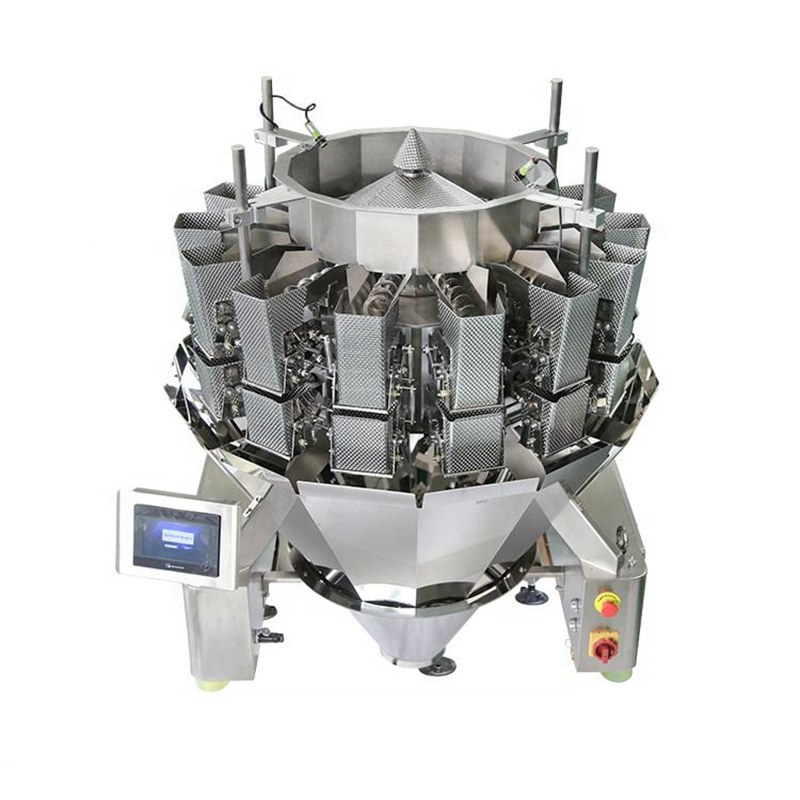
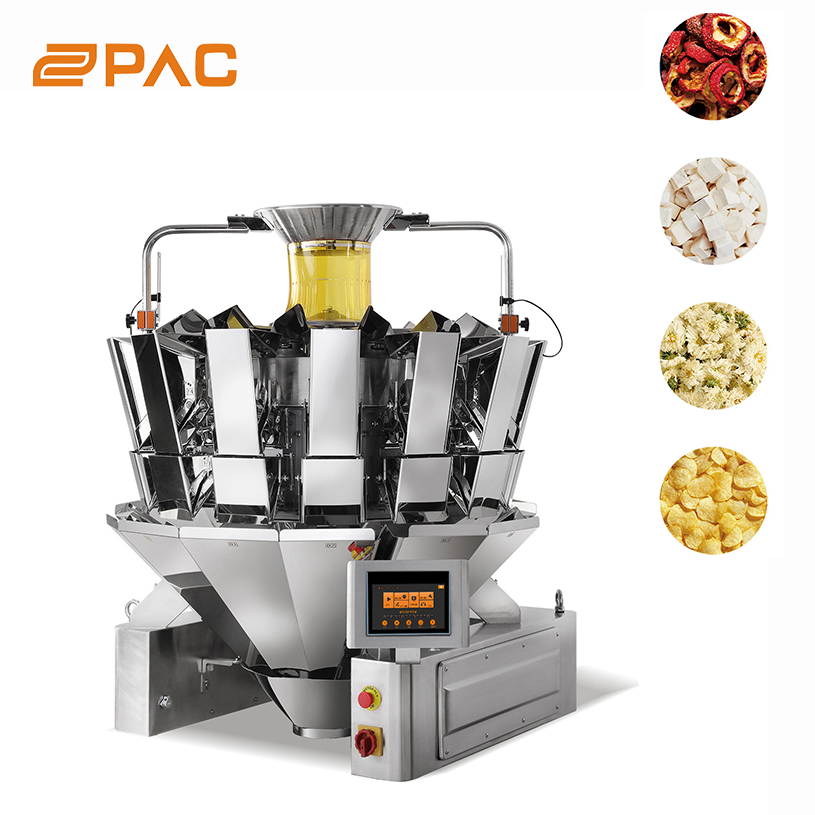
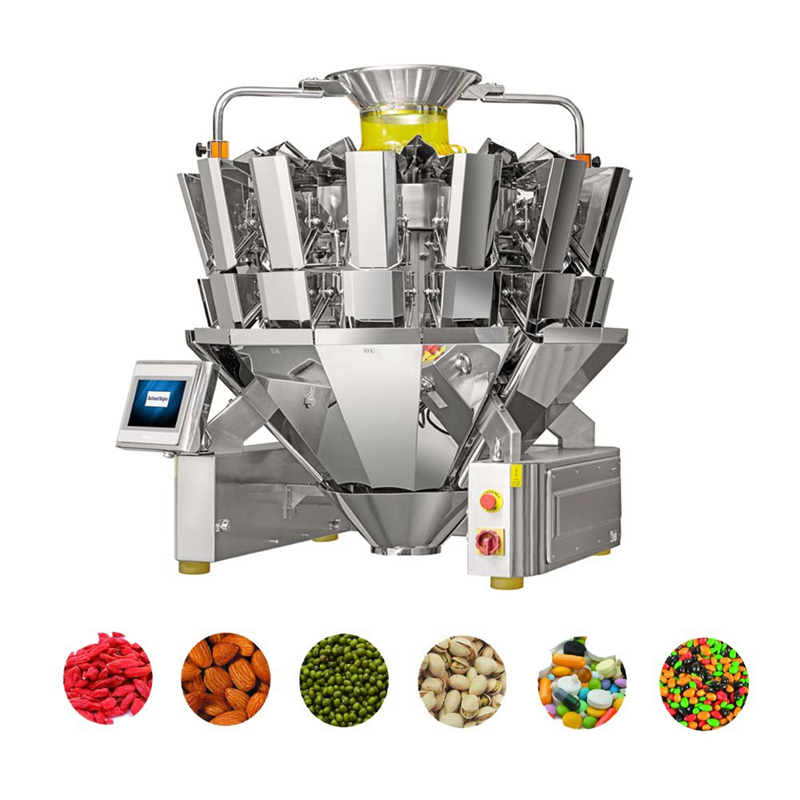
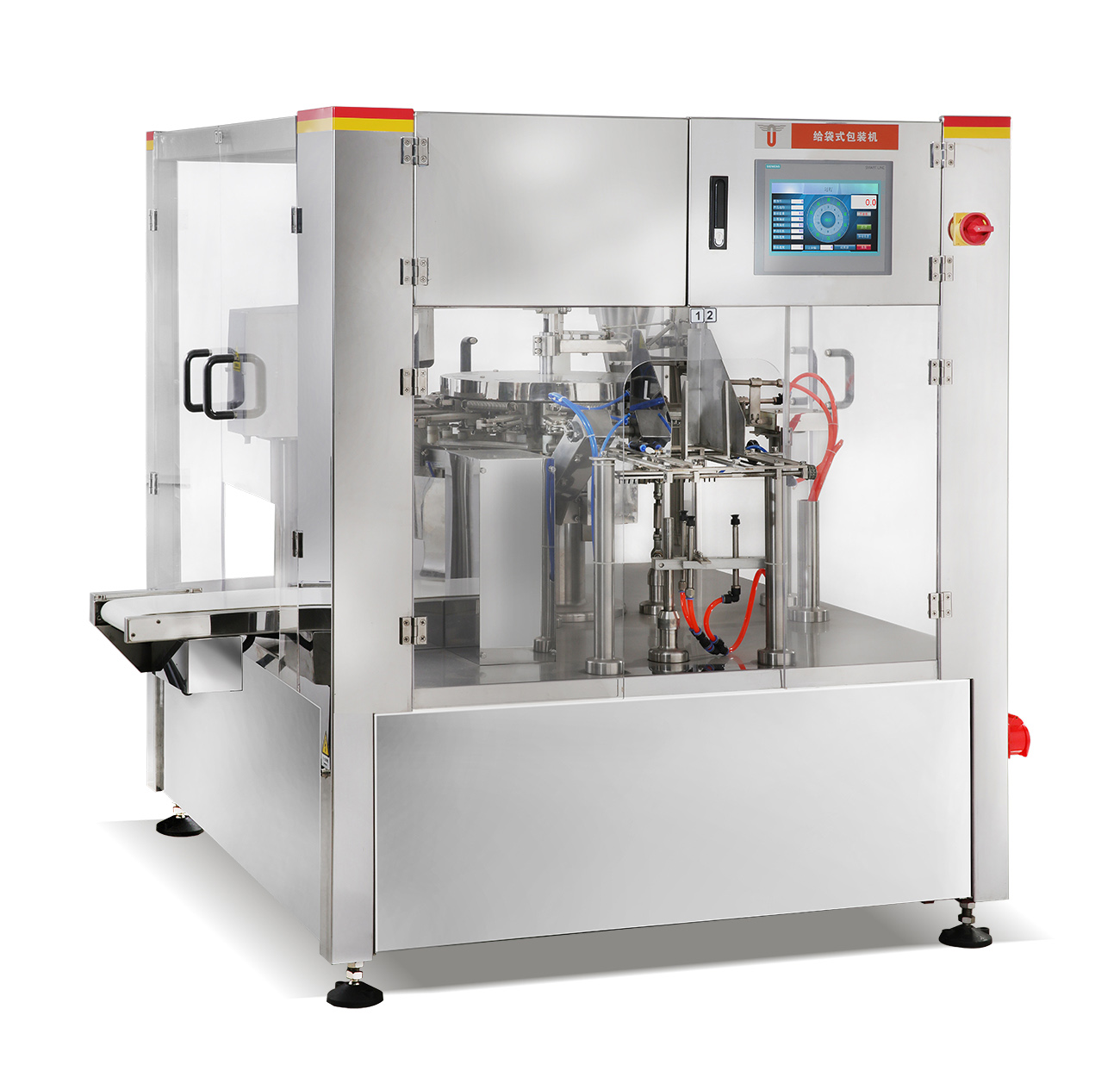
UUPAC 4-Head 0.5L High-Speed Linear Weigher Compact, Accurate Solution for Mid-Volume Production Lines

    In today's fast-paced manufacturing and packaging sectors, small to mid-sized production facilities face a unique challenge: balancing efficiency, precision, and cost-effectiveness. Oversized weighing equipment can waste floor space and stretch budgets, while low-capacity options struggle to keep up with daily output goals. For food processors, snack manufacturers, and small-batch producers, the right linear weigher needs to be space-saving, reliable, and adaptable—and that's exactly what the UUPAC 4-Head 0.5L High-Speed Linear Weigher delivers.

 4 head 0.5L Linear Weigher


Why Linear Weighers Stand Out for Mid-Volume Operations?

1. Operate in compact facilities (e.g., small-scale snack factories, local food processors) and need equipment that fits tight floor plans.

2. Handle diverse products (from granular items like nuts or spices to small pieces like candy or pet treats) and require quick recipe switches.

3. Seek cost-effective automation—linear weighers integrate seamlessly with existing equipment (VFFS machines, pouch fillers, jar fillers) without the investment of a full-scale production line overhaul.


    The UUPAC 4-Head 0.5L model takes these advantages further, addressing common pain points like inconsistent weight accuracy, slow changeovers, and difficult maintenance.


Key Features: Built for Practicality and Performance

     What makes this linear weigher a top choice for mid-volume producers? Its design prioritizes ease of use, durability, and flexibility—all critical for keeping production lines running smoothly.


1. Compact Design, Maximum Space Efficiency

    With a net weight of just 91kg and dimensions of 1,086(L)X710(W)X898(H)mm, this weigher fits into tight production spaces (e.g., small workshops or existing lines with limited room). The 0.5L small-volume hoppers don't just save space—they also boost precision by reducing product residue and ensuring consistent dosing for lightweight items (3–300g).


2. Reliable Accuracy for Compliance and Waste Reduction

    Equipped with a minimum scale interval of 0.1g and accuracy class X(0.5), this weigher eliminates the risk of underpacking (which risks regulatory fines) or overpacking (which wastes materials). For food processors selling pre-portioned snacks or powdered goods, this level of precision directly protects profit margins.


3. Blended Product Weighing: Versatility for Multi-SKU Lines

    One of its most valuable features is the ability to handle 4 types of blended products (e.g., mixed nuts, trail mix, or multi-flavor candy). Simply set up the recipe in the system, and the weigher automatically combines products to the required total weight—no manual mixing or separate weighing steps needed. This is a game-changer for brands offering custom or mixed SKUs.


4. User-Friendly Operation and Quick Changeovers

  • The 7 "color touch screen (with intuitive controls) lets workers switch between 99 preset product parameters in minutes—ideal for facilities running multiple SKUs.
  • Amplitude adjusts automatically, so there's no need for time-consuming manual tweaks when changing products (e.g., from fine sugar to larger cereal pieces).
  • Software can be upgraded via USB, ensuring the weigher stays compatible with future production needs without costly hardware replacements.


5. Durability and Easy Maintenance for Long-Term Value

  • Constructed with SUS 304/316 stainless steel (optional) and an IP65 waterproof design, it's easy to clean—critical for food, pharmaceutical, or cosmetic applications where hygiene compliance is mandatory.
  •  The modular control system simplifies repairs: if a component needs replacement, you won't have to shut down the entire machine. Factory parameter recovery also minimizes downtime if settings are accidentally changed.


6. Stable, High-Speed Performance

    Driven by a step motor with an open-close mode, the weigher operates at a maximum speed of 85 weighments per minute (WPM)—fast enough to keep up with mid-volume production goals (e.g., 5,000+ packages per hour) while maintaining stability. It integrates seamlessly with VFFS machines, pouch fillers, and inline jar fillers, making it a flexible add-on to your existing setup.


Ideal Applications: Where This Weigher Adds the Most Value

    The UUPAC 4-Head 0.5L Linear Weigher is designed to solve problems across multiple mid-volume industries:


  • Food & Beverage: Weighing snacks (chips, candy), grains (quinoa, rice), spices, or powdered drinks.
  • Pet Food: Portioning small-batch dry pet treats or mixed kibble blends.
  • Pharmaceuticals: Dosing small herbal tablets or powdered supplements (with SUS 316 stainless steel for compliance).
  • Hardware & Electronics: Weighing tiny components like screws, washers, or connectors for small-package sales.


Why Choose UUPAC for Your Linear Weigher?

    As a professional manufacturer specializing in intelligent weighing, packaging, conveying, and detection systems, UUPAC doesn't just sell equipment—we deliver solutions tailored to your production needs. When you choose our 4-Head 0.5L Linear Weigher, you get:


  • Ready-to-Ship Availability: Short lead times to minimize production downtime.
  • Global Support: From installation guidance to after-sales maintenance, our team helps you keep operations running.
  • Flexible Integration: We work with you to ensure the weigher fits seamlessly with your existing VFFS, fillers, or conveyors.


If you're a mid-volume producer looking to save space, reduce waste, and streamline product changeovers, the UUPAC 4-Head 0.5L High-Speed Linear Weigher is built for your needs. If you are interested, Please contact us today to learn how it can integrate into your production line—or request a demo video to see it in action.

Gas Seals vs Wet Pressurized Seals

Gas Seals vs Wet Pressurized Seals

Given increasingly stringent environmental regulations, gas sealing technology remains crucial for ensuring the safe, reliable, and sustainable operation of pumps, mixers, and rotating equipment. Dry gas end-face lubrication offers significant advantages, ensuring high product purity and zero emissions. This technology has effectively reduced hazardous emissions over the years.


It is estimated that over the past 31 years, approximately 105,000 non-contacting gas seals have been sold, with an average service life of six years. This represents a potential avoidance of approximately 272.2 million pounds (123.4 kg) of toxic releases through zero-emission technology.


Maximum Availability Control Technology (MACT) is a key tool in achieving these goals. The California Air Quality Management Department (AQMD) estimates annual emissions from chemical/refining process pumps at 432 pounds, while the latest data from the US Environmental Protection Agency (EPA) suggests up to 2,200 pounds per pump. As early as 1993, this technology was proven to save $500 per seal (at an electricity cost of 6 cents per kilowatt-hour). Today, with energy costs rising to 10–16 cents per kilowatt-hour, the annual energy savings per seal have reached $1,350.


Figure 1 Energy Consumption Comparison between Gas Seals and Wet Seals


Figure 2. Typical spiral groove surface pattern and pressure gradient generated by the grooves


A variety of sealing arrangements are currently available to reduce emissions. The following is a ranking of their ability to control emissions on rotating equipment, listed from best to worst:

● Dual pressurized, non-contacting gas seal

● Dual pressurized liquid seal

● Dual pressureless seal with liquid barrier seal

● Dual pressureless seal with dry-running contacting/non-contacting barrier seal

● Single seal with sleeve

● Single seal

● Stuffing seal


The Evolution of Sealing Technology in Fluid Pumping


Early fluid pumps used fiber packing coated with wax or graphite to seal shaft leakage, but this method generated heat and shortened service life. Perforated lantern rings were introduced to improve lubrication and cooling. Good lubrication effectively extends the service life of sliding surfaces.


These limitations led to the development of mechanical shaft seals, which require effective lubrication. Advances in tribology and fluid engineering have further optimized seal lubrication systems. Manufacturers have designed pressure- and wear-resistant end face structures, some of which even utilize deformation to enhance lubrication and reduce wear. Ground and polished seal faces offer excellent pressure, friction, and wear resistance.


Liquid seal face lubrication is widely adopted due to its stability under high pressure, heat resistance, and compatibility with process fluids.


The Development of Spiral Groove Technology


Dutch tribology professor Evert Muijderman pioneered the use of a repetitive groove pattern in ultracentrifuges. This technology later evolved into mechanical seals and was first used in pumps over 30 years ago.


The non-contact function is achieved through a pattern on one sealing surface. As the shaft rotates, the pattern separates the sealing surfaces, eliminating friction. An inert gas (such as nitrogen) is used as a barrier gas, at a pressure 20 to 30 psi above the process pressure, achieving zero emissions.


Spiral grooves typically feature logarithmic spiral grooves machined into one sealing surface (usually made of a harder material). As the shaft rotates, gas is drawn into the groove, compressed by viscous shear, and then expands at the seal dam, creating a separation gap of several microns between the two sealing surfaces. The static pressure effect during downtime helps minimize seal surface damage.


The earliest spiral groove seals were unidirectional grooves on the outer diameter of a fixed end face. Because process pump speeds are much lower than those of turbo compressors (only 1200 to 3600 rpm), stronger materials, advanced groove designs, and lower spring loads and O-ring friction are required to improve seal face separation efficiency.


Application of Spiral Groove Technology


In 1992, a polymer manufacturer successfully implemented a non-contacting dry gas seal in a pump, effectively protecting product purity and the environment. Over the past 30 years, this technology has been widely used in equipment such as pumps, mixers, fans, and blowers, operating under a wide range of speeds, pressures, temperatures, and solids loadings.


Figure 3 shows the first dual-pressurized non-contacting seal installed in a large-bore centrifugal pump. Figure 4 illustrates a non-contacting gas seal suitable for ANSI and DIN standard bores, featuring a spiral-grooved mating ring and an inert barrier gas. Figure 5 shows the same seal configuration with the addition of a drain for process conditions up to 30% solids loading.


Figure 3: The first dual-pressure, non-contacting seal installed on a process pump, circa 1992


Figure 4: Gas-lubricated, non-contacting seal for a standard bore seal cavity


Figure 5: Gas-lubricated, non-contacting, standard bore seal cavity


This technology was subsequently expanded to mixers and containers, widely used in the pharmaceutical, food processing, and petrochemical industries to ensure product purity. Designers also developed spiral grooves on the carbon primary ring to accommodate low-speed and high-shaft runout conditions, achieving both hydrodynamic and hydrostatic lift.


Twenty years later, seal designs were further upgraded to meet the demands of higher pressures and solids-laden processes. Figure 7 shows a new seal designed for large-bore ANSI pumps, offering enhanced solids handling and performance.


The latest development is a gas seal suitable for high-temperature service (up to 800°F / 425°C). The metal bellows seal, shown in Figure 8, provides spring force, accommodates axial displacement, and effectively transmits torque. The bellows acts as a dynamic sealing element, supporting a variety of secondary seal combinations. The seal features pressure balancing and reverse operation to prevent accidental release of process fluids.


Figure 6: Gas-lubricated, non-contact mixer


Figure 7: Gas-lubricated, non-contact seal for high pressure and solid materials


Figure 8: Gas-lubricated, non-contact seal for high-temperature service


Application of Spiral Groove Technology


In all pressurized dual seal configurations, the barrier fluid pressure is higher than the process pressure being sealed. The dual gas seal differs from other pressurized seal configurations in that it does not rely on fluid circulation between the seals, but instead relies on an external inert gas source to pressurize the seal chamber. According to API 682, Fourth Edition, the corresponding piping plan for this type of seal is Piping Plan 74. Figure 9 shows a basic schematic diagram of this plan.


Figure 9 API Piping Plan 74 - API 682 Fourth Edition


The sealing system works by allowing fluid to flow from a high-pressure area to a low-pressure area. Mechanical seals minimize leakage through sealing faces and O-rings while maintaining a small gap to prevent overheating. This gap allows the high-pressure fluid to flow to the atmosphere. Dry gas barrier seals use a regulated inert gas (such as nitrogen) at a pressure 30 to 50 psi above the process pressure to achieve a seal.


Nitrogen is most commonly used as the barrier gas due to its compatibility and affordability. Nitrogen is typically supplied from a pressurized nitrogen line or from a nitrogen cylinder, but this is less reliable. If nitrogen pressure is insufficient, a gas booster can be used.


The control system must regulate pressure, filter the barrier gas, and monitor pressure and flow to prevent overpressure. Due to the extremely small gap between the sealing faces, the gas must be filtered to less than 1 micron. A flow meter monitors the gas flow, while the API Plan 74 panel is equipped with a transmitter to continuously monitor the seal status. The key parameter is the barrier gas pressure supplied to the seal.


Advantages of Gas Seals for End Users


Despite the numerous advantages of gas seals in pumping equipment, there are still some misunderstandings regarding the choice between wet and dry dual pressurized seal configurations. Wet pressurized seals rely on a liquid barrier fluid (such as API Plans 53A/B/C and 54) for lubrication and cooling, while dry pressurized seals use gas and require minimal preconditioning.


Cost Comparison

The base cost of wet and dry seal cassettes is similar. Wet seals require nitrogen, clean fluid, electrical wiring, cooling water, and power for the pump and fan; dry seals, on the other hand, rely primarily on nitrogen and electrical connections; if pressurization is required, they only require power to the nitrogen booster.


Barrier Fluid Compatibility

Wet seals have higher compatibility requirements for liquid barrier fluids, which may affect process quality. Dry seals use inert nitrogen, which generally does not pose compatibility issues.


System Monitoring and Maintenance

Wet seals require regular replenishment of barrier fluid and maintenance of the heat exchanger. Dry seals require monitoring of barrier pressure and a backup nitrogen source to ensure system reliability. Although high gas flow rates with dry seals require investigation, continued operation is generally acceptable as long as the barrier pressure remains stable.


Energy Consumption and Heat Control

Compared to gas seals, wet seals consume more horsepower and generate more heat. Gas seals also experience lower temperature rises and lower energy consumption. According to statistics, wet seals consume approximately 1,300 kWh of electricity and release 2 tons of carbon dioxide (CO₂) annually, while dry seals consume only 350 kWh and release 0.54 tons of CO₂. Over the past 31 years, approximately 105,000 gas seals have been installed worldwide, with an average operating life of six years per system, resulting in cumulative energy savings of 8.6 million kWh, equivalent to the total electricity consumption of the residents of Houston, Texas.


Installation Flexibility

Gas seal systems eliminate the need for complex fluid circulation, allowing for greater flexibility in the installation location of control and monitoring instruments. In contrast, wet seals require closer installation to the equipment to reduce piping losses. This flexibility is particularly useful in equipment retrofit projects, facilitating maintenance and repairs.


Compared to traditional liquid-lubricated contact seals, non-contacting dry gas seal technology significantly reduces fugitive emissions from process pumps, saving thousands of tons of toxic waste and eliminating the need for cooling water. Furthermore, this technology reduces parasitic power losses, significantly improving energy efficiency and saving approximately 2 tons of CO₂ per pump annually. Furthermore, improved mean time between repairs (MTBR) and equipment reliability offer significant operating cost advantages.


Non-contacting dry gas lubricated seal technology remains an ideal solution for achieving emission reduction goals and improving equipment reliability. As with any advanced technology, its application must be scientifically sound and tailored to local conditions. Proper selection and implementation of this technology not only improves equipment performance but also delivers significant economic and environmental benefits.

What are the common faults of water pumps?

Common faults of water pumps
please see the table below:

Symptom Possible Cause Solution
Mechanical seal leakage Impurities in the medium Improve media filtration and replace or clean the filter (core) promptly.
Air mixed in the medium Increase exhaust flow and install automatic exhaust valves in the pipeline.
Pump inlet pressure too low, causing cavitation Improve inlet conditions and increase inlet pressure.
Flow rate deviation, pump head too high Adjust the pump's operating point to an appropriate value.
Incompatibility between the medium and the mechanical seal material, improper mechanical seal selection Replace the appropriate type of mechanical seal.
Improper flushing or cooling pipe installation Re-adjust the installation.
Pump noise and vibration Air entering the pump Install an automatic air vent at the highest point in the pipeline
Cavitation in the pump Improve inlet conditions, increase inlet pressure, and reduce the outlet valve
Foreign matter in the pump Disassemble the pump and remove foreign matter
Lack of oil in the pump or motor bearings Lubricate more thoroughly and replace bearings if necessary
Poor coupling alignment Realign and replace damaged coupling components if necessary
Motor temperature too high Ambient temperature too high Increase pump room ventilation
Pump flow rate deviation, causing motor overcurrent Control the pump operating point within a reasonable range
Voltage too low or too high Improve power supply voltage
Motor bearing failure Lubricate or replace bearings
Motor fan failure Troubleshoot fan failure
Coupling misalignment Realign


Maintenance of water pump system


  • Regularly clean the exterior of the water pump and motor, and regularly clean the components inside the electrical control cabinet (using a vacuum cleaner is recommended).
  • Regularly inspect the connections and fastenings of the water pump and piping, and regularly check the wiring inside the electrical control cabinet for loose connections.
  • Regularly add or replace grease to the bearings of the water pump and motor. For components lubricated with thin oil, check the oil level frequently to ensure it is neither too high nor too low, and consider changing the oil if necessary. If bearings are deteriorating, replace them promptly.
  • Regularly inspect the filter at the water pump inlet and replace or clean the filter screen (core) promptly.
  • Regularly inspect the water pump mechanical seal for leaks. If leaks are detected, identify the cause, correct it, and replace a new mechanical seal.
  • Regularly check the alignment of the water pump coupling and adjust it appropriately.
  • Regularly inspect the motor insulation.
  • Regularly check the actual operating point of the water pump to ensure it is normal. If not, adjust it appropriately.

GroTech Beans color sorter High-Efficiency Removal of Insect-Damaged Beans

In the processing and sales of beans, insect-damaged beans have always been a “persistent problem” that affects quality and brand reputation. They not only damage the appearance and reduce consumer trust but may also compromise the storage safety of the entire batch. How can producers efficiently remove insect-damaged beans and enhance product quality? The answer is — Ai Bean Color Sorter.

Why Traditional Bean Color Sorters Fail to Remove Insect-Damaged Beans

Older generations of color sorters mainly rely on simple color differences to perform sorting.

  • Minimal color difference: Many insect-damaged beans retain a normal appearance, with only small spots or tiny holes, which conventional machines struggle to detect.

  • Hidden damage: Some insect damage occurs inside the bean, causing only subtle surface changes that traditional sorters often miss.

  • Single recognition method: Early machines simulated the human eye with basic optical detection, lacking the ability to judge fine textures, dark spots, or surface defects.

This leads to a common issue: traditional color sorters can remove obviously defective beans, but fail to thoroughly eliminate insect-damaged beans.

Advantages of Smart Bean Color Sorter for Insect-Damaged Bean Removal

With advanced multi-spectral imaging and intelligent algorithms, the new generation of bean color sorters breaks through these limitations:

  • High-definition detection: Captures subtle dark spots, holes, and color variations on the bean’s surface.

  • Intelligent learning: Built-in AI continuously learns insect-damage patterns, improving accuracy.

  • Efficient rejection: High-speed precision air-jet separation removes defective beans instantly.

  • Better product quality: Sorted beans are fuller, more uniform in color, and meet the demands of premium markets.

Bean Sorting Machine for Multiple Types of Beans


Whether soybeans, mung beans, red beans, kidney beans, or cowpeas — the smart color sorter handles them all with ease.

  • One machine for multiple bean types

  • Simple, intuitive interface

  • Saves labor cost and boosts efficiency

What Is Refrigeration Gas 404A Used For? A Guide to Its Core Applications

Refrigeration gas 404A is a blended HFC refrigerant known for its reliability and strong performance, especially in low and medium-temperature systems. For years, it has been a trusted choice across various sectors in the United States that require consistent and powerful cooling.

Its versatility makes it suitable for a wide range of demanding commercial and industrial environments. Here are the primary applications where refrigeration gas 404A is used:


1. Commercial Refrigeration


This is the most common sector for R-404A. It is engineered to perform exceptionally well in the daily grind of retail and food service environments. Key uses include:

  • Supermarket Display Cases: The open-air coolers and freezers lining grocery store aisles.

  • Walk-In Coolers & Freezers: Essential for restaurants, grocery stores, and food distributors to store perishable goods in bulk.

  • Ice Machines: Widely used in hospitality, food service, and healthcare to produce ice reliably.


2. Transport Refrigeration


The ability of refrigeration gas 404A to maintain a consistent temperature under varying conditions makes it ideal for mobile applications. It is frequently used in:

  • Refrigerated Trucks and Trailers: Keeping produce, frozen foods, and other temperature-sensitive items safe during transit.

  • Refrigerated Shipping Containers: Used for overseas and rail transport of perishable cargo.


3. Industrial Cooling


In more heavy-duty settings, refrigeration gas 404A provides the robust cooling capacity needed for large-scale operations. These applications include:

  • Cold Storage Warehouses: Large facilities that store frozen and refrigerated goods before distribution.

  • Food Processing Plants: Used in blast freezers and other cooling processes during food production.


In essence, refrigeration gas 404A is a versatile refrigerant designed for equipment that needs to achieve and maintain cold temperatures efficiently, from a local restaurant's walk-in freezer to a cross-country refrigerated truck.

Why is R-410A Being Banned?

R-410A, a popular refrigerant gas used in air conditioners and heat pumps, is often mentioned in discussions about refrigerant phase-outs. However, contrary to widespread belief, R-410A is not being banned globally. What’s happening is a gradual shift in refrigerant choices due to environmental concerns, regulatory changes, and industry trends.


Here’s why this confusion exists:

Environmental Impact

R-410A is a blend of hydrofluorocarbons (HFCs), which are potent greenhouse gases (GHGs). When released into the atmosphere, they contribute significantly to global warming. This has led to its inclusion in the Montreal Protocol and subsequent Kigali Amendment agreements aimed at reducing substances that harm the ozone layer and exacerbate climate change.

Although R-410A does not deplete the ozone layer (unlike its predecessor R-22), its high global warming potential (GWP) makes it a target for phasedown rather than an outright ban.


Regulations

Several countries, particularly in Europe and the U.S., are adopting stricter regulations on refrigerants with high GWP. In the U.S., the American Innovation and Manufacturing (AIM) Act aims to reduce the use of high-GWP refrigerants like R-410A by 85% over the next 15 years, replacing them with lower-GWP alternatives. Similarly, the EU’s F-Gas Regulation has set guidelines for reducing the use of HFCs.

However, R-410A is not banned outright. Instead, it's being phased out in favor of refrigerants with a lower GWP, such as R-32 or natural refrigerants like CO2.

Transitioning to Low-GWP Alternatives

While R-410A remains in use today, the industry is evolving. Manufacturers are increasingly shifting towards more eco-friendly options like R-32, which has a GWP of about one-third of R-410A. This transition is seen as a necessary step toward achieving global climate goals, but it's being implemented gradually, allowing existing systems using R-410A to remain operational.


Conclusion

R-410A is not being banned outright; instead, its use is being reduced as part of a broader push for more sustainable refrigerants. The shift is driven by climate policy, and while it might cause some confusion, it’s clear that the goal is to reduce the environmental impact of refrigerants, not to eliminate them entirely.

So, while R-410A may not have a permanent place in the future of HVAC systems, its gradual phase-out is part of an important environmental transition. The future of refrigerants is moving toward more sustainable options, and R-410A is just one step in the process.

Enhance Your Industrial Cooling Strategy with Air Cooled Screw Chillers

You gain immediate advantages when you implement central cooling in your facility. An industrial air cooled screw chiller delivers outstanding energy savings and boosts operational efficiency, especially in demanding industrial environments. Recent studies show these chillers excel in reliability and cut operational costs by using advanced controls and leveraging ambient air. You can count on this technology to strengthen your central heating and cooling system and improve your hvac performance. With proven energy optimization, you take a confident step toward better operational efficiency and long-term savings.


Key Takeaways

  • Industrial air cooled screw chillers boost energy savings and improve cooling reliability in demanding environments.

  • Central cooling systems provide consistent temperature control, reduce downtime, and support scalable industrial operations.

  • Advanced compressor and control technologies enhance efficiency, lower noise, and enable precise system monitoring.

  • Regular maintenance and compliance with standards maximize system lifespan and maintain peak energy efficiency.

  • Choosing modern refrigerants and energy-efficient designs helps reduce environmental impact and supports sustainability goals.


Central Cooling Overview


china air cooled industrial chiller


System Principles

Central cooling delivers consistent temperature control across your entire facility. You use a network of supply and return ducts to circulate cool air efficiently. The system draws in warmer air, cools it, and then distributes it back through supply ducts. You can choose between split-system units, which separate indoor and outdoor components, or packaged units that combine everything in one cabinet. Proper sizing and installation are essential. You follow industry protocols for load calculation and equipment selection to ensure optimal performance. You also need to design ductwork carefully, seal and insulate ducts, and position equipment to reduce noise and airflow issues. Adhering to manufacturer guidelines for refrigerant charge and airflow helps you maintain efficiency. You also meet standards like ASHRAE 62.1-2010 for ventilation and air quality, which ensures a safe and comfortable environment for your team.


Industrial Applications

You find central cooling essential in many industrial environments. The OMC-100ASH air cooled screw chiller supports industries such as rubber, plastics, petroleum, chemical, electrical, paper, textile, brewing, pharmaceuticals, machinery, food, and beverage processing. These sectors rely on precise temperature control to maintain product quality and protect sensitive equipment. You benefit from advanced hvac solutions that deliver reliable cooling even under heavy loads. Central cooling allows you to scale operations and adapt to changing production needs. By integrating a robust chiller, you ensure stable operation and reduce downtime, which is critical for maintaining productivity and meeting industry standards.


Industrial Air Cooled Screw Chiller Features

air cooled screw chiller supplier

Compressor Technology

You benefit from advanced compressor technology when you choose an industrial air cooled screw chiller. Semi-hermetic screw compressors offer several advantages over open-type models:

  • The intermediate flange connection reduces leakage risk, keeping your system secure.

  • Direct refrigerant cooling for the motor eliminates the need for a fan, lowering noise and boosting stability.

  • The design minimizes refrigerant and oil leakage, supporting long-term reliability.

  • Noise reduction improves your working environment.

  • Enhanced cooling capacity meets high-load demands in industrial settings.

Brand-name semi-hermetic screw compressors feature four-grade capacity control. This technology reduces electrical impact during startup and increases energy efficiency. You experience smoother operation and consistent temperature control, even during peak production periods.


Control Systems

You gain precise control and monitoring with the Siemens PLC and LCD touch screen interface. The centralized control system tracks critical parameters such as temperature, pressure, phase sequence, and motor conditions. The menu-driven LCD touch screen makes adjustments easy and provides real-time visualization of your chiller’s running state. You can select your preferred language for operation, making the system accessible for your team.

Energy optimization and load tracking are key features in modern industrial air cooled screw chillers. Variable speed drives on compressors, pumps, and fans can reduce energy consumption significantly. Studies show that optimizing condensing temperature and chilled water flow rates can increase the coefficient of performance and lower annual electricity use. Automated fault diagnostics help you detect issues early, minimizing downtime and maintenance costs. Advanced systems use real-time sensor data and AI-driven analytics to provide actionable insights and predictive maintenance.


Safety Feature

Description

Operational Risk Reduction

Automatic Shutdown Systems

Detect operational irregularities and shut down the chiller automatically.

Reduces equipment damage by up to 40%, prevents failures.

Pressure Relief Valves

Release excess pressure to prevent equipment rupture.

Lowers catastrophic failure risk by up to 50%.

Temperature Monitoring

Continuously monitors temperature and sends alerts if unsafe levels occur.

Enables real-time intervention, maintaining safe conditions.


Benefits of Central Cooling


Industrial Air Cooled Screw Chiller


Energy Efficiency

You achieve remarkable energy efficiency when you implement central cooling in your facility. Advanced air cooled screw chillers use semi-hermetic compressors with patented rotor profiles, which increase efficiency by up to 30% compared to standard models. The integration of electronic control systems and optimized refrigerants can reduce energy consumption by nearly 60%. You benefit from automatic load tracking and precise temperature management, which ensures that your system only uses the energy required for current conditions. This energy-efficient design not only lowers your utility bills but also supports your sustainability goals.


Cost Savings

You realize substantial cost savings with central cooling systems. Air cooled screw chillers offer several financial advantages over traditional cooling solutions:

  • Lower energy consumption leads to reduced utility expenses.

  • Minimal maintenance requirements decrease repair and service costs.

  • The absence of cooling towers and water treatment systems cuts installation and ongoing maintenance costs.

  • Simple design and easy maintenance contribute to long-term cost-effectiveness.

  • Combined, these factors deliver significant operational and maintenance savings for your business.

You can allocate more resources to core operations and growth, rather than spending on frequent repairs or complex maintenance routines.


Reliability

You depend on reliable cooling to maintain productivity and protect equipment. Central cooling systems equipped with advanced safety features, such as automatic shutdown, pressure relief valves, and continuous temperature monitoring, minimize the risk of unexpected failures. The patented compressor design with enhanced bearing life and built-in oil pressure systems ensures stable operation under varying loads. You experience fewer breakdowns and longer system life, which translates to less downtime and greater peace of mind.


Scalability

You gain flexibility and scalability with central cooling solutions. Modular designs allow you to expand your cooling capacity as your facility grows. You can customize systems to meet specific industrial requirements, ensuring adaptability and efficiency. For example, using multiple cooling distribution units enables you to achieve redundancy and maintain optimal performance during expansion. Modular and customizable systems support future upgrades and changes, helping you respond quickly to evolving production needs.


Environmental Impact

You make a positive environmental impact by choosing central cooling systems with advanced refrigerants and energy-efficient controls. Switching to modern refrigerants with lower global warming potential reduces harm to the environment and complies with international regulations. Research shows that these upgrades can decrease energy consumption by up to 60%, resulting in a 13% to 16% reduction across various environmental impact categories. Lower electricity demand means less reliance on fossil fuels, which conserves natural resources and reduces emissions. Space-saving designs, such as packaged rooftop units and modular systems, free up valuable indoor space, minimize noise, and simplify maintenance. These features support operational efficiency and contribute to sustainable facility management.


Implementation Steps

You strengthen your facility’s performance when you integrate an industrial air cooled screw chiller into your central heating and cooling system. Begin by assessing your current cooling and heating demands. Identify the areas where temperature control is critical for production or equipment safety. Select a chiller model that matches your load requirements and fits seamlessly into your central hvac network.

Next, plan the installation process. Coordinate with your engineering team to determine the best placement for the chiller, considering airflow, accessibility, and noise reduction. You benefit from factory-tested units that arrive ready for installation, reducing downtime and ensuring reliable startup. Connect the chiller to your existing piping and electrical infrastructure. Use the advanced control panel to calibrate temperature settings and monitor system performance.

After installation, conduct a thorough commissioning process. Test the chiller under real operating conditions to verify output, safety features, and integration with your central heating and cooling system. Train your staff on the control interface and routine maintenance procedures. Schedule regular inspections to maintain peak efficiency and extend equipment life.


Key Considerations

Customization plays a vital role in meeting your facility’s unique requirements. You can select special materials for corrosion resistance, enabling operation with deionized water or sea water. Unique physical configurations allow you to fit the chiller into challenging spaces. Advanced controls and instrumentation provide precise temperature management for sensitive processes. Dual refrigeration systems offer redundancy, ensuring uninterrupted cooling for critical applications.

You may require explosion-proof designs for hazardous environments or special pumps for high-pressure demands. Standard options include custom paint finishes, outdoor packages, remote switching, and additional safety switches. These features have proven effective in demanding industrial settings, delivering reliable performance and safety.


Why Water-Cooled Screw Chillers Are Leading the Cooling Industry

Why Water-Cooled Screw Chillers Are Leading the Cooling Industry


Water-cooled screw chillers are the top choice in cooling systems. The market for these chillers will be worth over $4.8 billion in 2025. Big companies buy these chillers because they save energy, can grow with needs, and help the environment. Experts know it is important to watch new trends. Smart technology and new rules help people stay ahead in cooling system ideas.

  • Water-cooled screw chiller models use up to 30% less energy than old systems.

  • The market gets bigger as chillers show they work well for businesses and factories.

  • New ideas like modular design and predictive maintenance make more people use water-cooled screw chillers.


Water-Cooled Screw Chiller Basics


How Water-Cooled Screw Chillers Work

A water-cooled screw chiller cools big buildings and factories. It has two main loops. One is the refrigeration loop. The other is the chilled water loop. The refrigeration loop uses the vapor compression cycle. This cycle lets the refrigerant change between liquid and vapor. It helps absorb heat and then release it. The chilled water loop sends cold water to places that need cooling.

Here is how water-cooled chillers work step by step:

  1. The screw compressor takes in low-pressure refrigerant vapor. It squeezes the vapor to make it hotter and under more pressure.

  2. The condenser moves heat from the refrigerant to the cooling water. The cooling water goes to the cooling tower.

  3. The expansion valve drops the pressure and temperature of the refrigerant.

  4. The evaporator takes heat from the chilled water. This cools the water for the building or process.

  5. The cycle starts again. This keeps cooling steady and efficient.

This process makes water-cooled screw chillers great for keeping temperatures stable in many places.


Key Components

Every water-cooled screw chiller has important parts. These parts work together to keep things cool:

Component

Role in Cooling Process

Compressor

Squeezes low-pressure refrigerant gas into high-pressure gas. This makes it hotter and helps move heat.

Condenser

Takes heat from the refrigerant and gives it to the cooling water. This turns the refrigerant into a liquid.

Expansion Valve

Lowers the pressure and temperature of the refrigerant. This helps it absorb heat better.

Evaporator

Takes heat from chilled water or fluid. This makes the refrigerant turn into vapor and cools the fluid.

Chilled Water Loop

Sends chilled water to places that need cooling.

Condenser Water Loop

Sends cooling water to take heat from the refrigerant. The water then goes to the cooling towers.

Water Boxes

Direct water flow in the evaporator and condenser. This helps heat exchange work better.

Power Unit

Controls the electricity for the chiller. It includes starters and circuit breakers.

Controls

Watch and change how the chiller works. They can make alarms and let people control the chiller remotely.

These main parts help water-cooled chillers work well, last long, and stay reliable in tough places.


Energy Efficiency Advantages

Water-cooled screw chillers are very good at saving energy. They use water to move heat. This helps them cool big buildings well. Using water makes them use less energy. It also helps building owners follow green rules. Experts use SEER, EER, and COP to check how well chillers work. These numbers tell us how much cooling comes from the power used. Lower approach temperatures mean the chiller works better.


Variable Speed Drives

Variable speed drives, or VSDs, help chillers save more energy. VSDs let the compressor change speed when needed. This means the chiller does not always run at full power. It uses less energy when cooling needs are low.

  • VSDs stop energy waste by slowing the compressor instead of turning it off and on.

  • Studies show VSD chillers use about 11% less energy each year than chillers that run at one speed.

  • In big buildings, VSDs can save over a million kilowatt-hours every year.

  • Tip: VSDs make chillers work better and last longer. They also help save money over time.


Advanced Heat Exchangers

Advanced heat exchangers help chillers move heat faster. New designs, like falling-film evaporators and special tubes, use less refrigerant and energy.

  • Hybrid evaporators mix old and new ideas for better cooling and less harm to the planet.

  • Stronger tube materials stop rust and help move heat better.

  • These changes let chillers reach COP values up to 4.98, showing they save a lot of energy.
    Better heat exchangers also make chillers smaller. This saves space and helps them fit in tight spots.


Innovations in Water Cooled Screw Chiller Technology

Large capacity water cooled screw chiller

IoT and Smart Controls

New water-cooled screw chillers use IoT and smart technology. These systems collect data like temperature and humidity. They also track how much work the chiller is doing. Smart controllers use this information to help the chiller work better. This makes the chiller use less energy and run more smoothly.

  • IoT lets chillers change quickly when things change.

  • Smart controls can cut energy use by half compared to old chillers.

  • One factory in Beijing used 25% less energy in a month after adding smart controls.

  • These systems watch the equipment and make small changes to keep things working well.

  • This means fewer problems and better control of temperature.

Facility managers need to check their systems before adding IoT. They should pick equipment that works with the new tech. Staff must learn how to use the new system. Regular checks and care, like fixing sensors and checking networks, keep things running well. More people want energy-saving and green systems, so smart chillers are becoming popular.

Note: IoT and smart controls are a big step for cooling systems. They help companies save money and have less downtime.


Sustainable Refrigerants

The industry now wants to use sustainable refrigerants to protect the environment. Old refrigerants like R-134a can harm the planet. New rules say companies must use greener choices. The U.S. SNAP program and some states, like California, limit high-GWP refrigerants in new chillers.

  • New refrigerants like R-454B, R-1234ze(E), R-1233zd(E), R-513A, R-515B, and R-32 have much lower GWP.

  • Some have GWP close to 1, so they are almost climate-neutral.

  • These new refrigerants help chillers work better and follow strict rules.

  • Most are not flammable or only a little flammable, so they are safer.

  • Top companies now sell chillers with these refrigerants to cut carbon without losing performance.

Natural refrigerants like ammonia, CO2, and hydrocarbons have very low GWP. But they can be harder to use because of safety and cost. Using better refrigerants shows how new ideas and rules are changing cooling.


Scroll Compressor Integration

Adding scroll compressors is another big change in water-cooled screw chillers. Now, some chillers use both screw and scroll compressors together. This is called a hybrid system. It uses the best parts of each compressor.

  • Scroll compressors are good when the chiller does not need to work as hard.

  • Screw compressors are better when the chiller needs to cool more.

  • Hybrid chillers can switch between the two or use both, depending on what is needed.

This design helps chillers use less energy and work better. It also makes chillers more reliable. Hybrid chillers can fit many building sizes and uses. These changes help chillers meet new needs and support a greener world.

Tip: Hybrid systems give more choices and save energy. They are a smart pick for new buildings and upgrades.


Water-Cooled Chillers Market Trends

Market Growth Drivers

The water-cooled chillers market is getting bigger as cities grow. More factories and buildings need better cooling. The global chillers market was $3.86 billion in 2024. It may reach $4.66 billion by 2032. This growth happens because cities are growing fast. More factories are being built. Old cooling systems need to be replaced. Asia-Pacific is the biggest market for chillers. It has over 40% of the market. Southeast Asia wants more water cooled chillers.

Many things help the water-cooled chillers market grow:

  • Water cooled chillers use less energy than air-cooled ones in big buildings.

  • New rules make building owners pick greener cooling systems.

  • Smart cooling systems, like IoT chillers, help save energy and watch equipment.

  • Hotter weather and bigger cities mean more cooling is needed.

  • More money and new buildings mean more chillers are needed.

  • Green buildings and saving money on energy keep the market strong.

Note: The water-cooled chillers market has some problems. These include high starting costs and not enough water. But smart tech and new refrigerants give good chances for growth.


Scalability and Application Range

Water cooled chillers are important for big jobs and factories. They use cooling towers outside to get rid of heat. They work at lower temperatures than air-cooled chillers. This makes them use less energy. They help keep places like factories, data centers, and hospitals cool.

Some main features of water cooled chillers are:

  • They can cool big places very well.

  • Their designs can be changed to fit many spaces.

  • They are quick to set up and do not stop work much.

  • They work in many different temperatures for many jobs.

A table below shows how water cooled chillers help in different places:

Application Area

Benefit of Water Cooled Chillers

Data Centers

High capacity, small footprint

Manufacturing Plants

Stable cooling for heavy equipment

Hospitals

Reliable temperature control

Commercial Buildings

Energy savings and easy scaling

Water cooled chillers are the best pick for city cooling systems. Their small size and easy design help big places add more cooling fast. As cities get bigger and the world gets hotter, water-cooled chillers will stay important for big, efficient cooling.


Overcoming Challenges

Water Management

Water-cooled screw chillers have some water problems. Corrosion happens when air, minerals, or germs get inside. If different metals touch, they can cause leaks. Dirt and small bits from bad water or dirty towers can block pipes. This makes it harder for the chiller to cool things down. These problems make the chiller less efficient and can break it.

  • Condenser tubes can get dirty from things in the water.

  • Buildup inside the tubes slows water and makes the chiller work more.

  • Cleaning with chemicals or brushes keeps the chiller working well.


How much water chillers use depends on the city. For example, Miami chillers use about 2,010 kGal each year. Chicago chillers use only 549 kGal each year. Some cities charge a lot for water, which can cancel out energy savings. Using more cycles in cooling towers can cut water use by half.


Installation and Maintenance

Good installation and care help chillers last longer. Facility managers use smart tools and IoT sensors to watch temperature, shaking, and how well the chiller works. They look for leaks, clean tubes, and treat water to stop rust and dirt. Workers keep records and follow safety steps, like using lockout/tagout and PPE.

  • Each year, they check wires, look for leaks, and test controls.

  • Cleaning and water treatment stop clogs and help cooling.

  • Training helps workers find problems early and avoid mistakes.

A good maintenance plan helps chillers last longer and break down less often.


Future of Water Cooled Chillers

Evolving Demands

The water-cooled chillers market is changing as new rules and technology appear. Companies want chillers that use less energy because energy prices are going up. They look for chillers with variable speed compressors and better heat exchangers. These features help save power and lower costs.
Facility managers now like smart controls and automation. IoT and AI systems let them watch chillers in real time and fix problems before they get worse. These tools help chillers work better and stop long breaks.
People care more about the environment, so the market is moving to safer refrigerants. Hydrofluoroolefins and natural choices like ammonia and carbon dioxide are better for the planet.
Saving water is also important now. New water treatment, closed-loop cooling, and hybrid systems help use less water but keep chillers working well.
The market is also starting to use renewable energy like solar and geothermal. Better materials help chillers last longer and stop rust. Rules and rewards push companies to pick greener technology.

The water-cooled chillers market is moving toward being greener, saving money, and using smart tech.


Anticipated Advances

In the next ten years, water-cooled chillers will get much better. Compressor technology, refrigerant control, and variable-speed drives will help chillers save more energy and work better.
Manufacturers want to add more smart controls and IoT features. These upgrades will let people check chillers from far away and fix problems before they start.
Eco-friendly refrigerants with low global warming potential will become normal as rules get stricter.
Modular designs and custom options will help companies get chillers that fit their needs.
Smart building systems will connect with chillers to save even more energy.
New rules, like the F-Gas Regulation in Europe, make the market create safer and greener chillers.

  • New changes in the water-cooled chillers market will help companies follow rules and work better.

  • The market will keep growing as cities get bigger and need more cooling.

  • Manufacturers will work on making chillers reliable, flexible, and good for the environment.


Water-cooled screw chiller systems are very popular. They save a lot of energy and use new technology.

Market Highlights

Details

Market Share

Water cooled chillers have 56.4% in 2024

Growth Drivers

They save energy, use smart controls, and eco-friendly refrigerants

People who pick cooling systems should choose water cooled chillers. These chillers are reliable and ready for the future. It is smart to follow new trends to keep doing well.


What Is a Telescopic Belt Conveyor and How Does It Work?

In busy logistics hubs and warehouses, moving goods efficiently is a top priority. One tool that’s become increasingly important in this process is the telescopic belt conveyor. If you've ever seen a long conveyor sliding in and out of a truck like a giant mechanical arm, you've likely seen one in action. But what exactly is it, and how does it actually work?


Let’s break it down in a way that combines technical understanding with real-world application.


A Simple Definition

At its core, a 4 extension loading and unloading conveyor is a kind of conveyor system that can extend and retract, much like a telescope. This movement allows it to reach inside trucks or containers for easier loading and unloading. The design significantly reduces manual handling, improves safety, and speeds up operations.


In more technical terms, it's a multi-section conveyor where the nested sections slide out to extend the length. The belt moves continuously along these sections, even as the conveyor extends or contracts.


How Does It Work?

Now let’s get into the mechanics—without sounding like a textbook.


Imagine you’ve got a truck backed up to your dock. Instead of sending in workers to carry boxes one by one, you roll up the telescopic conveyor. At the press of a button (or using manual control in simpler models), the conveyor slides forward, reaching deep inside the truck.


The moving belt—usually made from durable rubber or PVC—carries boxes from the vehicle right into the warehouse or the other way around. Some models even let you adjust the height or tilt the conveyor to match different truck sizes or dock levels.


And when the job’s done? Just retract the conveyor back like a telescope and roll it away. Simple, right?


Key Features (from a Practical Viewpoint)

While tech specs matter, most warehouse managers care more about how it helps:

Adjustable length – So you can handle different truck sizes.

Height control – For aligning with containers or dock heights.

One-person operation – Reduces manpower costs.

Fast belt movement – Speeds up loading and unloading dramatically.

Safety mechanisms – Like emergency stop buttons and anti-slip belts.


Where Is It Used?

You’ll find mobile telescopic belt conveyors in a lot of places:

Logistics centers shipping thousands of parcels daily

Online retail fulfillment hubs (think e-commerce giants)

Courier and express parcel services

Airports, for baggage handling

Warehouses and storage facilities


Basically, if there are goods constantly coming in and going out, a telescopic conveyor makes the job smoother.


Why Are Telescopic Belt Conveyors So Popular?

Now, let’s get real. Time is money—and in logistics, wasted time equals wasted revenue. A conveyor that extends into a truck eliminates time-consuming, back-breaking labor. Not to mention, it cuts down the chance of workplace injuries.


From a formal point of view, telescopic conveyors are recognized as effective solutions for enhancing logistics productivity, operational safety, and space optimization.


And let’s not forget the long-term cost savings. Fewer injuries mean fewer insurance claims. Faster operations mean quicker turnaround. That’s good news for your bottom line.


Whether you’re running a small warehouse or managing a large distribution center, investing in a telescopic belt conveyor can seriously streamline your operations. It's not just a piece of equipment—it’s a way to modernize your entire loading process.


So next time you’re stuck waiting on slow, manual unloading? Just imagine how a telescopic conveyor could slide right in and change everything.
Telescopic Belt Conveyor

Why Use an Explosion-Proof Submersible Pump?

In environments like the petrochemical industry, coal mines, and underground engineering, where flammable and explosive media are present, an explosion can cause significant damage and loss to life and property. However, there's one piece of equipment that can ensure our safety: the explosion-proof submersible sewage pump. Explosion-proof submersible sewage pumps play a vital role in flammable and explosive environments. When the explosive gas mixture inside the motor explodes, the pump's flameproof casing withstands the impact and high temperatures, preventing damage. Furthermore, internal flames cannot penetrate the casing's mating surfaces and ignite the external explosive atmosphere, thus preventing the fire from spreading and increasing the risk. Explosion-proof submersible sewage pumps provide a strong safeguard for the safety of life and property. Currently, there are numerous brands of explosion-proof submersible sewage pumps on the market, and their quality varies widely. Therefore, when purchasing, be sure to choose a reputable brand and ensure that its quality meets relevant standards.


Today, I'd like to recommend several explosion-proof submersible sewage pumps.


1. Tsurumi KTX Series Explosion-Proof Submersible Sewage Pump

This pump has a maximum diameter of DN100 and a maximum power of 11 KW, making it suitable for applications with low flow and head requirements.


Discharge Bore(mm):50 - 100

Motor Output(kW):0.4 - 11

The HSX/KTX series are submersible explosion-proof drainage pumps. Equipped with high-chromium cast iron impellers excellent in wear resistance, they are built to heavy-duty specifications. The HSX-series pump is single-phase powered, and the shaft-mounted agitator prevents air locks, which tend to occur in vortex or semi-vortex pumps. The KTX-series pump is three-phase powered and built to high head specifications, and the slim design allows the pump to be placed in a confined space.


2. Domestic BQS Mining Flameproof Submersible Pump

This pump has a maximum flow rate of 2000 m³/h, a maximum head of 800 m, and a maximum power of 315 KW. Customizable power options are available, making it suitable for high flow rates, high heads, and drainage in most harsh working conditions.

3. Domestic WQB Series Ordinary Explosion-Proof Submersible Sewage Pump

This pump has a maximum power of 200 KW and a maximum flow rate of 3000 m³/h. It can be used in chemical plant environments requiring standard explosion-proof conditions, such as stormwater and domestic water drainage.

4. Domestic BWQG Series Stainless Steel Explosion-Proof Submersible Sewage Pump

This pump features a stainless steel casing and can be used in corrosive environments where explosion protection is required. It can also be equipped with a mixing device to shred impurities in the medium before discharging them, preventing impeller entanglement.