GroTech Grain Color Sorter Smart Solution for Millet, Japonica Rice, and Glutinous Rice

In modern grain processing, product quality is the key to winning customer trust and expanding market share. Raw millet, japonica rice, and glutinous rice often contain impurities, discolored kernels, or defective grains after harvesting. Traditional manual sorting is labor-intensive and inconsistent.

TheGroTech Grain Color Sorter solves this problem withartificial intelligence recognition and high-resolution cameras. Powered by AI algorithms, it can accurately detect impurities, moldy grains, and foreign particles, ensuring only clean, high-quality grains are delivered.

Millet color sorter machine price

Multiple Models for Different Capacities

Every grain processor has unique production needs. That’s why GroTech providesa wide range of models:

Small-capacity color sorter – ideal for farms and small processing plants.

Medium-capacity color sorter – balancing performance and cost, suitable for most processors.Large-capacity color sorter – designed for rice mills and industrial grain processing, running at high speed with maximum efficiency.

Whether you are a family-owned mill or a large-scale grain enterprise, GroTech offers the right solution for your business.

AI grain color sorter manufacturer

Wide Applications: From Millet to Rice and More

GroTech grain color sorters are not limited to one crop. They are widely used for sorting:

Millet – removing impurities and discolored grains.

Japonica rice – ensuring consistent whiteness and appearance.

Glutinous rice – achieving clean and uniform quality.

Other grains – including oats, barley, corn, and buckwheat.

With one machine, you can handle multiple grain types, improving overall efficiency.

Key Benefits for Your Business

✅High efficiency – much faster than manual sorting.
✅Stable quality – consistent grain purity and color.
✅Reduced waste – minimizes loss of good grains.
✅Better competitiveness – premium quality boosts your brand and sales.

As the grain industry moves towards automation and intelligence, GroTech continues to lead withAI-powered grain color sorters. With flexible models, wide grain compatibility, and superior sorting accuracy, GroTech helps processors of millet, japonica rice, glutinous rice, and other cereals achieve higher efficiency and quality.

 GroTech Grain Color Sorter – Clean Grains, Stronger Business.

How High-Precision Terminals Improve Vehicle Reliability and Safety

You count on automotive electrical terminals to keep your car safe and working well every day. New ways of making them and better materials help your car work better.


If you use bad connectors, your car may not work right. This can cause safety problems, break rules, and cost more money over time. As electric cars and new car systems get more common, high-precision terminals are needed for better performance.


Automotive Electrical Terminals Overview

Definition and Role


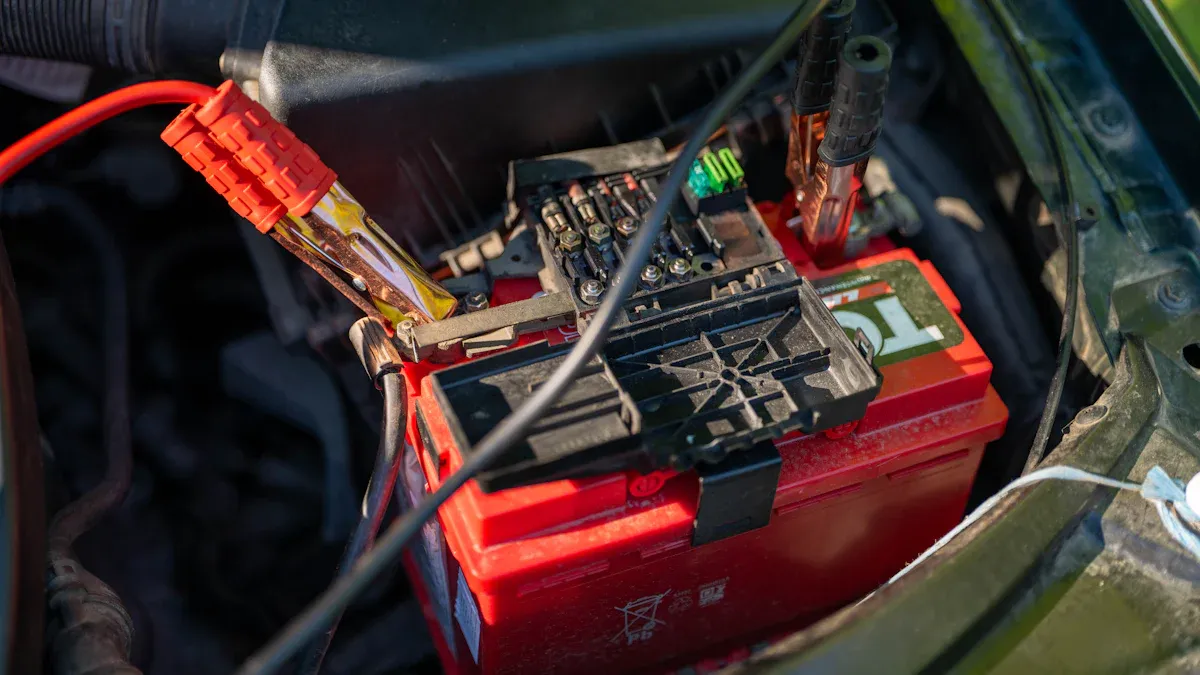
Every time you start your car, you use automotive electrical terminals. These are small metal pieces inside your car. They connect wires and cables together. This lets power move from the battery to things like the engine and lights. When you press a button or turn the key, the terminals send signals to the right places. Without these parts, your car would not work or keep you safe.

Automotive electrical terminals come in many shapes and sizes. Some are flat, some are round, and some look like pins. Each kind has a special job in your car. You can find them in connectors, fuse boxes, and control modules. They hold wires tight and help electricity move easily. If a terminal stops working, you might see warning lights or lose power. Sometimes, your car may not even start.

Jiaxin (Xiamen) Precise Metal Co., Ltd. is a top maker of these terminals. The company uses strong materials and new technology. This helps each terminal work well, even in tough places. Their products last a long time and keep your car’s electrical system strong.


Importance in Vehicle Systems
Automotive electrical terminals do more than just help you start your car. They are important for every part of your car’s electrical system.

Here are some reasons why they matter:

  • They keep power and signals steady so your car works right.
  • Good terminals block water and dust to protect electronics.
  • They help the engine, ignition, and fuel injectors work together.
  • Strong terminals lower the chance of breakdowns and keep you safe.
When you pick good automotive electrical terminals, your car runs better and lasts longer. Their importance grows as cars get more advanced. You need strong connections for things like sensors, safety systems, and electric motors. That is why many experts choose Jiaxin for their cars.


Key Features ofHigh-Quality Terminal Connectors
Material Selection and Finishes


When you look at good terminal connectors, you see the materials and finishes first. These connectors use strong metals like Be-Cu, CuSn4, CuSn6, SUS301, and SUS304. Each metal helps the connector last longer and work better in cars. The right finish keeps the connector safe from rust and damage. You can find finishes like tin, gold, silver, and nickel. These finishes help the connector handle heat, water, and wear.

Here is a table that shows some common materials and finishes, along with their advantages:


Testing Method Purpose Key Features
Continuity Testing Checks for complete electrical paths Finds open or short circuits
High-Voltage (Hi-Pot) Testing Tests insulation under stress Needed for electric vehicles
Pull-Force Testing Checks strength of joints Makes sure crimps stay secure
Crimp Cross-Section Analysis Looks at crimp quality under a microscope Finds voids or weak spots
Environmental Stress Testing Tests in heat, cold, and vibration Includes salt, humidity, and vibration tests
Visual and Label Inspection Checks appearance and labels Done by trained inspectors
Functional Testing Checks system performance Includes live system checks


You can also find different thicknesses for each type. Flat connectors are usually between 0.3 and 0.5 mm thick. Cylindrical ones are often 0.3 to 0.4 mm thick. These features help connectors fit many uses in cars.


Precision Manufacturing


You want terminal connectors to work every time. Special machines build these connectors with care. Automated lines put each part in the right place. Robots handle small wires and parts with high accuracy. Real-time checks look for problems as connectors are made. Smart tools test each connector to make sure it meets strict rules.

  • Automated machines help lower mistakes and keep quality high.
  • Robots make sure each wire and part fits just right.
  • Quality checks happen at every step of making connectors.

Manufacturers use lean methods and Six Sigma to keep things running smoothly and cut down on waste. They use digital calipers, automated checks, and special tools to look at every connector. These steps help you get connectors you can trust every time.


Customization and Validation


Every car is different.Good terminal connectorscan be made to fit your needs. You can pick the size, shape, and finish that works for your project. This makes putting cars together easier and helps stop mistakes. Many companies work with you from design to making the connectors. They help you if you are an OEM or a Tier 1 supplier.


To make sure each connector works well, companies use many tests. Here is a table of common tests and what they do:


Testing Method Purpose Key Features
Continuity Testing Checks for complete electrical paths Finds open or short circuits
High-Voltage (Hi-Pot) Testing Tests insulation under stress Needed for electric vehicles
Pull-Force Testing Checks strength of joints Makes sure crimps stay secure
Crimp Cross-Section Analysis Looks at crimp quality under a microscope Finds voids or weak spots
Environmental Stress Testing Tests in heat, cold, and vibration Includes salt, humidity, and vibration tests
Visual and Label Inspection Checks appearance and labels Done by trained inspectors
Functional Testing Checks system performance Includes live system checks


These features help you trust that your connectors will work in any condition.


Connectivity and Reliability Benefits
Consistent Performance


You want your car to start every time you try. High-precision terminalshelp make this happen. These terminals give strong and steady connections. Power and signals move easily through your car’s systems. They use metals that carry electricity well. The way they are made is very careful. This helps your car work the same, even in heat, cold, or when it shakes.

High-precision terminals are made by following strict rules. They meet standards like IPC620. They also use a quality system called IATF 16949. Every terminal gets checked by machines. Each one is tested to make sure it works right. This helps stop problems before they reach your car.

Here is a table that shows how these rules and checks help:


Evidence Description Details
Manufacturing Standards Made by following IPC620 rules for each part.
Quality Management Uses IATF 16949 system for better processes.
Quality Assurance Machines check and test every terminal for mistakes.
Production Quality Meets high standards for important car parts.


You can trust these terminals to keep your car’s wires working. They help your car handle bumpy roads and bad weather. This kind of reliability is needed for today’s cars.


Reduced Failure Rates


Using high-precision terminals means fewer wiring problems. These terminals help your car last longer. You will need fewer repairs. They keep the wiring harness safe and strong. This saves you time and money on fixing your car.

The right terminals also keep your car safe from things like short circuits or fires. They make sure every connection stays tight. This keeps you and your passengers safe.

Here is a table that explains the main benefits:


Benefit Description
Improve automotive performance Makes sure power and signals move well.
Reduce failure rate Helps wires last longer and lowers repair costs.
Enhance safety Stops dangers like short circuits and fires.


These terminals are tested before they go in your car. Companies check for things like if the wires connect right and if the insulation is good. They see if the terminals can handle high voltage and shaking. They also test if they work in hot or cold weather. These tests follow rules like AEC-Q103, ISO 16750, and ISO 26262. This means you get safe and reliable parts.

Validation testing includes:

Testing Type

Purpose Importance
Continuity Testing Checks if wires connect all the way. Finds broken wires or wrong connections that could cause problems.
Insulation Resistance Testing Makes sure wires are covered well. Stops leaks and short circuits, which is very important for high voltage.
High-Potential (Hipot) Testing Checks if insulation can handle high voltage. Keeps the system safe if there is a sudden voltage spike.
Contact Resistance Testing Measures how well connections let power flow. Makes sure signals and power move without getting too hot or losing strength.
Mechanical Testing: Pull Force and Vibration Checks if terminals stay strong when pulled or shaken. Makes sure wires do not come loose in tough conditions.
Environmental Testing Tests if terminals work in extreme weather. Needed for cars that face rain, heat, or cold.
Color Difference and Wire Position Analysis Checks wire colors and where wires go. Stops mistakes that could cause problems or safety issues.


High-precision terminals do more than just join wires. They help your car stay safe and work well. With good connections, you can feel safe every time you drive.


Safety and Importance in Vehicle Systems
Preventing Electrical Faults


You want your car to be safe every time you drive. High-precision terminals help stop many electrical problems. These small parts give safe and strong connections. Electricity can move without trouble. This means power goes to every part of your car. Good conductivity lets energy move easily. This helps your car work its best. Strong materials make these terminals last longer. They can handle wear and tear better.

High-precision terminals are made to fight rust, heat, and shaking. This keeps them working in hard conditions. Using these terminals helps stop overheating and damage to important car parts.

Some common electrical problems you can avoid are:

  • Loose connections that make lights flicker or sensors not work
  • Corrosion and oxidation that block electricity and lower performance
  • Bad crimping that causes weak connections and system failures


Supporting Critical Systems


You count on many safety systems in your car. These includeadvanced driver assistance systems and battery management. High-precision terminals are very important for these systems. They help sensors, cameras, and controllers work together. For example, these terminals help ADAS sensors like radar and lidar stay in place. This gives you correct readings. The micro-stamping process makes sure signals move without mistakes. This is very important for your safety.

Here is how high-precision terminals help battery management systems:


Functionality Description
Accurate Monitoring Lets you check cell voltages and temperatures for safety and efficiency.
Cell Balancing Keeps battery cells working well and stops overheating.
Pack Monitoring Watches high voltage, current, and temperature to keep battery packs safe.


Real-world results show these terminals really help. For example, stability control systems with high-precision terminals can cut single-car crashes by 52.6%. Newer systems have also lowered serious injuries by up to 72%.

You can trust high-precision terminals to keep your car’s systems safe and working right.


Integration in Modern Vehicles


Automotive wire connectors are found all over modern cars. They help connect wires for power, signals, and data. Battery management systems use them to keep batteries safe and working. Motor controllers need them so cars can move smoothly. Sensors use these connectors to send information to the car’s computer. Powertrain systems use them to control the engine and transmission. Chassis systems need them for brakes, steering, and suspension.

Here is a table that shows whereautomotive wire connectorsare used in cars:


Application Area Purpose
Battery Management Watches and balances battery cells
Motor Controllers Runs electric motors
Sensors Sends data for safety and performance
Powertrain Connects engine and transmission systems
Chassis Links brakes, steering, and suspension


These connectors help keep your car safe and working well. You need the right connector for each job. Each one has a special shape and size for its use.


Versatility Across Systems


Automotive wire connectors work in many different car systems. There are many types, like pin connectors, blade connectors, and ring terminals. Each type is best for certain jobs. Pin connectors are good for sensors. Blade connectors work well for power circuits.

Connectors must handle heat, cold, and shaking. Jiaxin gives you help to pick the right connector for your needs. You can get help with design, testing, and making the connectors. This makes it easy to find the best one for your project.

You can trust Jiaxin to give you connectors for many cars and systems. Their products work with new technology and changing needs. You get strong and steady performance in every part of your car.


FAQ


What makes high-precisionterminals important for vehicles?
High-precision terminals help keep your car safe. They make sure power and signals move easily. These terminals also protect against heat, shaking, and rust.

How do I choose the right terminal for my project?
Check the size, shape, and finish of each terminal. Think about where you will use it in your car. If you are not sure, ask your supplier for help.

Can high-precision terminals improve safety features?
Yes, they can help safety systems work better. These terminals let sensors and controllers work together. This helps things like airbags and ADAS work right.

Where are automotive electrical terminals used?
You can find these terminals in many car parts. They connect wires in battery management, sensors, powertrain, and chassis. Every modern car needs strong and steady connections.

FENGYU Your Trusted Partner for High-Quality Side Rod Assy (Automotive Side Rod Assembly)

As a professional manufacturer specializing in auto suspension and steering parts with over 30 years of manufacturing and export experience, FENGYU has carved out a strong presence in the global aftermarket by delivering top-tier Side Rod Assemblies (Side Rod Assy). Our expertise lies in crafting precision-engineered side rod solutions that cater to 90% of vehicle makes worldwide—encompassing Japanese, American, Korean, and European models. Whether you need Honda Civic Side Rod Assy, Toyota Camry Side Rod Assy, Ford F-150 Side Rod Assy, Chevrolet Malibu Side Rod Assy, Nissan Sylphy Side Rod Assy, or Dodge Ram Side Rod Assy, FENGYU stands as your one-stop source for reliable, vehicle-specific components.

Aftermarket Side Rod Assembly

Engineered for Durability: Premium Materials & Meticulous Craftsmanship

At FENGYU, every Side Rod Assy is built to withstand the harshest driving conditions—from daily urban commutes to rough off-road terrains. We start with selecting industry-leading materials to ensure long-term performance:


Side Rod Core: Forged from high-grade S45C carbon steel, the main rod boasts exceptional tensile strength, resisting bending and wear even under heavy loads.

Dust Cover Boot: Made of EPDM rubber (ethylene propylene diene monomer), this component provides superior resistance to oil, ozone, and road debris, effectively protecting internal parts from contamination and extending the assembly’s lifespan.

Hardware Components: The Side Rod Bolt & Nut set is manufactured from high-tensile alloy steel, featuring precise threading for easy, secure installation without compromising structural integrity.

Side Rod Bushing: Precision-molded from polyurethane (PU) or rubber, the bushing absorbs vibrations and reduces noise during steering, enhancing ride comfort while minimizing friction between connected suspension parts.


Flexible OEM/ODM Solutions to Elevate Your Brand

We understand that aftermarket partners have unique branding and product needs—and FENGYU’s customization services are designed to meet those demands. Our OEM/ODM capabilities include:

Finish Customization: Choose from popular options like zinc plating (silver), black electrophoretic coating, or custom colors to match your brand aesthetic.


Branding Options: Laser engraving of your logo, part numbers, or batch codes directly on the Side Rod Assy for enhanced brand recognition.

Packaging Tailoring: From branded color boxes and blister packs to custom polybags with your company label—we ensure your products stand out on shelves.

Low MOQ Advantage: With a minimum order quantity of just 100 units per model, we make it easy for distributors, wholesalers, and importers to access tailored solutions without heavy inventory pressure. Plus, our factory-direct pricing ensures you stay competitive in the market.


Uncompromising Quality: Rigorous Testing & Global Certifications

Quality is the cornerstone of FENGYU’s operations. Every Side Rod Assy undergoes a multi-stage quality control process to meet or exceed original equipment (OE) standards:


Raw Material Inspection: All steel, rubber, and alloy components are tested via spectral analysis and hardness testing to ensure compliance with material specifications.

In-Process Testing: Dimensional precision is verified using 3D coordinate measuring machines (CMM), while torque endurance tests simulate real-world steering stress to confirm structural stability.

Pre-Shipment Audit: Final checks include salt spray testing (500 hours) for corrosion resistance and visual inspections to eliminate defects.


Our commitment to quality is further validated by IATF 16949 and ISO 9001 certifications—giving you full confidence that every FENGYU Side Rod Assy meets global industry benchmarks.


Reliable Support: Warranty, Stock, & 7/24 Service

FENGYU doesn’t just supply parts—we build long-term partnerships. Here’s how we support your business:


Warranty Coverage: All Side Rod Assemblies come with a 12-month/20,000-kilometer warranty. If issues arise, simply provide photos or videos of the concern, and we’ll offer prompt resolutions (refunds or replacements in your next order).

Ready Stock: With over 100,000 units in stock (covering popular models like Subaru Forester Side Rod Assy and Jeep Wrangler Side Rod Assy), we ensure fast delivery—most orders ship within 3–5 business days.

24/7 Service: Our team of automotive experts is available around the clock to answer questions, provide technical support, or assist with custom orders. For custom designs, lead times are just 30–45 days.


Partner with FENGYU for Side Rod Assy Success

Whether you’re stocking up on Mazda 3 Side Rod Assy for the Japanese market or Ford Mustang Side Rod Assy for American buyers, FENGYU combines quality, flexibility, and expertise to fuel your business growth. We’re more than a supplier—we’re your dedicated partner in navigating the aftermarket.


Ready to find the perfect Side Rod Assy solutions for your portfolio? Contact FENGYU today to request a free quotation, discuss customization needs, or explore our full product range.

Precision-Engineered Inner Arm Shaft Kits Reinforcing Steering System Durability

With over three decades of specialized experience in automotive steering and suspension components, Xiamen Fengyu Autoparts Co., Ltd. has become a globally recognized manufacturer trusted by distributors and repair centers worldwide. Among our core product offerings, Inner Arm Shaft Kits represent a critical segment designed to restore steering precision and vehicle safety for a broad spectrum of Japanese and American car models.

Steering inner shaft assembly

Designed for Strength and Longevity

Every FENGYU Inner Arm Shaft Kit is manufactured using high-grade materials and advanced engineering processes. The shaft cores are constructed from hardened steel, treated through quenching and tempering processes to enhance surface hardness and fatigue resistance. Each kit includes precision-ground components that ensure exact fitment and smooth operation within the steering linkage system.


To guarantee lasting performance in diverse driving environments, our inner arm shafts are equipped with industrial-grade rubber seals that prevent dust, water, and road contaminants from entering the assembly. This is especially vital for vehicles operating in regions with harsh winters or coastal conditions, where corrosion and wear are accelerated.


Comprehensive Vehicle Compatibility

We supply Inner Arm Shaft Kits that meet OEM specifications for a wide variety of popular vehicles, including:


Japanese models: Toyota, Honda, Nissan, Mazda

American brands: Ford, Chevrolet, Dodge, Buick

European applications: Volkswagen, Audi, BMW


Each kit is engineered to match original performance benchmarks, ensuring easy installation and reliable operation without the need for modifications.


Customization and Supply Chain Agility

FENGYU supports both OEM and ODM requirements, offering tailored solutions such as custom packaging, logo engraving, and specialized surface treatments. With a low minimum order quantity and flexible production scheduling, we help clients maintain optimal inventory levels while reducing lead times. Our factory-direct model ensures competitive pricing without compromising quality.


Quality Assurance Backed by International Certifications

All inner arm shaft kits undergo stringent quality verification, including dimensional accuracy checks, torque testing, salt spray corrosion resistance validation, and dynamic load analysis. Our production facilities are IATF 16949 and ISO 9001 certified, affirming our commitment to global quality and safety standards.


Dependable Logistics and Customer Support

FENGYU’s well-established supply chain enables prompt and reliable delivery, supported by an extensive ready-to-ship inventory. Our customer service team provides expert technical assistance and responsive after-sales support, including warranty services and troubleshooting guidance. 


Partner with FENGYU for Superior Steering Components

Whether you supply automotive retailers, repair shops, or wholesale distributors, FENGYU’s Inner Arm Shaft Kits offer the durability, precision, and value that today’s market demands. We don’t just sell parts—we deliver confidence through every order.


Contact us today to request a catalog, sample, or competitive quotation.

Applications of large size FS Seal and P seal

JST Seals produces various sizes of FS seal and P seal, from 4.5" to 36".


FS seal:

FS seal is suitable for 15000Psi, LU temperature rating, chemicals with H2S/CO2.

Below drawings show our standard FS seal groove dimension and product drawing.


26” FS seal


30” FS seal

P seal:

Regarding P seal, JST has two different designs. One design is rubber reinforced with two 316ss wire mesh back up rings, another design is rubber with two springs.


Usually we use back up ring for small dimension. But for large dimension and lower pressure and small groove gap, we would recommend to use P seal without back up rings.

Here are two drawings for your better understanding of our designs.


-The one without back up rings.

JST had supplied below design to our overseas customer and it works perfectly and saves big cost for our customer.

When using this design, it requires to add pressure and add grease through one-way valve , then the seal will work.


-The one with back up rings:

This design can be used for high pressure and it has no strict requirement to the groove gap.


For the detailed application, please contact jst-seals. Our engineer will help you.


Diamond Segment Manufacturing Process, Shapes, and Applications – A Complete Guide

When it comes to precision cutting in the stone industry, diamond segments are the core component that determines performance, efficiency, and durability. Whether you're cutting marble, granite, or engineered stone, choosing the right diamond segment and understanding how it's made can significantly impact your results.


In this comprehensive guide, SANG Diamond Tools walks you through everything you need to know about diamond segments—from how they are made, to the different segment shapes, and how to choose the right one based on your cutting needs.


What Is a Diamond Segment?

A diamond segment is the functional part of diamond tools like diamond saw blades, grinding shoes, and core drill bits. It is composed of diamond particles and metal bond powder, which are carefully engineered to deliver high performance for different cutting applications.


How Are Diamond Segments Made?
1. Preparation of Diamond and Metal Powder
The first step is sourcing high-quality diamond particles and metal powders. The formulation varies based on the cutting material. For example, granite requires a different diamond-metal mix than marble.

2. Mixing the Compound
Both components are mixed thoroughly—often for over 2 hours—to ensure uniform distribution. This step is critical to segment strength and cutting consistency.

3. Cold Pressing
The mixed compound is pressed into segment layers using an automatic cold-pressing machine. Depending on the cutting application, segments may have multiple layers:
Side Layers (higher diamond concentration)
Middle Layers (lower concentration)
Transition Layers (no diamond)


4. Die-Filling

The layered powders are placed into molds in the correct sequence for hot pressing.

5. Hot Pressing
The hot pressing process uses high temperature and pressure to bind the layers into a solid segment. This step defines the hardness, density, and overall durability of the segment.

6. Mold Removal
After cooling, the diamond segments are removed from the mold, ready for finishing.

7. Sand Blasting
Sand blasting removes burrs and smoothens the surface of the segment for optimal performance.

8. Inspection
Each segment undergoes strict quality control, including checks for dimensional accuracy, weight, and appearance.

9. Packing

Finally, the high-quality diamond segments are carefully packed and prepared for shipping.


Common Shapes of Diamond Segments and Their Applications
The shape of a diamond segment directly impacts cutting efficiency, sharpness, and lifespan. Here's a breakdown of the most common types:
1. Rectangular (Cube) Segments
Best for: Gang saw blades, large marble saw blades
Why: Provides maximum cutting surface and efficiency, ideal for softer stones like marble.
2. R-Shape (Fan-Shaped) Segments
Best for: Medium-diameter marble and granite saw blades
Why: Excellent for curved slab cutting and general-purpose applications.
3. M-Shape Segments
Best for: Hard stone cutting
Why: Sawtooth design enhances sharpness, increases cutting speed, but may reduce lifespan.
4. K-Shape Segments
Best for: Mining and long-duration cutting
Why: Focuses on durability and consistent performance over time.
5. T-Shape Segments
Best for: Applications requiring a balance of sharpness and lifespan
Why: High resistance to wear and impact, but at a higher cost.
6. W-Shape Segments
Best for: Serrated saw blades, microcrystalline stone, artificial granite

Why: High sharpness and sustained cutting performance.


Why Choose SANG Diamond Tools?

With over 30 years of experience in manufacturing premium diamond segments, SANG Diamond Tools delivers:
Customized diamond formulas for different materials
Precision engineering for consistent performance
Strict quality control at every step
Global supply capabilities
Whether you're in construction, mining, or stone fabrication, our diamond segments are designed to meet the highest standards of durability, efficiency, and cutting precision.

Diamond segments are essential for cutting tools used in stone and construction industries.
The manufacturing process involves multiple stages, from powder mixing to hot pressing and inspection.
Choosing the right segment shape can significantly improve performance based on your material and usage scenarios.
SANG Diamond Tools provides high-quality, custom-designed diamond segments for global markets.


Contact Us

Looking for the best diamond segments for your business?
Get in touch with SANG Diamond Tools today for expert advice and customized solutions.

Contact Us | info@sangtools.com | www.sangtools.com

How Does a Diamond Grinding Segment Improve Surface Preparation?

When it comes to preparing concrete surfaces for grinding or polishing, the tools you use can make or break the final result. At SANG Diamond Tools, we understand that great outcomes begin with the right diamond grinding segment — a small component that delivers big impact.

In this post, we’ll break down how diamond grinding segments function, why they’re indispensable for professional surface prep, and how SANG’s expertly crafted segments can enhance your productivity, tool life, and finish quality.

What Exactly is a Diamond Grinding Segment?
A diamond grinding segment is a key element of a floor grinding tool, featuring industrial-grade synthetic diamonds embedded in a specially formulated metal bond. These segments are mounted onto grinding plates or heads and paired with floor grinders to tackle surfaces like:
Concrete
Terrazzo
Natural stone
Epoxy coatings
Paints and adhesives


The effectiveness of a diamond segment depends on various factors — including the concentration of diamonds, the hardness of the bond, and the shape of the segment itself. At SANG, we engineer each of these elements with precision to ensure reliable, high-performance results.

SANG DIAMOND GRINDING SEGMENT


How Diamond Grinding Segments Enhance Surface Preparation
1. Fast and Effective Material Removal
Diamond segments are designed to cut through hard materials efficiently. Compared to conventional abrasives, they offer significantly faster removal rates — allowing you to save both time and effort, especially when dealing with thick coatings or uneven concrete surfaces.

2. Even, Predictable Surface Finish
A quality segment helps ensure consistent grinding, minimizing the risk of surface inconsistencies like gouging or patchiness. This is essential for preparing floors prior to polishing, sealing, or overlaying, where uniformity is crucial.

3. Built to Last
At SANG, we manufacture our segments using premium synthetic diamonds and optimized metal bonds. This gives them outstanding wear resistance, even in demanding grinding environments. The result? Fewer tool changes, less downtime, and lower overall costs.

4. Customized Bonds for Every Job
No two floors are the same — and neither are our bonds. We offer a full range of options tailored to different surface types:
Soft bonds for grinding hard concrete
Medium bonds for general-purpose applications
Hard bonds for soft or abrasive materials
Choosing the correct bond type ensures maximum efficiency and longer tool life, getting the most out of every grind.

5. Cleaner Worksites and Safer Operation

Well-designed grinding segments allow for smoother, more controlled grinding, which leads to less airborne dust. When paired with effective dust extraction systems, this creates a cleaner, safer environment for both operators and surrounding areas.


Why Professionals Choose SANG Diamond Segments
At SANG Diamond Tools, we focus on delivering diamond solutions that professionals can rely on — whether you're working on a small residential floor or a large commercial surface.

Here’s what sets our segments apart:
Precision manufacturing for perfect balance and performance
A wide selection of segment shapes — including arrow, round, rectangular, and trapezoid
Compatibility with top grinder brands like Husqvarna, HTC, Lavina, and more
Custom formulations tailored to your job site needs
From removing old epoxy to prepping raw concrete, SANG segments are built to deliver speed, accuracy, and consistency every step of the way.


Proper surface preparation lays the groundwork for any successful flooring project — and the right diamond grinding segment can make all the difference. Choosing SANG’s high-performance segments means smoother operations, superior finishes, and greater long-term value.

Ready to Upgrade Your Surface Prep Game?
Browse our full collection of diamond grinding segments or get in touch for a custom solution tailored to your workflow. At SANG Diamond Tools, we help professionals grind smarter — not harder.

How to Choose the Right Wall Saw Blade for Precise Cutting


When it comes to precision wall cutting, the choice of the right wall saw blade can make all the difference between a clean, efficient cut and a costly mistake. At SANG Diamond Tools, we understand the challenges professionals face on the job site — whether you're cutting reinforced concrete, brick, or masonry. That's why we’ve created this guide to help you choose the perfect wall saw blade for your project.


1. Know Your Material
The first and most important factor is the type of material you're cutting. Different blades are designed for different densities and abrasiveness. Choosing the wrong blade can lead to excessive wear, overheating, or poor cutting performance.

Material Type
Recommended Blade Type
Reinforced Concrete
Laser Welded Blade with Soft Bond
Asphalt or Green Concrete
Blade with Hard Bond
Brick / Block
Segment Blade with Medium Bond
Granite / Hard Stone
Turbo or Silent Core Blade

Tip: For multi-material projects, consider a general-purpose blade, but understand it may compromise precision and speed.


2. Understand Blade Bond Hardness
The bond is the matrix that holds the diamonds in place. It plays a crucial role in how the blade wears and how it interacts with the cutting surface.
Soft Bond: Best for hard materials like reinforced concrete. It wears down faster, exposing fresh diamonds.
Medium Bond: Ideal for general use and moderately abrasive materials.
Hard Bond: Suitable for softer, more abrasive materials like green concrete or asphalt.

3. Match Blade Size to Your Equipment
Wall saw blades vary in size — from 400mm to over 1600mm. Make sure the blade you choose:
Matches your saw’s arbor size
Fits within the maximum RPM rating of your saw
Doesn’t exceed the depth of cut required for the job
Using an oversized or incompatible blade can damage your saw and compromise safety.

4. Choose the Right Segment Design
Segment design affects cooling, chip removal, and cutting speed. At SANG, we offer a variety of segment shapes to meet different cutting challenges:
Standard Segments – Balanced for general cutting
Turbo Segments – Faster cutting with improved cooling
Silent Core Blades – Noise-reducing core, ideal for indoor or urban jobs
Keyhole or Drop Segments – Enhanced debris removal and heat dissipation
ARIX Segments – High-performance, Arrey Pattern diamond segments for ultra-precise cutting and extended blade life

What is ARIX Segment Technology?
ARIX Segments use 3D diamond arrangement technology to place each diamond crystal in an optimal position. This ensures:
Consistent cutting speed from start to finish
Reduced vibration and friction
Longer blade lifespan
Maximum efficiency on reinforced concrete, high-density stone, and engineered materials
Perfect for professionals seeking premium-level performance and precision cutting in demanding construction environments.

5. Wet vs Dry Cutting
Most wall sawing is done with wet cutting blades to reduce heat and dust. However, certain jobs may require dry cutting due to site limitations.
Wet Blades: Longer lifespan, faster cutting, less dust
Dry Blades: Shorter lifespan, louder, more dust — but no water required
SANG’s premium blades are optimized for both wet and dry applications depending on your job site conditions.

6. Look for Quality and Certification
Always choose a blade from a trusted manufacturer. SANG Diamond Tools uses high-grade industrial diamonds, precision laser welding, and ISO-certified quality control to ensure every blade delivers top-level performance.

7. Customize for Special Projects
If you're working on a unique or high-volume project, SANG offers custom wall saw blades tailored to your specific needs — including ARIX segment layout, bond matrix, segment height, and cooling slots.

Why Choose SANG Diamond Tools?
Over 30 years of diamond tool manufacturing experience
Global distribution network and fast delivery
OEM / ODM services for construction professionals
Strict quality control for consistent performance
Advanced ARIX segment technology available


Choosing the right wall saw blade is about matching the blade to the material, machine, and job requirements. With the right blade, you’ll get cleaner cuts, faster production, and longer blade life — ultimately saving you time and money.

Need help picking the perfect blade?

Contact SANG Diamond Tools today — our experts are here to help you find the best solution for your next cutting project.

Explore Our ARIX Wall Saw Blades
Contact Us: info@sangtools.com
Website: www.sangtools.com


What Defines a High-Quality Diamond Core Bit?

In short: the most suitable one is the best one.
However, for first-time users, identifying the "right" bit can be challenging—after all, true quality is proven through performance.


How Should a Beginner Choose a Diamond Core Bit?
The key lies in identifying your drilling material:

· Brick Walls: A standard diamond core bit is sufficient. Remember the principle: choose what is right, not what is expensive.

· Tiles, Artificial Boards, etc.: It is recommended to use a bit specially designed for tile or stone. For limited drilling tasks, a brazed diamond bit is an ideal choice.

· Concrete Floors: Please select an engineering bit or one specifically for concrete. If the concrete strength grade exceeds C40, the use of a cobalt-enhanced bit is recommended.

· Beams & Columns: Drilling should ideally be avoided, as these are critical load-bearing structures. If absolutely necessary, use a fixed drill machine (recommended speed ≤800 RPM) paired with a high-quality, high-cobalt bit.


Returning to the essentials, an excellent core bit must possess these five core traits:

1. Sharp & Efficient– It must not only "penetrate" but also drill "quickly."

2. Durable & Long-Lasting– It should complete at least one full hole or meet a full day's work demand without failure impacting progress.

3. Reasonably Priced– Time is money. For professionals, efficiency far outweighs a low price, as long as the cost is not excessive.

4. Reliable Brand– A reputable brand signifies more consistent quality and greater assurance.

5. Smooth Operation– The drilling process should be seamless and smooth, easy to handle, with wide applicability.

A bit that fulfills all five points is a drill bit you can trust!


As an established manufacturer in the diamond tool industry, QUANZHOU SANG DIAMOND TOOLS CO., LTD. consistently upholds diamond core bits as one of our core products, strictly adhering to these five standards.
We go beyond merely meeting basic requirements like "drilling, segment retention, low price." We are committed to producing core bits that are highly efficient, consistently high-quality, smooth-handling, and offer exceptional value for money. Our diverse product range includes standard sintered, sintered arranged, and brazed bits, catering to the demanding needs of various scenarios.
We continuously challenge ourselves to live up to expectations, enabling drilling professionals to:
Work with less effort, earn significantly more.

Let "Made in China" diamond core bits shed the label of being low-end products forever.
We welcome your inquiries and look forward to cooperating with you!


What Is the Best Concrete Saw Blade for Different Cutting Projects?

When it comes to cutting concrete efficiently and safely, choosing the right saw blade makes all the difference. At SANG Diamond Tools, we specialize in developing high-performance diamond blades tailored for a variety of applications. Whether you’re cutting green concrete, cured concrete, reinforced concrete, or asphalt, each project demands a specific blade for optimal results.

In this blog, we’ll explore how to choose the best concrete saw blade for different cutting projects, based on material type, equipment, and working conditions.

1. Cured Concrete Cutting
Best Blade: Laser Welded Diamond Blade for Cured Concrete

Material Characteristics: Hard and abrasive, often reinforced with steel rebar.
Recommended Blade Features:
Laser-welded segments for strength and durability.
High diamond concentration for longer lifespan.
Turbo or segmented rim for faster cutting and better cooling.
SANG Recommendation:
SANG Elite Series Segmented Diamond Blade – Designed for dry and wet cutting of cured and reinforced concrete. Offers excellent cutting speed and wear resistance.

2. Green Concrete Cutting
Best Blade: Soft-Bond Diamond Blade

Material Characteristics: Recently poured concrete, still curing, softer and more abrasive.
Recommended Blade Features:
Softer metal bond to expose diamonds quickly.
Wide gullets for debris removal.
Designed for early entry cutting.
SANG Recommendation:
SANG Green Cut Blade – Specially engineered for early entry saws with a soft bond matrix to handle the abrasiveness of green concrete.

3. Asphalt Cutting
Best Blade: Asphalt Diamond Blade with Deep Gullets

Material Characteristics: Soft and highly abrasive.
Recommended Blade Features:
Very soft bond to maintain diamond exposure.
Deep, angled gullets for debris removal and cooling.
SANG Recommendation:
SANG Asphalt Pro Blade – Features undercut protection to extend blade life and sharp cutting action for abrasive asphalt surfaces.

4. Reinforced Concrete Cutting
Best Blade: High-Segmented Diamond Blade with Reinforcement Tolerance

Material Characteristics: Concrete with embedded steel rebar.
Recommended Blade Features:
Laser-welded segments for high strength.
High-quality diamonds for cutting both concrete and metal.
Heat-resistant core for heavy-duty cutting.
SANG Recommendation:
SANG Rebar Master Blade – Built for aggressive cutting through rebar and hard concrete, with reduced vibration and blade warping.

5. Dry Cutting vs. Wet Cutting Projects
Considerations:

Dry Cutting: Requires blades with heat-dissipating cores and turbo segments.
Wet Cutting: Allows for smoother cuts and longer blade life due to water cooling.
SANG Tip: Always check your saw’s compatibility with dry or wet cutting and choose the blade accordingly.

6. Handheld Saws vs. Walk-Behind Saws
Handheld Saws: Use smaller diameter blades (4–14 inches), ideal for quick jobs or tight spaces.
Walk-Behind Saws: Use larger blades (14–36 inches) for deep or continuous cutting on large surfaces.
SANG Offers: A full range of blade diameters and arbor sizes to fit all types of saws and cutting depths.

Final Thoughts: Choose the Right Blade with Confidence
Choosing the right concrete saw blade can dramatically impact the productivity, safety, and cost-efficiency of your cutting job. At SANG Diamond Tools, we’re committed to helping contractors, builders, and DIYers get the most out of every blade.

Why Choose SANG Diamond Tools?
Premium diamond grit and optimized bond formulas.
Custom solutions for different cutting environments.
ISO-certified quality control and durability testing.
Competitive pricing and fast worldwide delivery.
Need Help Choosing a Blade?
Let our experts guide you.
Contact us at info@sangtools.com
or browse our full product catalog at www.sangtools.com.