Container shears are heavy-duty industrial equipment primarily used to compress and shear various metal scraps (such as steel sections, plates, auto bodies, and lightweight materials) into high-density "blocks" for easier transportation, storage, and improved smelting efficiency.
Before starting work each day, the following checks must be performed:
1. Cleaning and Visual Inspection
Remove debris: Remove dust, oil, metal shavings, and other debris from the equipment surface, around the blades, and the feed chute. Keeping the equipment clean prevents debris from affecting cutting accuracy and damaging the equipment.
Visual Inspection: Visually inspect all parts of the equipment for obvious damage, cracks, or deformation.
2. Lubrication Check
Check Oil Level: Check that the hydraulic oil level in the hydraulic system is within the range specified on the oil level gauge. If the oil level is too low, add hydraulic oil of the same grade immediately.
Check Lubrication Points: Add an appropriate amount of grease or lubricating oil to all lubrication points specified in the equipment manual (such as slide rails, bearing seats, pins, etc.). Ensure that moving parts are well lubricated.
3. Fastener Inspection
Check Critical Bolts: Focus on checking the tightness of critical parts such as anchor bolts, blade fixing bolts, and hydraulic line joints to ensure there is no looseness. Looseness can lead to increased vibration, increased noise, and even accidents.
4. Electrical System Inspection
Inspect Wiring: Visually inspect cables and wires for damage, aging, or exposed wires.
Inspect Operating Buttons: Test the sensitivity and reliability of all operating buttons (such as start, stop, up, down). The emergency stop button must function effectively.
5. Blade Inspection
Inspect Blade Edges: Check the sharpness of the upper and lower blades, ensuring there are no chips, curled edges, or severe wear. Dull blades will reduce shearing quality and increase equipment load.
6. No-Load Trial Run
Before starting formal work, start the equipment and perform several no-load shearing cycles. Listen to the equipment's operating sound to ensure it is normal, and observe the hydraulic system for any abnormal vibrations or leaks. Work can only begin after confirming everything is normal.
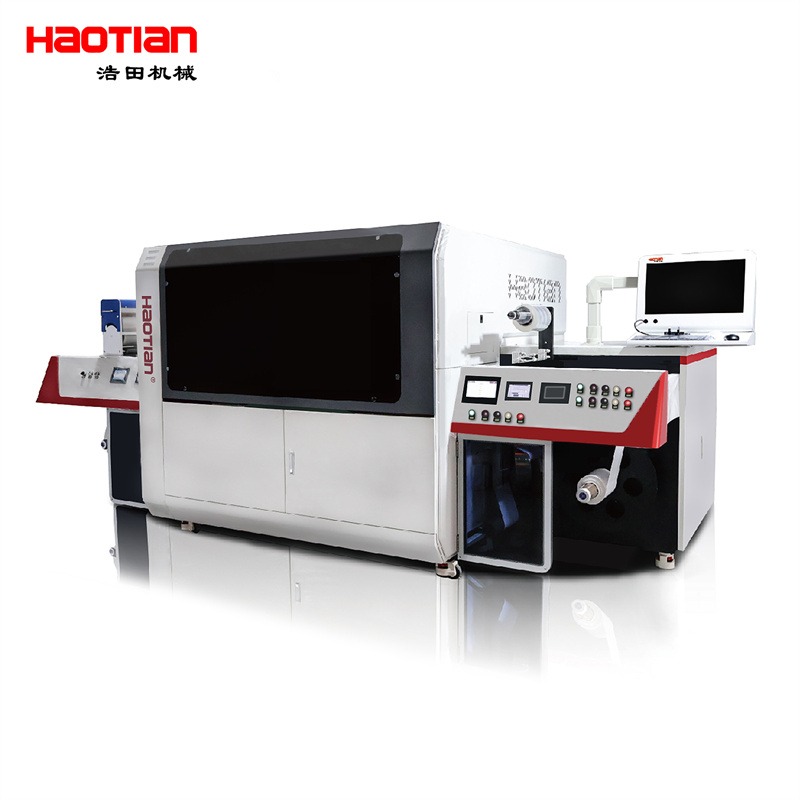
In today’s fast-moving print and packaging industries, choosing the right machine can make or break productivity and cost efficiency. The HGP-Digital UV Inkjet Printing Machine is designed for companies seeking high precision, broad substrate compatibility, and low downtime. From signage and custom packaging to industrial components, it supports a wide range of materials and workflows.
This article explores why the HGP system stands out, what features matter most, and how to assess whether it fits your production environment.
1. Market & Industry Context
The global UV inkjet printing market continues to expand rapidly — projected to grow from USD 54.85 billion in 2024 to USD 60.61 billion in 2025, reflecting an estimated CAGR of around 9.6%. The growth is driven by customization demands, eco-friendly printing needs, and the shift toward digital high-speed production.
Year
Market Size (USD bn)
2024
54.85
2025
60.61
2030
~86.05
These figures highlight strong momentum in UV inkjet technology. For equipment buyers, it signals that now is the time to invest — early adopters of systems like the HGP series can gain a clear competitive advantage in both cost efficiency and production flexibility.
2. Core Features of the Machine
Let’s explore three essential feature sets that make this printer a market leader — while naturally embedding high-value long-tail search keywords.
(1) Versatility: HGP-Digital UV Inkjet Printer for Multiple Substrates
Unlike traditional printers limited to one medium, the HGP model is engineered for both rigid and flexible materials. It prints directly on acrylic, metal, wood, plastic, and vinyl — all with outstanding color fidelity.
This makes it an excellent UV Printer for Signage and Packaging, ideal for manufacturers who need to switch quickly between large-format boards, corrugated boxes, or plastic sheets without tool changes.
(2) Productivity: High-Speed Performance for Volume Printing
Speed and accuracy define profitability in today’s market. The HGP-Digital UV Inkjet Printing Machine achieves production rates up to 50 m/min, depending on resolution and substrate type.
Its High-volume UV Inkjet for Fast Printing capability allows shorter lead times, instant ink curing, and reduced bottlenecks. Compared to conventional solvent systems, users typically see 30–40% faster turnaround with significantly lower drying time.
That efficiency translates to higher output with the same footprint — ideal for contract manufacturers or private-label printers.
Modern printing requires environmental responsibility. The HGP machine adopts UV-LED curing technology, dramatically cutting both VOC emissions and energy use.
As a Low Energy UV-LED Inkjet Printer, it consumes up to 50% less power than mercury-lamp systems while maintaining equal or better curing strength.
This means cleaner air, less heat stress on substrates, and reduced maintenance costs — a win for both operators and the planet.
3. Material Compatibility & Application Range
One of the strongest advantages of the HGP-Digital UV Inkjet Printer is its wide substrate compatibility.
Users can print directly on:
Glass, acrylic, aluminum composite, wood, and plastic
Flexible films, banners, or soft PVC
Industrial parts requiring direct marking or variable data
Substrate
Typical Application
Curing Performance
Acrylic / Metal Panels
Indoor signage & displays
Instant, no color bleed
Film / Vinyl Banners
Outdoor wraps
Flexible, UV-LED cure
Wood / MDF Panels
Furniture, décor panels
Low heat stress
Plastic (ABS, PETG)
Custom enclosures
Non-absorbent surfaces
This multi-material flexibility enables a single system to replace multiple dedicated printers — a key reason why so many users transition to the HGP platform.
4. ROI & Productivity Metrics
Evaluating return on investment is crucial before any equipment purchase.
Below are sample operational benchmarks observed in industrial use cases:
Parameter
Typical Value / Benefit
Print speed
Up to 50 m/min
Ink cost per m²
~20% lower vs solvent printing
Substrate changeover
Under 10 minutes
Energy savings
40–50% less than conventional UV systems
Maintenance downtime
Reduced by 30% through automated cleaning
When factoring in consumable savings, reduced downtime, and faster production cycles, many businesses achieve ROI in 24–36 months.
5. Setup & Operational Best Practices
To ensure consistent print quality and machine longevity, operators should consider:
Substrate flatness: Prevent nozzle misfires and registration drift.
Ink compatibility: Use only UV-LED-certified inks for adhesion and gloss control.
Ambient environment: Maintain stable humidity and airflow for optimal curing.
Maintenance routine: Regular head cleaning prevents clogging and improves color uniformity.
Workflow alignment: Integrate RIP software and material handling for continuous production.
Proper setup and training can improve throughput by 15–20% on average.
6. Why the HGP-Digital UV Inkjet Printing Machine Stands Out
While other UV printers compete on either speed or versatility, the HGP model combines both.
It provides:
True hybrid printing (rigid + flexible substrates) on one platform
High-precision color reproduction through intelligent RIP processing
Expandable architecture for white ink, varnish, or variable data options
Low maintenance and modular upgrades, ideal for small to mid-sized enterprises scaling up
Its balance of speed, sustainability, and scalability makes it a future-ready investment for companies expanding into custom digital printing.
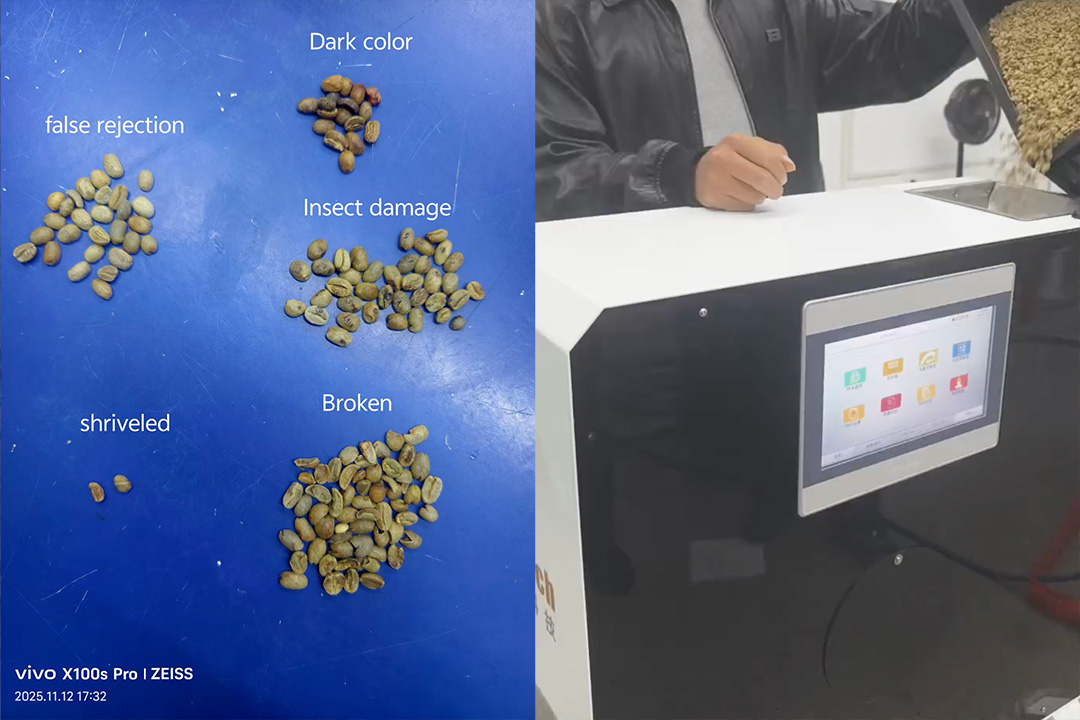
GroTech’s Micro-L Sorter (AI Version) brings professional color sorting technology to your desktop.
Engineered for green coffee quality control, it provides laboratory-grade accuracy in detecting and separating defective coffee beans, ensuring every batch meets premium standards.
Precision in Every Bean
Equipped with dual Toshiba CCD cameras and an Altera control chip, MicroSorter identifies color, shape, and surface defects with over 99% sorting accuracy.
From broken, insect-damaged, black, or sour beans to foreign materials like stones or husks — the MicroSorter ensures flawless separation for both Arabica and Robusta varieties.
Performance Highlights:
·Throughput: 20–40 kg/hour
Sorting Accuracy: >96%
Voltage: 110–250V / 50–60Hz
Power: 0.5 kW
Air Pressure: 0.4 MPa
Dimension: 903 × 434 × 951 mm
Weight: 78 kg
·
Smart AI Technology
Using deep learning algorithms, MicroSorter automatically adapts to different bean types and lighting conditions.
Its Wi-Fi remote control module allows real-time operation, calibration, and technical support — no matter where your roastery or lab is located.
Application Case: Coffee Bean Sorting
Designed specifically for small batch or lab analysis, MicroSorter helps roasters and quality inspectors:
Identify defects in raw green coffee beans
Evaluate supplier bean quality
Improve consistency in roasting and cupping
Its food-grade conveyor and stainless steel frame ensure durability and hygiene for continuous operation.
Sales & Support
GroTech offers direct sales worldwide with DDP delivery terms, ensuring door-to-door service and clear pricing.
We provide remote installation guidance, online training, and lifetime technical support for all machines.
When it comes to precision granite cutting, contractors and manufacturers rely heavily on high-performance diamond tools. Among them, the Arix diamond saw blade for granite has become a top choice for professionals looking for speed, durability, and cleaner cuts. At SANG Diamond Tools, we specialize in manufacturing premium-quality silent-core diamond blades that meet the demanding needs of granite processing. What is an Arix Diamond Saw Blade? The term Arix refers to a customized diamond segment technology that arranges industrial diamonds in a precise 3D matrix. Compared to traditional random diamond distribution, Arix technology ensures consistent cutting performance, longer blade life, and faster cutting speeds. These blades are especially effective for cutting hard stones like granite, where accuracy and segment longevity are critical.
Why Choose a Silent Core Blade? Noise pollution is a major concern in industrial and urban construction environments. Our silent Arix diamond saw blades are engineered with a sandwich steel core, incorporating a copper or resin layer between two steel sheets. This structure significantly reduces noise during operation — up to 15 dB quieter than standard blades — making them ideal for indoor use, CNC bridge saws, and environmentally sensitive job sites.
Key Advantages of SANG’s Arix Diamond Saw Blades for Granite. At SANG Diamond Tools, our granite saw blades with Arix segment technology are designed for both wet and dry cutting applications. Whether you are using a bridge saw, CNC machine, or handheld cutter, our blades deliver exceptional performance.
Here’s why professionals choose our blades: Precision-Cut Diamond Segments: Arix technology ensures an even distribution of diamonds throughout the segment for consistent performance. Silent Core Design: Reduces operation noise without compromising strength or stability. Extended Blade Life: Optimized bond and segment height (up to 15mm) for long-lasting use. Fast Cutting Speed: Reduces cutting time while maintaining clean, chip-free edges. Application Versatility: Suitable for granite, engineered stone, and other natural hard stones.
How We Compare with Leading Brands When compared with leading global brands, SANG’s Arix diamond saw blades for granite provide equal — if not superior — performance at a more competitive price point. We utilize premium-grade diamonds and rigorous quality control to ensure each blade meets international standards.
Available Specifications We offer a wide range of sizes to suit various cutting machines: Diameter: 300mm – 1200mm Segment Height: 10mm / 12mm / 15mm Arbor size: 60mm, 50/60mm, custom available Silent and Non-silent core options All of our blades are compatible with bridge saws, table saws, and manual cutting machines from leading manufacturers.
Common Applications Our silent Arix granite saw blades are used in: Granite countertop fabrication Monument and tombstone production Tile and slab cutting Architectural stonework Outdoor paving stone shaping
Custom Solutions Available At SANG Diamond Tools, we understand that every project is unique. That’s why we offer customized blades for specific granite types, machine models, and cutting environments. Whether you need a blade for high-speed production lines or precision artisan work, we can tailor the solution for you.
If you’re looking for a high-quality Arix diamond saw blade for granite cutting, SANG Diamond Tools offers a reliable, professional-grade solution. With our advanced diamond segment engineering, silent-core technology, and custom manufacturing capabilities, we are trusted by granite fabricators and stone processing professionals worldwide.
Contact Us Today to learn more about our Arix granite blade options or to request a custom quote.
If you would like to learn more about this product, you can click this link to watch a product usage video:
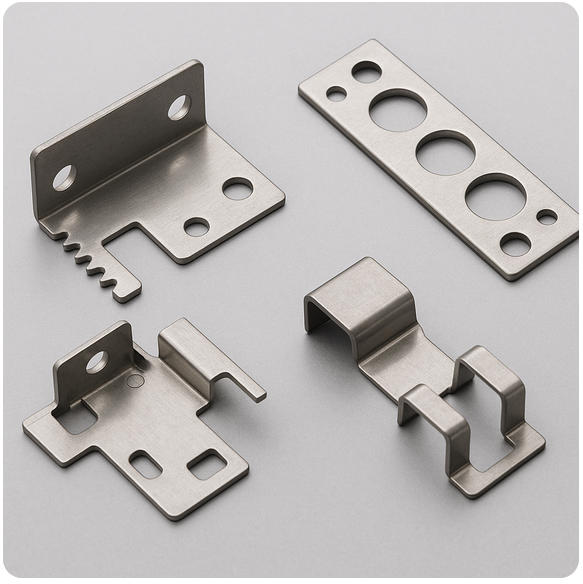
Backed by decades of engineering experience, Jiaxin (Xiamen) Precise Metal Co., Ltd. specializes in precision metal stamping solutions tailored for demanding OEM and ODM applications.
In today’s highly competitive manufacturing environment, industries such as automotive, lighting, and household appliances require components that deliver consistency, reliability, and cost-efficiency at scale. Among all metal fabrication processes, custom metal stamping parts remains one of the most mature, stable, and economically advantageous technologies for producing high-volume precision metal parts.
This article provides an in-depth analysis of the advantages of custom metal stamping and why it is the preferred process across these major industries.
Understanding Custom Metal Stamping from an Engineering Perspective
Metal stamping is a process that transforms sheet metal into complex shapes using precision tooling and high-tonnage stamping presses. What differentiates high-quality stamping from general forming is:
1. Tooling Accuracy
High-precision dies (often 0.005–0.02mm tolerance control) determine part quality, cycle stability, and production cost.
2. Material-Forming Behavior
Engineers must evaluate:
Yield strength
Elongation
Springback behavior
Grain direction
Surface finish requirements
These parameters determine whether a part can be punched, drawn, or formed without cracking or deformation.
3. Progressive vs. Single-Process Stamping
Progressive dies integrate multiple forming operations into a single continuous process, ideal for high-volume automotive connectors, terminals, and brackets.
Single- or compound dies are suitable for large, thick, or structural components.
4. Tolerance & Dimensional Stability
Stamped parts often meet stricter tolerances than cast or welded parts due to the mechanical repeatability of stamping tools.
Why Custom Metal Stamping Is Essential for Automotive, Lighting & Appliance Industries
The engineering and economic benefits of stamping for major manufacturing sectors.
1. Automotive Industry, Meeting Safety and High-Reliability Standards
Automotive components face extreme mechanical stress, temperature fluctuations, and safety requirements. Custom stamping offers:
High Structural Integrity
Stamped components preserve material grain structure, resulting in stronger parts than cast or injection-molded alternatives.
Tight Tolerance Control for Assemblies
Automotive systems (chassis, braking, electronics) require parts that fit precisely with zero deviation.
Stamped parts can maintain tolerances as low as ±0.02 mm.
Excellent Reproducibility for High-Volume Production
Stamping provides:
Stable cycle time
Minimal dimensional drift
Long die lifespan
This is critical for Tier 1 and Tier 2 automotive suppliers.
Typical automotive stamping applications:
Sensor housings and terminals
Seat structure fittings
Brackets and reinforcement plates
ABS/EPS system connectors
Battery and EV hardware parts
Automotive-grade projects often require PPAP, control plans, and rigorous inspection — capabilities provided by experienced suppliers like Jiaxin.
2. Lighting Industry: High Precision and Thermal Management
Lighting systems rely heavily on stamped components for both structural and thermal functions.
Engineering benefits include:
High thermal conductivity for heat dissipation (especially aluminum reflectors or LED housings)
Lightweight structure for improved installation and energy efficiency
Surface uniformity required for optical performance
Excellent corrosion resistance for outdoor lighting fixtures
Common lighting components include:
Reflectors
Lamp bases and holders
Brackets for mounting systems
Aluminum housings for LED fixtures
Stamping ensures consistent geometry which is essential for light distribution and assembly alignment.
3. Household Appliances: Consistency, Safety, and Mass Production Efficiency
Appliance manufacturers require millions of consistent components annually. Custom metal stamping delivers:
Electrical Safety and Conductivity
Copper and brass stamped terminals provide reliable performance for motors, heating cores, switches, and control units.
Structural Stability for Long Lifespan Stamped steel components offer rigidity for:
Washing machine frames
Refrigerator brackets
Oven panel supports
Precision for Mechanical Movement
Hinges, spring plates, and locking mechanisms rely on tight tolerances to function correctly over years of usage.
Typical appliance stamping parts:
Motor brackets
Mounting plates and hinges
Shield covers
Terminal connectors
Electrical housing components
Mass-production appliances rely heavily on stamping due to speed, consistency, and low per-unit cost.
Technical Advantages of Custom Metal Stamping
To better illustrate why stamping is favored over machining, casting, or welding, here are the core performance benefits:
1. Superior Dimensional Stability
Stamping dies are fixed tools — once optimized, every part produced maintains the same precision.
2. Material Utilization Rate Up to 80–95%
Progressive stamping minimizes scrap, significantly reducing cost, especially in copper and stainless steel.
3. High-Speed Production (Up to 800 Strokes/Minute)
Ideal for large-scale production of connectors, electrical contacts, and small structural parts.
4. Compatibility With Automation
Stamped parts can be integrated directly into automated assembly lines, improving factory efficiency.
5. Excellent Surface Quality
Stamping produces clean edges and smooth surfaces suitable for polishing, plating, anodizing, and painting.
6. Long Tooling Life Cycle
Premium tool steels (SKD11, DC53, carbide) allow tools to produce hundreds of thousands to millions of parts without significant wear.
Why Work with Jiaxin (Xiamen) Precise Metal Co., Ltd.?
As a company with extensive experience in metal stamping engineering, Jiaxin provides capabilities that ensure project success from concept to production.
1. In-House Tooling Development
Faster lead time (typically 15–25 days for new tooling)
Better control of precision and cost
Full DFM (Design for Manufacturability) support for customers
2. Advanced Production Equipment
Including high-speed presses, precision progressive dies, and CNC secondary processing equipment.
3. Robust Quality Control System
Incoming inspection
First Article Inspection (FAI)
SPC and real-time dimensional monitoring
Full traceability of material batches
4. Multi-Industry Engineering Experience
Having served automotive, lighting, appliance, and industrial electronics sectors, Jiaxin understands varying industry standards and compliance requirements.
5. Flexible & Scalable Manufacturing
From initial prototyping to mass production, Jiaxin supports projects of all scales with consistent quality and on-time delivery.
With advanced engineering capability, comprehensive tooling development, strict quality control, and proven industry experience, Jiaxin (Xiamen) Precise Metal Co.,Ltd. is well-positioned to deliver reliable, cost-effective metal stamping solutions for global OEM and ODM customers. Welcome to visit us, Contact today.
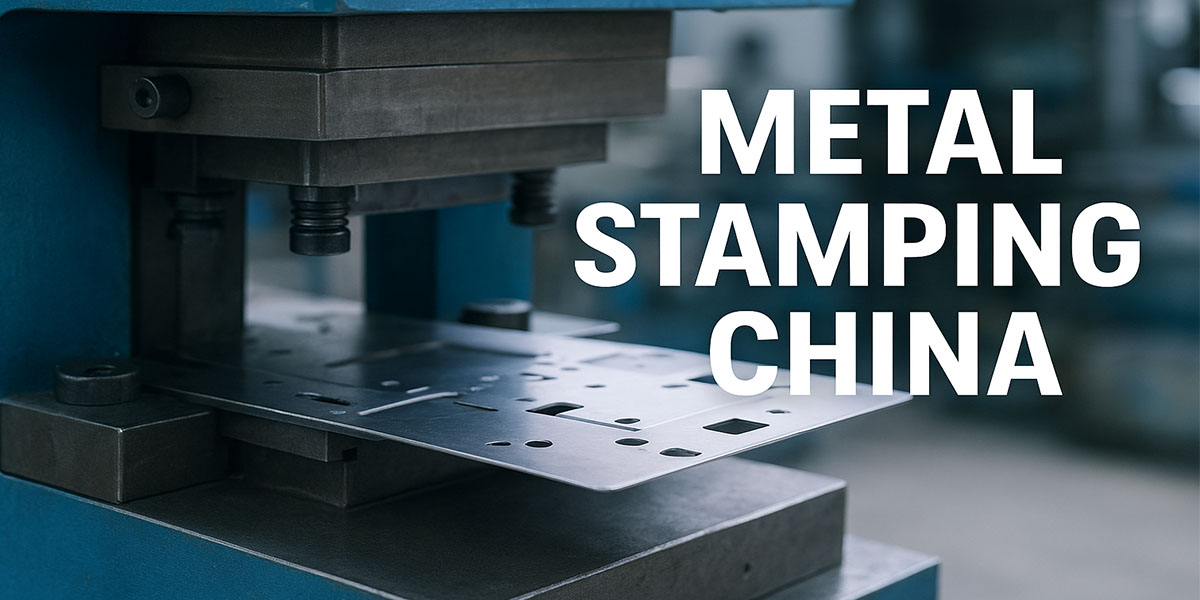
Metal stamping remains a key process for producing high-quality components with efficiency, consistency, and cost-effectiveness in today’s fast-moving manufacturing world. From automotive and electronics to industrial relays and connectors, custom stamping parts play a vital role in ensuring reliable product performance. When it comes to sourcing, many global buyers turn to metal stamping in China and for good reason.
1. Over the past two decades, The Rise of Metal Stamping in China
With advanced tooling technology, precision equipment, and experienced engineers, Chinese factories are now capable of producing complex stamped parts that meet international standards such as ISO, UL, and IATF.
For buyers in need of precision stamping metal part, choosing a metal stamping manufacturer in China ensures a perfect balance of quality, flexibility, and cost-efficiency. The combination of local material supply chains and advanced production lines allows manufacturers to respond quickly to project demands from prototyping to mass production.
2. What Makes Precision Stamping Metal Part Different
Precision Stamping Metal Part refer to components that require extremely tight tolerances and consistent dimensional accuracy. These stamping parts are often used in applications where stability and performance are critical, such as relay components, electronic terminals, or sensor housings.
At JX Precise, for example, precision stamping is supported by progressive die tooling, high-speed presses, and automated inspection systems. These technologies ensure consistent quality, smooth edges, and zero-defect delivery, helping clients reduce assembly time and improve end-product reliability.
3. How to Identify a Reliable Metal Stamping Manufacturer
Selecting the right metal stamping manufacturer can be the difference between a successful partnership and production delays. When evaluating suppliers, consider the following factors:
Engineering Capability: Can the factory provide tooling design, material selection, and tolerance analysis?
Quality Control System: Does the company hold certifications such as ISO 9001 or IATF 16949 for automotive-grade production?
Production Flexibility: Is there support for both small-batch customization and high-volume stamping runs?
Material Expertise: Experienced suppliers can work with a wide range of metals from stainless steel and copper to brass and aluminum.
Chinese manufacturers like JX Precise integrate all these elements, offering one-stop metal stamping solutions that combine tooling, fabrication, and post-processing services such as plating, tapping, and assembly.
4. Why Global Buyers Choose Metal Stamping Suppliers from China
Working with metal stamping suppliers in China offers a strong competitive advantage in the global market. The main reasons include:
Cost Efficiency: Lower production and tooling costs without compromising quality.
Technical Expertise: Continuous investment in automation, high-speed presses, and precision dies.
Supply Chain Integration: Seamless coordination between material sourcing, production, and logistics.
Customization Capability: Tailored solutions to meet the specific needs of various industries.
Moreover, Chinese suppliers are increasingly focused on sustainability and lean manufacturing, reducing waste and optimizing material usage an important factor for global clients pursuing green manufacturing goals.
5. Your Trusted Metal Stamping Partner in China:JX Precise
As a professional metal stamping manufacturer in China, JX Precise specializes in producing precision metal stampings for relay parts, connectors, brackets, and custom components. With decades of experience, advanced production lines, and a strict quality control process, we help clients worldwide achieve performance excellence.
Our in-house engineering team supports custom tool development, and our automated production lines ensure consistent quality across every batch. Whether you are an OEM, a component supplier, or a product designer, JX Precise delivers precision, reliability, and service that exceeds expectations.
If you need stamping products and service, please contact us immediately.
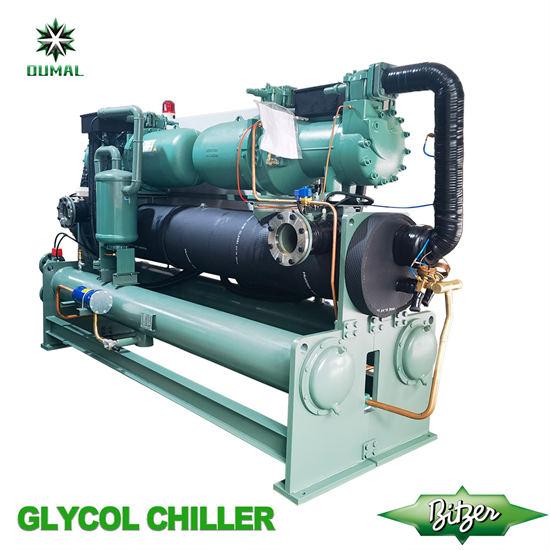
2025 Guide to Water Cooled Screw Chiller vs Air Cooled Chiller for Industry
If you want the most efficient cooling for large-scale industrial operations in 2025, you should consider a Water Cooled Screw Chiller. This chiller type remains the preferred choice for high thermal output needs, holding 59.5% market share in 2024. You need to weigh key factors such as cost, energy efficiency, installation space, maintenance, environmental impact, water use, noise, and suitability for your industry and location.
Factor
Water-Cooled Chillers
Air-Cooled Chillers
Cooling Capacity
More suitable for larger cooling needs
Better for smaller to medium applications
Installation Space
Requires indoor placement with cooling towers
Can be installed outdoors, saving indoor space
Quick Comparison
Water Cooled Screw Chiller vs Air-Cooled Chiller
Choosing the right chiller for your facility depends on several important factors. You want to compare water cooled screw chillers and air-cooled chillers side by side to see which fits your needs best. Below, you will find a summary table that highlights the main differences. This table helps you quickly scan the features that matter most for industrial cooling in 2025.
Factor
Water Cooled Screw Chiller
Air-Cooled Chiller
Initial Cost
Higher due to cooling tower and piping
Lower, simple installation
Energy Efficiency
High, especially in large-scale operations
Moderate, best for small to medium setups
Installation
Needs indoor space and water supply
Outdoor installation, saves indoor space
Maintenance
Regular water treatment and tower upkeep
Simpler, less frequent maintenance
Environmental Impact
Uses water, but supports eco-friendly refrigerants
No water use, may have higher energy demand
Water Use
Requires reliable water source
No water needed
Noise
Operates quietly indoors
Fans can create more noise outdoors
Lifespan
Long, with proper maintenance
Moderate, depends on environment
Suitability
Best for large, high-temperature industries
Ideal for smaller, space-limited sites
You should also consider operational characteristics. Water cooled screw chillers perform well in high-temperature environments and offer precise cooling. Air-cooled chillers work best where water is scarce or installation space is limited. Your final choice depends on your cooling capacity requirements and the environmental conditions at your site.
How They Work
Water Cooled Screw Chiller Operation
You will find that a water cooled screw chiller uses water as the main medium to remove heat from your process. The system pumps water through a sealed condenser, where it absorbs heat from the refrigerant. This heated water then travels to a cooling tower, where it releases the heat into the atmosphere. The cooled water returns to the chiller, and the cycle repeats.
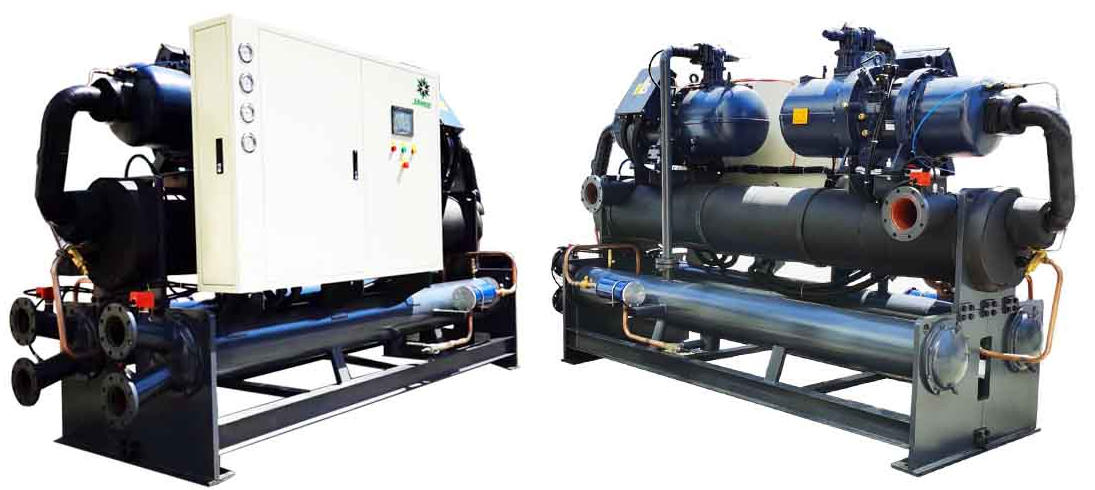
Modern water cooled screw chillers often include advanced features that enhance performance and efficiency. For example, a double compressor system allows the chiller to handle larger loads with greater stability. You can benefit from a PLC control system, which provides smart monitoring and easy adjustments through a touchscreen interface. These controls let you track system diagnostics, log historical data, and even access the chiller remotely. Many models use eco-friendly refrigerants, which help reduce environmental impact while maintaining high efficiency.
Air-Cooled Chiller Operation
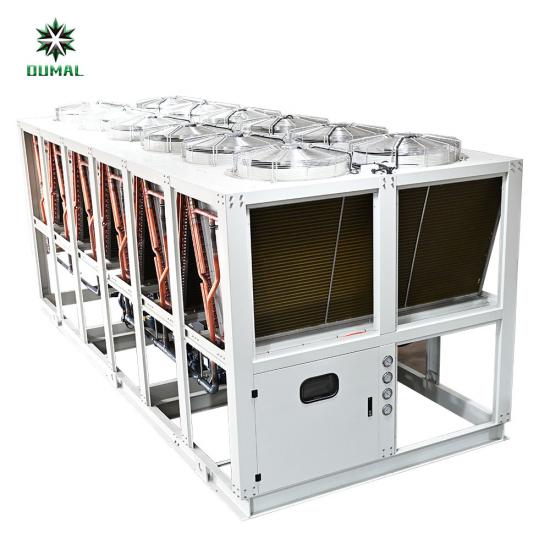
An air-cooled chiller works differently. Instead of using water, it relies on fans to blow air across exposed condenser tubes. The refrigerant inside these tubes releases heat, which the moving air carries away. This process makes air-cooled chillers easier to install, since you do not need a cooling tower or extra piping.
You can place an air-cooled chiller outdoors, such as on a rooftop or beside your facility. This setup saves indoor space and reduces installation complexity. However, air is less effective than water at absorbing heat, so air-cooled chillers may not match the efficiency or performance of water cooled screw chillers for large industrial loads.
Feature
Water-Cooled Chillers
Air-Cooled Chillers
Efficiency
More efficient for large loads due to water's heat capacity
Less efficient, relies on air which is less effective
Space Requirements
Requires mechanical rooms and cooling towers
Requires less space, can be placed on rooftops
Maintenance Needs
Higher maintenance due to more equipment
Lower maintenance due to simpler design
Service Life
Generally longer due to indoor placement
Shorter due to exposure to environmental elements
Water Cooled Screw Chiller Pros and Cons
Advantages
You gain several benefits when you choose a water cooled screw chiller for your industrial facility.
You achieve high energy efficiency, especially in large-scale operations. Many water cooled screw chillers reach COP values up to 4.98 and IPLV ratings as high as 6.67.
You control temperature with precision. Stepless capacity modulation lets you adjust cooling from 0 to 100%, so you match your process needs exactly.
You enjoy advanced safety features. Modern water cooled screw chillers include multiple protection devices, such as over-temperature and pressure safeguards.
You benefit from reliable performance in demanding environments. These chillers handle capacity ranges from 50 to over 1,000 tons, making them ideal for industries like plastic manufacturing and concrete mixing.
You extend the lifespan of your equipment. Indoor placement shields the chiller from weather, which helps maintain efficiency and reduces long-term costs.
Disadvantages
You should consider some challenges before installing a water cooled chiller.
You face installation complexity. Proper planning and execution are crucial for setting up a water-cooled chiller. You need to follow a step-by-step guide to ensure efficient operation and system longevity.
You must manage water requirements. Untreated water can cause higher condenser pressures and lower heat transfer efficiency. You need chemical treatments to keep the system running smoothly.
You take on regular chiller maintenance tasks. Tube cleaning is essential for optimal heat transfer. You also need to analyze and change compressor oil. Maintaining flow rates between 3 to 12 feet per second helps prevent operational issues.
You invest more upfront. The initial cost is higher due to the need for cooling towers and extra piping, but you may save on operating costs over time.
Water-cooled chillers suit large facilities with reliable water sources and skilled maintenance teams. If you want top chiller efficiency and precise control, this type of chiller meets your needs.
Air-Cooled Chiller Pros and Cons
Advantages
You will find that air-cooled chillers offer several practical benefits for industrial settings. These systems stand out for their straightforward installation process. You do not need to set up cooling towers or complex plumbing, which helps you save both time and money. Many facilities choose air-cooled chillers because they can be placed outdoors, freeing up valuable indoor space for other equipment or operations.
Maintenance tasks are also simpler. You avoid the need for water treatment systems and the frequent upkeep required by cooling towers. This means you spend less time and resources on regular maintenance.
Here is a quick overview of the most commonly cited advantages:
Advantage
Description
Lower Installation Costs
No need for cooling towers or extra plumbing, making installation more affordable.
Simplified Maintenance
Fewer components mean easier and less frequent maintenance.
Smaller Footprint Indoors
Outdoor installation frees up indoor space for other uses.
No Water Consumption
Perfect for areas with water restrictions or high water costs.
Disadvantages
You should also consider some limitations before choosing an air cooled chiller. These systems often have lower energy efficiency compared to water-cooled models, especially when you need to cool large industrial loads. Air, as a cooling medium, cannot absorb as much heat as water, so the system may use more electricity to achieve the same cooling effect.
Noise can be another concern. Air-cooled chillers use large fans to move air across the condenser coils. These fans can generate noticeable noise, especially when the chiller operates at full capacity. If your facility is located near offices or residential areas, you may need to plan for noise reduction measures.
Key Comparison Factors
Cost
You need to consider both initial and ongoing costs when choosing a chiller. Water cooled screw chillers usually require a higher upfront investment. You pay for the chiller itself, a cooling tower, and extra piping. Installation takes longer because you must set up a continual water source and allocate space for additional equipment. Air-cooled chillers cost less to install. You can place them outdoors and avoid the expense of a cooling tower. Over time, water cooled screw chillers may save you money through lower energy bills, especially in large facilities. Air-cooled chillers often have higher operating costs in hot climates due to lower efficiency.
Energy Efficiency
You want your chiller to deliver strong performance while using less energy. Water cooled screw chillers excel in energy efficiency. Water absorbs heat better than air, so these chillers use less electricity to cool large loads. Advanced models feature eco-friendly refrigerants and PLC controls that optimize operation. Air-cooled chillers work well for small to medium applications but may consume more energy in high-temperature environments. If you run a large industrial process, you benefit from the superior efficiency of water cooled screw chillers.
Installation
You must plan for installation requirements before making a decision. Water cooled screw chillers need indoor space and a reliable water supply. You also install a cooling tower, which adds complexity and time to the project. Air-cooled chillers are stand-alone units. You can install them quickly outdoors, saving valuable indoor space. If you want a faster setup, air-cooled chillers offer a clear advantage.
Maintenance
You should prepare for regular maintenance to keep your chiller running smoothly. Water cooled screw chillers require more attention. You need to treat water to prevent corrosion and clogs. You also clean tubes and monitor water quality. Air-cooled chillers have fewer components, so maintenance is simpler. You mainly check refrigerant levels and clean condenser coils.
Issue
Description
Solutions
Low Refrigerant Levels
Ice may form if refrigerant levels drop too low.
Regularly check and top up refrigerant levels.
Water Flow Issues
Inadequate water flow can lead to ice buildup.
Ensure proper maintenance and check for blockages.
Malfunctioning Sensors
Faulty temperature sensors can prevent proper operation.
Replace faulty sensors to avoid ice buildup.
Water Quality Issues
Hard water and contaminants can damage components and reduce efficiency.
Implement a water treatment system and regularly monitor water quality.
Improper Operation
Operating outside recommended parameters can cause wear and failure.
Avoid overloading and ensure settings align with manufacturer recommendations.
Power Fluctuations
Voltage spikes can harm electrical components.
Use voltage regulators and conduct regular inspections of electrical systems.
Corrosion can lead to leaks and damage if you do not treat water properly.
Poor maintenance may result in clogs and reduced efficiency.
Lifespan
You want your chiller to last as long as possible. Water cooled screw chillers often have a longer lifespan. Indoor placement protects them from weather and temperature swings. You extend their life with regular maintenance and water treatment. Air-cooled chillers sit outdoors, so they face rain, dust, and heat. These conditions can shorten their service life. If you prioritize durability, water cooled screw chillers offer better long-term value.
Environmental Impact
You need to think about how your choice affects the environment. Water cooled screw chillers use water, but many modern models run on eco-friendly refrigerants. Advanced controls help reduce energy use and emissions. Air-cooled chillers do not consume water, which makes them suitable for regions with water scarcity. However, they may use more electricity, especially in hot climates, which can increase your carbon footprint.
Water Use
You must evaluate water consumption before selecting a chiller. Water cooled screw chillers require a steady supply of water. Usage varies by city and climate. For example, annual water consumption per ton ranges from 1.1 kGal in Minneapolis to 4.1 kGal in Phoenix.
Air-cooled chillers do not use water, making them ideal for facilities in water-restricted areas.
Noise
You should consider noise levels, especially if your facility is near offices or residential zones. Water cooled screw chillers operate quietly indoors, with noise levels between 55 and 65 decibels. This is similar to a conversation or background music. Air-cooled chillers produce more noise, ranging from 70 to 80 decibels, which you can compare to a vacuum cleaner or a busy street.
Chiller Type
Noise Level (dB)
Description
Air-Cooled Chillers
70 to 80
Comparable to a vacuum cleaner or busy street
Water-Cooled Chillers
55 to 65
Similar to a conversation or background music
Suitability by Industry
Large-Scale Manufacturing
You should choose a water cooled screw chiller for large-scale manufacturing. Industries such as plastics, chemicals, and concrete production rely on these chillers for their broad capacity coverage and reliable load-following performance. Market reports show screw chillers hold a 38.3% share in these sectors, with centrifugal chillers gaining momentum due to efficiency and reduced maintenance needs.
Chiller Type
Market Share
Key Features
Screw Chillers
38.3%
Broad capacity, reliable operation
Centrifugal Chillers
Gaining
High efficiency, low maintenance
Screw chillers offer cost-effectiveness and low maintenance.
You see them most often in plastics, chemicals, and pharmaceuticals.
Medium & Small Facilities
For medium and small facilities, you need to focus on operational efficiency and cost-effectiveness. Chillers with capacities between 50 and 200 tons fit these operations well. You should consider the layout and available space in your facility, as well as the need for precise temperature control.
You benefit from chillers that maintain precise temperature and offer easy installation.
Water-Restricted Locations
If your facility is in a water-restricted area, you should select an air-cooled chiller. These chillers do not require a water supply or cooling tower, making them ideal for remote sites or regions with limited water resources.
When to Use Air-Cooled Chillers
Why It Makes Sense
Remote or water-scarce locations
No need for water supply or cooling towers
Projects needing fast deployment
Easier to install, no water piping required
Tight budgets
Lower initial investment
Urban environments with space limits
Rooftop-ready, compact size
Air-cooled chillers help you avoid water costs and simplify installation.
High Temperature Areas
In high temperature industrial areas, you should rely on water cooled screw chillers. Water has higher thermal conductivity than air, so these chillers deliver greater cooling efficiency and stable performance. You also experience quieter operation because they do not depend on large fans.
Feature
Water-Cooled Chillers
Air-Cooled Chillers
Cooling Efficiency
Greater
Less efficient in hot climates
Noise Level
Quieter
Noisier due to fan operation
Performance in Hot Climates
Consistent and stable
Struggles with efficiency
Urban vs Remote Sites
You need to consider site conditions when choosing a chiller. In urban environments with limited space, air-cooled chillers fit well on rooftops and offer a compact footprint. For remote sites or projects needing fast deployment, air-cooled chillers provide easy installation and lower initial costs. Water-cooled chillers consistently outperform air-cooled systems in environments demanding high efficiency and stable operation, such as large-scale manufacturing or a data center.
Choose air-cooled chillers for space-limited urban sites or remote locations.
Select water-cooled chillers for high-capacity, efficiency-driven projects.
2025 Trends for Water-Cooled Chillers
Energy-Saving Tech
You will see major advances in energy-saving technology for water cooled screw chillers in 2025. Manufacturers now use variable speed drives and compressors, which let your chiller adjust its output based on cooling demand. This feature helps you achieve greater energy efficiency and higher efficiency during peak and off-peak hours. Advanced heat exchanger designs improve heat transfer, so your water cooled chiller uses less energy. Many systems now include closed-loop cooling and hybrid cooling, which combine wet and dry methods to reduce water use. You can also benefit from free cooling and heat recovery, which capture waste heat for other applications.
Feature
Description
Variable Speed Drives
Adjust operation for optimal energy use
Advanced Heat Exchangers
Boost heat transfer, lower energy needs
Hybrid Cooling
Mixes wet and dry cooling to save water
Free Cooling
Uses ambient air to reduce compressor energy
Heat Recovery
Captures waste heat for heating
Smart Controls
You can now control your water-cooled chiller with smart technology. PLC controllers and microprocessor systems monitor every function and keep your chiller running smoothly. Touch screen interfaces make operation simple and give you detailed alarm information for troubleshooting. Intelligent control systems allow remote monitoring, so you can track performance from anywhere. Automation features help you maintain precise temperature control, which is vital for data center cooling and other sensitive environments.
Feature
Description
PLC Controller
Delivers temperature accuracy within ±0.5 degrees
Touch Screen Interface
Offers intuitive operation and alarm details
Remote Monitoring
Enables real-time performance tracking
Predictive Maintenance
Uses AI to prevent failures and optimize efficiency
Eco-Friendly Refrigerants
You will notice a strong shift toward eco-friendly refrigerants in water-cooled chillers. Companies now use refrigerants with lower global warming potential to meet new regulations and sustainability goals. These refrigerants support green building standards and help you lower your carbon footprint. Manufacturers also focus on sustainable materials and processes, so your chiller meets environmental requirements. The rise of adaptable, cost-effective cooling solutions means you can choose a water cooled screw chiller that fits your needs and supports environmental responsibility.
You must stay informed about new regulations affecting water-cooled chillers. In 2025, stricter standards require you to use chillers that meet ASHRAE and LEED guidelines. These rules encourage the use of eco-friendly refrigerants and energy-saving technologies. You need to ensure your chiller complies with local and international standards to avoid penalties and support sustainability. Manufacturers now design chillers with advanced safety protections, including over-temperature and pressure safeguards, to meet these requirements.
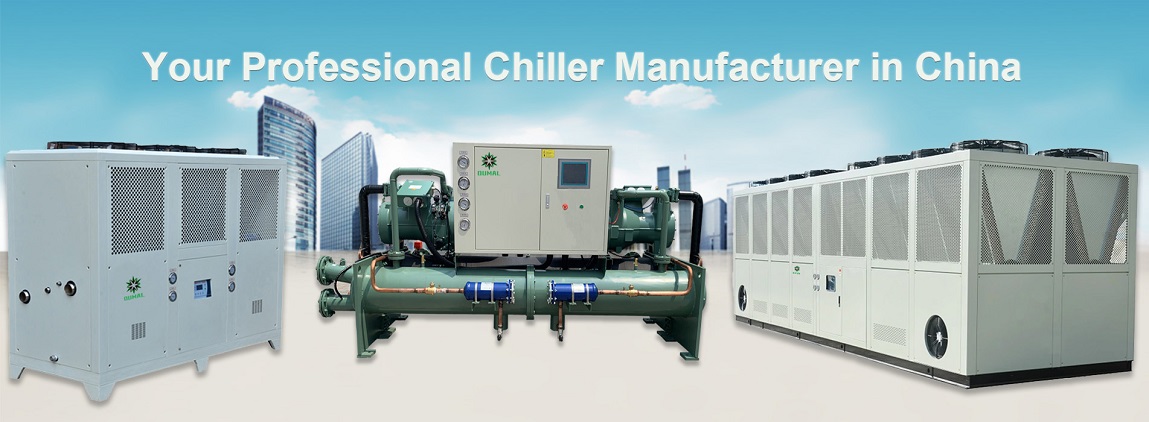
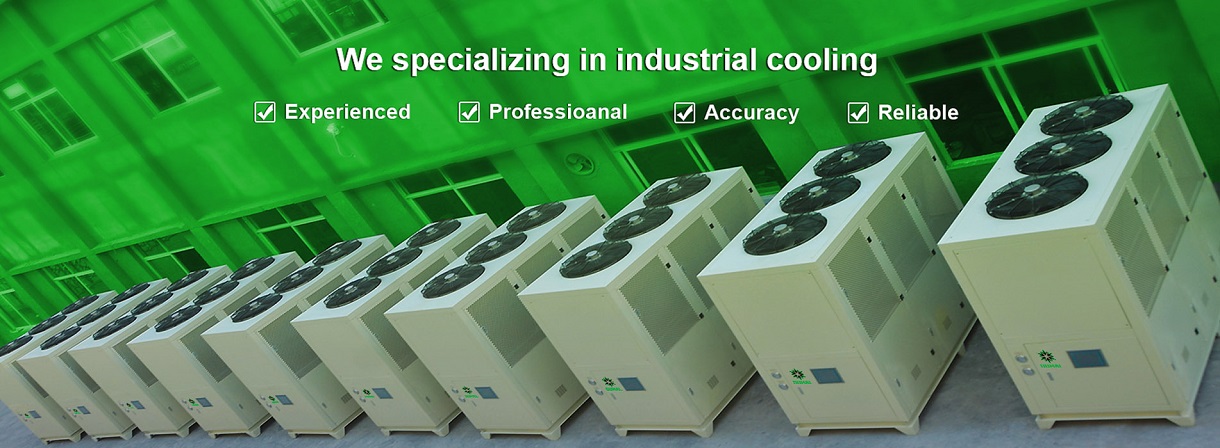
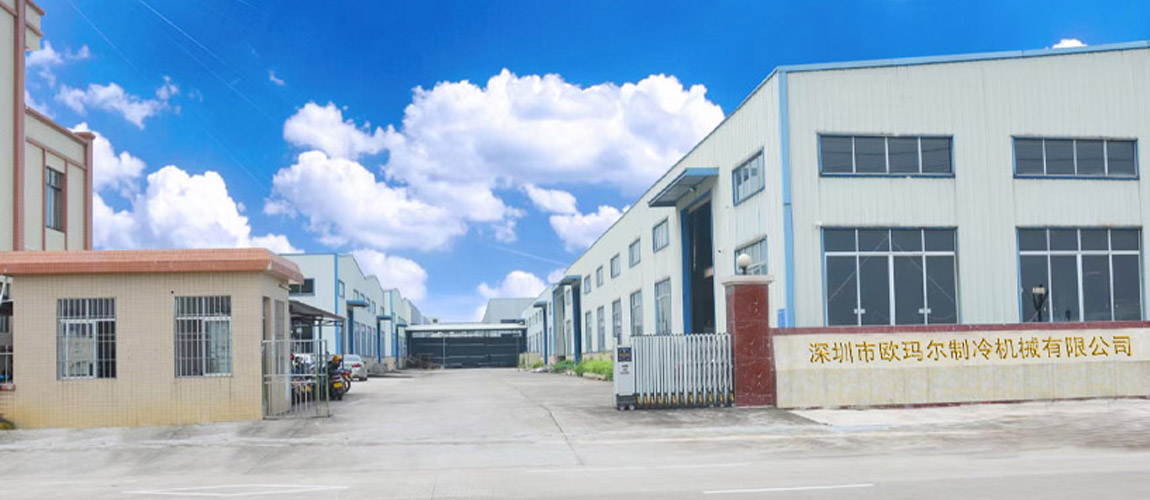
OUMAL Chiller is a cooling tower and chiller system manufacturer integrating R&D,manufacturing and customization.Provide professional solutions.15+ years of work experience!
Choosing the right chiller for your building depends on size, weather, and money. Small or medium buildings often use an air cooled chiller. Big buildings with lots of cooling needs may need a water cooled chiller. Look at this quick chart to help you choose:
Feature
Air Cooled Chiller
Water Cooled Chiller
Initial Cost
Lower
Higher
Efficiency
Moderate
High
Maintenance
Simple
More Complex
Picking the right chiller helps save energy and money.
Air-cooled chillers are good for small or medium buildings. They cost less at first and are easy to take care of.
Water-cooled chillers use less energy and last longer. They are best for big buildings or factories.
Think about your building’s size and the weather before you choose a chiller. Air-cooled chillers are great in places with mild weather. Water-cooled chillers work better in hot or wet places.
Look at your budget closely. Air-cooled chillers help you save money at the start. Water-cooled chillers can help you spend less on energy over time.
Always check if you have enough space and water. Air-cooled chillers need less space and water. Water-cooled chillers need more equipment and a steady water supply.
Quick Comparison Key Differences
It is important to know how air-cooled chillers and water-cooled chillers are not the same. The table below makes it easy to see the differences:
Factor
Air-Cooled Chiller
Water-Cooled Chiller
Initial Cost
Lower
Higher
Operating Cost
Moderate
Lower
Energy Efficiency
Good, but less than water-cooled
Very high
Lifespan
15–20 years
20–30 years
Maintenance
Easier, less frequent
Needs more care and checks
Climate Suitability
Works well in most climates
Best in hot or humid places
Space Needed
Less, can go outdoors
More, needs indoor space
Application Scale
Small to medium buildings
Large buildings or factories
Tip: If your building is small and you want easy care, an air-cooled chiller could be a good pick. If your building is big and you want the best energy savings, water-cooled chillers are often better.
Choose an air-cooled chiller if:
Your building is small or medium.
You want to spend less at first.
You need simple setup and easy care.
You do not have room for cooling towers.
You want a 400 kw air cooled chiller for normal cooling.
Choose a water cooled chiller if:
You run a big building or a factory.
You want the best energy savings.
You have room for more equipment like cooling towers.
You want to use it for many years and can do more care.
Always pick the chiller that fits your building size, money, and weather. Chillers work best when you choose the right one for your needs.
Air Cooled Chiller
You use an air cooled chiller when you want to cool your building without needing extra water systems. This type of chiller pulls heat from the building and releases it into the air outside. Fans blow air over coils filled with refrigerant. The refrigerant absorbs heat from the water inside the chiller. The fans then push the heat away from the coils. You often see air cooled chillers on rooftops or outside buildings. You do not need a cooling tower or extra plumbing. You can choose a400 kw air cooled chillerfor medium-sized buildings. You get simple installation and easy maintenance.
How it works:
The chiller takes warm water from your building.
The refrigerant inside the coils absorbs the heat.
Fans blow air over the coils and move the heat outside.
The cooled water goes back into your building.
Tip: Air-cooled chiller systems work well in places with limited water or space.
Water Cooled Chiller
You use a water cooled chiller when you need high efficiency and have space for more equipment. This type of chiller uses water to remove heat from the building. The chiller sends heat from the refrigerant to water in a separate loop. The water then moves to a cooling tower, where it releases the heat into the air. You often find water cooled chillers in large buildings or factories. You need a cooling tower, pumps, and extra piping.
How it works:
The chiller collects warm water from your building.
The refrigerant absorbs the heat and transfers it to the water loop.
The water carries the heat to the cooling tower.
The cooling tower releases the heat into the air.
The cooled water returns to your building.
Note: Water cooled chillers last longer and save more energy, but you need more space and regular maintenance.
Advantages
When you choose an air-cooled chiller, you get several benefits that make it a popular choice for many buildings.
You can install an air-cooled chiller outside, which saves indoor space.
The system does not need a cooling tower or extra water piping. This makes setup easier and faster.
Maintenance stays simple. You do not have to check water quality or deal with water treatment.
The initial cost is lower than other types of chillers. You spend less money at the start.
You can use a 400 kw air cooled chiller for medium-sized buildings. This size gives you enough cooling power without taking up too much room.
Air-cooled chillers work well in places where water is hard to get or expensive.
You can use these chillers in many climates. They handle both hot and mild weather.
Tip: If you want a system that is easy to manage and does not need much water, an air-cooled chiller could be the right fit.
Disadvantages
You should also know the limits of air-cooled chillers before you decide.
Air-cooled chillers use fans to move heat. These fans can make more noise than water-cooled systems.
The energy efficiency is lower. You may pay more for electricity over time, especially in very hot weather.
The lifespan is usually shorter. Most air-cooled chillers last about 15 to 20 years.
You cannot use them for very large buildings or factories. They work best for small to medium spaces.
Outdoor installation means the system faces weather, dust, and debris. This can lead to more wear and tear.
If you need very high cooling capacity, like in a large factory, an air-cooled chiller may not meet your needs.
Note: Always match the chiller type to your building size and cooling needs. This helps you avoid problems and extra costs later.
Water Cooled Chiller Pros and Cons
You get many benefits when you choose a water cooled chiller for your facility. These chillers work well in large buildings and places that need a lot of cooling. Here are some key advantages:
You enjoy high energy efficiency. Water-cooled chillers use water to remove heat, so they cool your building faster and use less electricity.
You get a longer lifespan. Most water cooled chiller systems last 20 to 30 years with good care.
You can use them in hot or humid climates. These chillers keep working well even when the weather gets very warm.
You save money over time. Even though the first cost is higher, you pay less for energy each month.
You can cool large spaces. Water-cooled chillers handle big loads, so they fit factories, hospitals, and office towers.
Note: If you need more cooling than a 400 kw air cooled chiller can provide, a water cooled chiller might be the better choice.
You should also think about the downsides before you pick a water cooled chiller. These systems need more planning and care.
You pay more at the start. Water-cooled chillers cost more to buy and install.
You need extra equipment. Cooling towers, pumps, and pipes take up space and add to the setup.
You must do regular maintenance. You need to check water quality, clean the system, and watch for leaks.
You use a lot of water. These chillers need a steady water supply, which can be a problem in dry areas.
You need trained staff. The system is more complex, so you may need experts to keep it running well.
Tip: Always check if your building has enough space, water, and staff before you choose water-cooled chillers.
Decision Factors
Cost
You need to think about cost before you choose a chiller. Air-cooled chillers usually cost less when you buy them. You spend less money at the start. Water-cooled chillers cost more because you need extra equipment like cooling towers and pumps. You also pay for installation and setup. Operating costs can change over time. Water-cooled chillers use less electricity, so you save money each month. Air-cooled chillers may cost more to run, especially in hot weather. If you want a system with lower maintenance requirements, air-cooled chillers help you save on service costs. You should look at both the first price and the long-term bills.
Tip: If you want to cool a medium-sized building and keep costs low, a 400 kw air cooled chiller can be a smart choice.
Efficiency
Chiller efficiency matters for your energy bills and the environment. Water-cooled chillers have high energy efficiency. These systems use water to move heat, so they work better and use less power. Air-cooled chillers have good chiller efficiency, but they do not match water-cooled chillers. You may see higher bills if you use air-cooled chillers in very hot places. Water-cooled chillers give better performance in hot climates. You should check how much cooling your building needs and pick a system that saves energy.
Note: High chiller efficiency means you spend less on electricity and help the planet.
Lifespan
You want your chiller to last a long time. Water-cooled chillers can work for 20 to 30 years if you take care of them. Air-cooled chillers last about 15 to 20 years. The longer lifespan of water-cooled chillers comes from better protection and less wear. Air-cooled chillers sit outside, so weather and dirt can shorten their life. You should think about how long you want your system to run before you buy.
Space
Space is important when you pick a chiller. Air-cooled chillers need less room. You can put them outside, on a roof, or next to your building. Water-cooled chillers need more space inside. You must add cooling towers, pumps, and pipes. If your building does not have extra space, air-cooled chillers fit better. Large buildings or factories often have room for water-cooled chillers and all the extra parts.
Tip: Check your building plans before you choose. Make sure you have enough space for the system you want.
Maintenance
Chiller maintenance keeps your system working well. Air-cooled chillers have lower maintenance requirements. You clean the coils and check the fans. Water-cooled chillers need more care. You must test water quality, clean the cooling tower, and watch for leaks. You may need trained staff for water-cooled chillers. Good chiller maintenance helps your system last longer and work better.
Climate
Climate changes how chillers work. Air-cooled chillers handle mild and cool weather well. In very hot places, they may lose chiller efficiency. Water-cooled chillers give better performance in hot climates. These systems use water to move heat, so they keep working even when it gets very warm. If you live in a place with high temperatures or humidity, water-cooled chillers can save you money and trouble.
Note: Always match your chiller to your local weather for the best results.
Water Use
Water use matters for your building and the environment. Air-cooled chillers do not need much water. You get reduced risk of water damage and save resources. Water-cooled chillers use a lot of water every day. You need a steady supply and must watch for leaks. If you live in a dry area, air-cooled chillers may be a better choice. Water-cooled chillers work best where water is easy to get.
Tip: Think about water costs and local rules before you pick a chiller.
Decision Guide
You need to pick the right chillers for your building. This checklist can help you make a good choice:
1、Facility Size
If your building is small or medium, try air-cooled chillers.
If your building is big or a factory, use water-cooled chillers.
2、Budget
If you want to spend less at first, air-cooled chillers are best.
If you can pay more now to save later, water-cooled chillers are better.
3、Space Available
If you do not have much space, air-cooled chillers go outside or on the roof.
If you have lots of room inside, water-cooled chillers need cooling towers and more equipment.
4、Climate
If your weather is mild or dry, air-cooled chillers work well.
If your weather is hot or humid, water-cooled chillers are more efficient.
5、Water Supply
If water is hard to get, air-cooled chillers use less water.
If you have plenty of water, water-cooled chillers need a steady supply.
6、Maintenance
If you want easy care, air-cooled chillers need less work.
If you can do regular checks, water-cooled chillers need more maintenance.
Tip: A 400 kw air cooled chiller is good for medium buildings. It gives enough cooling and is easy to set up.
Example Scenarios
Office Building (Medium Size)
You want a system that is easy to install and does not need much care. Air-cooled chillers are a good choice. You can put them outside and save indoor space.
Hospital (Large Facility)
You need strong cooling and high efficiency. Water-cooled chillers are best for you. They last longer and save energy over time.
Factory in Hot Climate
You have high temperatures and need lots of cooling. Water-cooled chillers work best. They handle big jobs and keep energy bills lower.
School with Limited Budget
You want to spend less money at first and want easy care. Air-cooled chillers fit your needs. They work well for small and medium buildings.
Remember: Always pick chillers that match your building’s size, weather, and budget for the best results.
You need cooling that works well in a big building. A water-cooled screw chiller gives strong cooling for large spaces. It is good when you need the temperature to stay the same. Many reports talk about two main benefits:
Benefit
Description
Environmentally Friendly
Uses less energy, so it helps the planet. It also uses water well, which makes it even better for the environment.
Consistent Performance
Gives steady cooling, which is important for places like data centers.
Always follow the best steps and listen to the maker’s instructions when you install it. This helps it work well for a long time.
Key Takeaways
Water-cooled screw chillers use less energy and help the environment. They can lower your energy bills and make less pollution. These chillers give steady cooling all the time. This makes them good for big places like hospitals and data centers. It is important to install them the right way. You need a strong base and enough room. Always follow the maker’s rules to stop mistakes. Check the chiller every day and get it looked at once a year. This helps it work well and last longer. Smart controls can make the chiller work better and save energy. This makes your cooling system more useful.
Water-cooled Screw Chiller Basics
What Is a Water-cooled Screw Chiller
A water-cooled screw chiller helps cool big buildings. It chills water and moves it through pipes. This keeps rooms at the right temperature. Hospitals, malls, and office towers use these chillers. You can choose chillers from 50 Ton to 850 Ton. Pick the size that fits your building.
The main parts of a water-cooled screw chiller work together in a cycle. Here is a table that shows what each part does:
Component
Function
Compressor
Pulls in cold refrigerant gas and squeezes it. This makes the gas hot and under high pressure.
Condenser
Cools the hot gas so it turns into a liquid.
Thermal Expansion Valve
Controls how much refrigerant goes into the evaporator. It checks the heat of the gas.
Evaporator
Takes heat from the chilled water. This makes the refrigerant turn into cold gas.
Return and Repeat
The cold gas goes back to the compressor. The cycle starts again.
How Screw Compressors Operate
Screw compressors are inside the chiller. They use two spinning screws to squeeze the refrigerant gas. This makes the gas hotter and under more pressure. Screw compressors work quietly and smoothly. They give high cooling power and save energy. Here is a table to compare screw compressors with other types:
Feature
Screw Compressors
Reciprocating Compressors
Capacity
High cooling power
Lower cooling power
Operation
Works smoothly
Not as smooth
Energy Efficiency
Saves more energy
Uses more energy
Size
Smaller size
Bigger size
Noise Level
Makes less noise
Makes more noise
Complexity
More parts inside
Fewer parts inside
Key Features and Benefits
Water-cooled screw chillers have many good features. Here are some important ones:
Saves energy and lowers your power bills.
Keeps big spaces cool and comfortable.
Smaller size makes it easier to install.
Screw compressors work well and last long.
Smart controls help you use the system easily.
Easy to check and fix problems fast.
Lasts longer so you do not need many repairs.
Good heat exchanging parts help with bad water.
You can change the chiller to fit your building.
Tip: Try to get chillers with smart controls and strong parts. These help your system work well for a long time.
Why Choose Water-cooled Screw Chillers
Comparison with Other Chiller Types
You might ask how this chiller compares to others. The main difference is with air-cooled chillers. Look at the table to see what makes them different:
Comparison Aspect
Water-Cooled Chiller
Air-Cooled Chiller
Initial Cost
Costs more because it needs extra equipment
Costs less since it has fewer parts
Operating Cost
Uses less energy in big buildings
Uses more energy, especially when it is hot
Efficiency
Works better in places with steady temperatures
Does not work as well when it is very hot
A water-cooled screw chiller costs more at first. But you save money later because it uses less energy. This is why it is a good choice for big buildings.
Advantages for Large Buildings
If you need to cool a big building, you want a system that works well and is quiet. Water-cooled screw chillers have many good points:
They cool better because water moves heat faster than air.
They are quieter, so you do not hear loud fans.
They work well even when it is very hot outside.
Tip: Pick this chiller if you want steady cooling and less noise.
Energy Efficiency
You want to spend less on energy. Water-cooled screw chillers help you do that. They use a cooling tower to cool water better than air-cooled chillers. This means they use less energy to cool the building. Over time, you pay less for energy. You also help the planet by using less power.
You can count on a water-cooled screw chiller to give strong and steady cooling. It saves energy and works well in big buildings.
Pre-installation Planning
Assessing Cooling Needs
Before you install a chiller, you need to know how much cooling your building needs. Start by looking at the total heat load. This includes heat from machines, lights, and people inside the building. You should also check for heat coming from outside, like sunlight through windows. Use these steps to guide your planning:
Calculate the cooling load for your building.
Check energy efficiency ratings, such as the Coefficient of Performance (COP), to see how much energy the chiller will use.
Think about capacity and if you might need more cooling in the future.
Make sure the chiller is easy to maintain and that parts are available.
Look at the total cost, not just the price to buy the chiller, but also the cost to run and maintain it.
Identify all heat sources, both inside and outside.
Choose the right type of chiller for your needs.
Know the flow rate and the temperatures you want for the water going in and out.
Tip: A good plan now helps you avoid problems later.
Site Selection and Plant Room Design
You must pick the right spot for your chiller. The plant room should be safe and easy to reach. Follow these steps for a good setup:
Select a location with good airflow and enough space for workers to move around. Avoid hot areas.
Build a strong, level foundation to hold the chiller’s weight.
Connect water and power supplies safely and securely.
Install high-quality pipes and check for leaks.
Test the system to make sure it works well and does not leak.
A well-designed plant room makes it easier to keep your chiller running smoothly.
Compliance and Safety
You need to follow rules and standards when you install chillers. These rules help keep people safe and make sure the chiller works well. Here are some important standards:
Standard/Regulation
Focus/Description
ISO 5151
Tests cooling capacity and energy efficiency.
ISO 13256
Sets design and performance rules for water-cooled units.
ASHRAE 90.1
Lists energy efficiency needs for buildings.
ASHRAE 15
Covers safety for refrigerant leaks and ventilation.
EN 378
Covers safety, energy use, and environmental impact.
Montreal Protocol
Phases out harmful refrigerants.
Electrical Safety
Protects against shocks and fires.
Mechanical Safety
Prevents access to moving parts and keeps the chiller stable.
Energy Labeling
Shows energy efficiency for buyers.
MEPS
Sets minimum energy performance standards.
Note: Always check local codes and ask experts if you are not sure about a rule.
Step-by-step Installation Guide for Water-cooled Screw Chiller
You want your building to stay cool. This guide shows you how to install a water-cooled screw chiller. Follow each step to make sure you do it right.
Foundation Preparation
Begin with a strong base. The chiller needs a flat and sturdy floor. You can use concrete or other tough materials. Put the chiller on a concrete floor that is level within 6mm. For bigger chillers, build a concrete base with a 50-100mm gap. Fill this gap with sand or pitch. The gap helps stop vibration and keeps the chiller steady. A good base stops movement and damage when the chiller runs.
Use concrete for a strong base.
Make sure the floor is flat before you start.
Fill the gap with sand or pitch for support.
Tip: A strong base helps your chiller last longer.
Positioning and Mounting
Now, put the chiller in the plant room. Leave enough space around it for workers and air to move. Place the chiller where people can reach it easily. Attach the chiller tightly to the base. Use bolts and brackets that the maker suggests. Check that the chiller is straight to avoid bending the frame.
Leave space for workers to get to the chiller.
Use strong bolts to hold the chiller.
Make sure the chiller is straight.
Utility Connections
Connect water and power to the chiller. Use good cables and pipes. Follow safety rules for electricity. Make sure the water supply fits the chiller’s needs. Check that all connections are tight and do not leak. Label each connection so you know what it is for later.
Use safe cables and pipes.
Connect water pipes to the right places.
Test for leaks after you connect everything.
Piping Installation
Put in pipes carefully. Pick pipes with the right size for your system. Connect pipes using normal ways for chilled water and cooling water. Add pipes that help stop vibration. Put a filter at the water inlet and clean it often. If your water is not good, use Y-type filters and check them a lot. Build and install pipes by following national rules.
Pick pipes that match your chiller’s power.
Connect pipes the right way.
Add filters and clean them to keep water clean.
Use vibration pipes to protect the evaporator.
Note: Clean filters and good pipes help your chiller work well.
Vibration Isolation
Vibration isolation keeps your chiller and building safe. Pick isolators like rubber mounts or springs based on the chiller’s size and weight. Put isolators between the chiller and its base. Follow the maker’s instructions for lining things up. Stop vibration problems by checking system frequencies. You can change these by adjusting mass or stiffness.
Method
Description
Vibration Isolator Selection
Choose isolators that fit the chiller’s size and weight.
Installation
Put isolators between the chiller and base, following instructions.
Avoiding Resonance
Check and change system frequencies to stop vibration problems.
Frequency Analysis
Look at the system to find natural frequencies.
Modifying the System
Change mass or stiffness to fix vibration issues.
System Testing and Commissioning
Test the system before you use it. Start with checks before turning it on. Look at all papers and check the setup. Test pipes and connections for leaks. Check oil levels and water flow. Turn on the chiller and watch how it works. Use flow meters to see if water flow is right. Check the compressor’s spin and oil after starting. Run the chiller for 30 minutes and change settings if needed. Make the system better by changing controls and checking building system links. Teach workers and give them all papers.
Check the setup and test for leaks.
Look at oil levels and water flow.
Turn on the chiller and watch how it works.
Use flow meters to test water flow.
Check compressor spin and oil after starting.
Run the chiller for a while and change settings.
Teach workers and give them papers.
Tip: Always test the system before using it fully. This step helps you find problems early and makes sure your chiller works well.
You now have a simple step-by-step guide for installing your water-cooled screw chiller. Follow each step and use good methods. This helps you get a good installation and strong cooling for your building.
Tips for Successful Installation
Avoiding Common Mistakes
You want your chiller to last a long time. Making mistakes during installation can cause problems. Many people forget to check the base before putting in the chiller. If the base is not flat or strong, the chiller can shake or break. Some people do not read the manufacturer’s instructions. This can cause wrong connections or a bad setup. Always follow the steps from the maker.
Leave enough space around the chiller for workers. Tight spaces make fixing and checking hard. Workers need room to reach all parts. Another mistake is using pipes that do not fit the chiller’s size. Pipes that are too small or too big can leak or lower cooling power.
Tip: Check every step twice when installing. Ask for help if you are unsure about a part or connection.
Maintenance Planning
Regular care helps your chiller work well. You need a plan for daily, monthly, and yearly tasks. This helps you find problems early and avoid big repairs. Check the inlet and outlet temperatures every day. This shows if the chiller is cooling right. Look at water strainers each month to keep water clean and stop clogs. Test phase rotation and check the expansion valve every month. These steps help the chiller stay safe.
Some jobs need to be done once or twice a year. Use ultrasonic leak testing to find hidden leaks. Take oil samples and send them to a lab. Pressure wash the microchannel coil to clean off dirt. Update the software on control systems to keep the chiller smart.
Here is a table to help you plan your maintenance:
Maintenance Task
Frequency
Daily checks (inlet/outlet temps)
Daily
Inspecting water strainers
Monthly
Testing phase rotation
Monthly
Checking expansion valve response
Monthly
Ultrasonic leak testing
Annual/Bi-annual
Oil sample laboratory analysis
Annual/Bi-annual
Microchannel coil pressure washing
Annual/Bi-annual
Software updates on control systems
Annual/Bi-annual
Note: Clean water helps your chiller last longer. Always check water quality and clean filters often.
Performance Optimization
You can help your chiller work better and save energy. Use smart controls that change how the chiller and cooling tower run. Extremum Seeking Control (ESC) uses feedback from power use to find the best way to work. This can save up to 40% energy in medium chiller plants. Small plants may save about 20%. Another way builds an energy model for your building. It looks at the thermal load and weather to find the best settings. This saves energy and lowers greenhouse gas emissions.
Here is a table with some top optimization techniques:
Optimization Technique
Description
Energy Savings
Extremum Seeking Control (ESC)
Uses feedback from total power use to make chiller and cooling tower work better.
Up to 40% for medium chiller plants, about 20% for small chiller plants.
Energy Optimization Methodology
Builds an energy model to set the best chiller plant settings based on thermal load and weather.
Saves lots of energy and lowers greenhouse gas emissions.
Check the controls often and update them when needed. Watch how the chiller reacts to changes in weather or building use. Change settings to keep cooling steady and save energy.
Tip: Use smart controls and keep software updated. This helps your chiller save energy and work better.
You can avoid problems and keep your chiller working well by following these tips. Good installation, regular care, and smart optimization make your system strong and reliable.
Chiller Application Case Study
Project Overview
You can learn from real building projects. In one big building, the team picked water-cooled screw chiller technology. They used EWWD-VZ chillers with inverter technology. This helped the system save energy and work well. The design made sure it ran well at part load. This lowered how much it cost to run. The building needed to be quiet, so the team put in a soundproof system. They also used reclaimed refrigerants to help the environment. The project met LEED standards for energy efficiency and sustainability.
Key Element
Description
Advanced Chiller Technology
EWWD-VZ water-cooled chillers with inverter technology for top performance.
Energy Efficiency
System works well at part load, reducing costs.
Noise Attenuation
Soundproof system keeps noise low for mixed-use buildings.
Project meets LEED certification for sustainability.
Installation Challenges
You may face hard problems when installing a chiller. In this project, water rules made things tough. The rules did not allow a big cooling tower or adiabatic cooling system. The team had to find a new way. They added high efficiency air cooled chillers to work with the water-cooled screw chiller. This smart idea helped them meet the building’s cooling needs and follow the rules.
Results and Lessons Learned
After the chiller was installed, the building improved a lot. City water use dropped from 6,650,000 gallons to only 150,000 gallons. The yearly cost savings reached $65,000. These results show a good chiller system saves money and protects resources.
Metric
Before Installation
After Installation
Change
City Water Consumption
6,650,000 gallons
150,000 gallons
Decrease of 6,500,000 gallons
Yearly Cost Savings
N/A
$65,000
N/A
You can learn important lessons from this project. Make sure all equipment arrives on time to avoid delays. Stay flexible with your schedule if something unexpected happens. Use energy-efficient technology like CO2 sensors and enthalpy controls to make your system better.
Lesson Learned
Description
Timely Delivery of Equipment
Get all parts on schedule to keep the project moving.
Flexibility in Scheduling
Adjust plans when problems come up, like factory shutdowns.
Energy-Efficient Tech Implementation
Use smart controls to save energy and lower costs.
Tip: Plan ahead and use smart technology. You will get better results and save more in the long run.
You can keep big buildings cool if you do these things: First, make sure the area is flat and has lots of space. Put in anti-vibration devices to stop shaking. Next, set up water pipes like the manufacturer’s diagram shows. Clean the water pipes before you use them. Test the pipes to make sure they work right. Insulate cold parts so you do not lose energy.
Good planning and regular care help chillers work well and last longer. If your project is hard, ask experts for help to keep things safe and working their best.