Fineness Requirements for Lithium-Ion Battery Slurry

In lithium-ion battery manufacturing, the fineness of the slurry (mainly referring to the electrode slurry) is a key parameter affecting electrode performance (such as capacity, rate capability, cycle life, safety) and process stability. Different battery types have significantly different fineness requirements for the slurry (usually measured by particle size distribution indicators such as D50, D90, Dmax), due to the intrinsic characteristics of their positive/negative electrode active materials (such as crystal structure, ionic/electronic conductivity, specific surface area, mechanical strength, reactivity) and different requirements for electrode microstructure.

The following is a detailed analysis of slurry fineness requirements for major battery types:


I. Lithium Cobalt Oxide (LCO) Batteries

1. Material Characteristics:

Layered structure (R-3m), high theoretical capacity (~274 mAh/g), high compaction density, but relatively poor structural stability (especially at high voltages), moderate cycle life and thermal stability, high cost.

2. Fineness Requirements):

High fineness is required. Typically requires D50 in the range of 5-8 μm, D90 < 15 μm, maximum particle size Dmax < 20-25 μm.

3. Reasons:

  • High rate performance: Finer particles shorten the lithium-ion diffusion path within the particles, facilitating high-rate charging and discharging.
  • High compaction density: Fine particles can pack more tightly, increasing the electrode's compaction density and volumetric energy density.
  • Reducing side reactions/Improving cycling: Small and uniform particles help form a more uniform solid electrolyte interphase (SEI) film, reducing cracks caused by localized stress concentration in large particles and side reactions with the electrolyte, improving cycle stability (especially at high voltages).
  • Reducing polarization: Reducing particle size can lower charge transfer resistance and concentration polarization.

II. Lithium Iron Phosphate (LFP) Batteries

1. Material Characteristics:

Olivine structure (Pnma), extremely stable structure (strong P-O bonds), long cycle life, excellent thermal safety, low cost. However, both electronic conductivity and ionic conductivity are low, compaction density and voltage plateau are low.

2. Fineness Requirements:

Very high fineness is required. Typically requires D50 in the range of 0.2-1.0 μm (200-1000 nm), D90 < 2-3 μm. This is the highest fineness requirement among all mainstream lithium-ion battery cathode materials.

3. Reasons:

  • Overcoming intrinsic low conductivity: This is the core reason. LFP's extremely low electronic and ionic conductivity is the main bottleneck for its performance. Nanosizing it (D50<1μm) is a key strategy to improve rate capability, significantly shortening the transport paths of electrons and lithium ions.
  • Improving rate performance: Nanoparticles enable high-rate charge/discharge capability.
  • Improving tap/compaction density: Although nanoparticles themselves have low tap density, through reasonable particle morphology (such as spheroidization) and slurry/electrode processes, fine primary particles can fill better, improving electrode compaction density (though still lower than LCO/NCM).
  • Fully utilizing capacity: Ensures all particles can fully participate in the electrochemical reaction, avoiding unreactive "dead zones" inside large particles.

battery slurry

III. NCM Batteries (LiNiₓCoᵧMn₂O₂)

1. Material Characteristics:

Layered structure (R-3m), combines the high capacity/high voltage of lithium cobalt oxide, the high capacity of lithium nickelate, and the stability/low cost of lithium manganate. Performance (energy density, rate capability, cycle life, safety, cost) depends on the specific ratio (e.g., NCM111, 523, 622, 811). Higher nickel content leads to higher capacity and energy density, but greater challenges in structural stability and safety.

2. Fineness Requirements:

High fineness is required, but specific requirements become stricter with increasing nickel content.

  • Medium/Low Nickel (e.g., NCM523 and below): D50 typically 6-10 μm, D90 < 18-22 μm.
  • High Nickel (e.g., NCM622, 811, NCA): D50 requires finer particles, typically 3-8 μm (especially 811/NCA tends to be finer), D90 < 12-15 μm, strict control of Dmax < 20 μm.

3. Reasons:

  • High energy density/rate performance: Fine particles help increase compaction density and rate performance (shortening Li⁺ diffusion path).
  • Improving structural stability of high-nickel materials: High-nickel materials (high reactivity) are more prone to structural degradation (e.g., phase transition, microcracks) during cycling.
  • Fine and monodisperse particles can: Reduce stress concentration within particles and crack initiation/propagation.
  • Form a more uniform and stable CEI film, reducing electrolyte consumption and transition metal ion dissolution.
  • Mitigate particle pulverization during cycling, improving cycle life.
  • Reduce interfacial impedance/polarization: Similar to LCO.
  • Safety considerations: Finer particles have relatively better heat dissipation and more stable structure, helping to improve safety (especially for high-nickel materials).

IV. NCA Batteries (LiNiₓCoᵧAl₂O₂)

1. Material Characteristics:  Very similar to high-nickel NCM (high capacity, high energy density). Aluminum doping aims to improve structural stability and cycle performance, but processing challenges (e.g., sensitivity to humidity) and safety challenges remain.

2. Fineness Requirements:

Very high fineness is required, close to or equivalent to high-nickel NCM (e.g., 811). D50 typically 3-7 μm, D90 < 12-15 μm, strict control of Dmax.

3. Reasons:

Identical to high-nickel NCM. The core lies in maximizing structural stability, cycle life, and safety through nano-sizing/fine particles while pursuing high energy density.


V. Lithium Titanate (LTO) Batteries)

1. Material Characteristics:

Spinel structure (Fd-3m), used as anode. Has "zero-strain" characteristic (minimal volume change), ultra-long cycle life (over 10,000 cycles), excellent rate capability and low-temperature performance, extremely high safety. However, high operating voltage (~1.55V vs Li+/Li) leads to low full-cell voltage and low energy density.

2. Fineness Requirements:

Medium to fine fineness is required. D50 typically in the range of 1-5 μm, D90 < 10-15 μm. Coarser than LFP, possibly slightly finer or comparable to some NCM/LCO.

3. Reasons:

  • High-rate performance: LTO itself has good conductivity, but fine particle size is still an effective means to improve ultra-high-rate performance (e.g., fast charging), shortening the Li⁺ solid-phase diffusion path.
  • Increasing compaction density: Although LTO is "zero-strain", increasing compaction density still helps improve volumetric energy density (despite its low absolute value).
  • Reducing electrode impedance: Fine particles facilitate the formation of a tighter conductive network.
  • Balancing processability and performance: Excessively fine LTO nanoparticles have a huge specific surface area, which significantly increases slurry viscosity, reduces solid content, increases binder/conductive agent usage, and exacerbates side reactions with the electrolyte (although LTO is stable, nano-sizing increases surface activity). Therefore, the fineness requirement is a balance between high-rate performance and processability/cost.


VI. Solid-State Batteries (SSBs)

1. Important Note:

"Solid-state batteries" cover various technical routes (polymer, oxide, sulfide electrolytes), and the choice of positive/negative electrode materials is also diverse (can be any of the above materials or new materials such as lithium-rich manganese-based, lithium metal anode). The requirements for slurry fineness are extremely complex and highly dependent on the specific system, but there are some common trends.

2. Core Challenge:

Solid-solid interfacial contact. In liquid batteries, the electrolyte can wet and fill pores, while the solid electrolyte is rigid particles, and point contact with active materials leads to huge interfacial impedance. This is one of the core challenges of solid-state batteries.

3. Fineness Requirement Trends:

  • Generally higher fineness is required: Both active material and solid electrolyte particles usually require finer particle size (D50 often in the sub-micron to micron range).
  • Reasons:

(1) Increasing solid-solid contact area: Fine particles provide a larger contact interface, reducing interfacial impedance.

(2) Shortening ion transport path: Fine particles can shorten the Li⁺ transport distance within the active material and solid electrolyte, and at the interface between them.

(3) Achieving more uniform composite: When preparing composite electrodes (active material + solid electrolyte + conductive agent + binder), the particle size and morphology matching of each component is crucial. Usually, all components need to achieve comparable fineness levels to mix uniformly and form effective ionic/electronic conductive networks.

4. Specific System Differences:

  • Sulfide solid-state batteries: Highest fineness requirements. Sulfide electrolytes (e.g., LPS) usually need to be made into sub-micron or even nano-sized particles (D50 < 1 μm), active materials also often need to be nano-sized, and extremely uniform mixing (often using high-energy ball milling) is required to form a good ion-percolating network. Maximum particle size control is very strict.
  • Oxide solid-state batteries: Electrolytes (e.g., LLZO) are usually hard and have larger particle sizes (micron level). To improve contact, active materials (especially the cathode) also tend to use smaller particles (e.g., D50 1-5 μm), and may require the introduction of a small amount of polymer binder or liquid wetting agent (quasi-solid). High requirements for mixing uniformity.
  • Polymer solid-state batteries: The process is relatively close to traditional liquid batteries. Polymer electrolytes have a certain fluidity after heating. The fineness requirements for active materials are similar to or slightly higher than the corresponding liquid systems (e.g., using LFP, NCM), mainly for better interfacial contact and ion transport. The fineness of the polymer electrolyte itself (e.g., PEO particles) also needs to be controlled.
  • Anode (e.g., lithium metal, silicon-based): If lithium metal foil is used, there is no slurry fineness requirement. If composite anodes are used (e.g., pre-lithiated silicon/graphite mixed with solid electrolyte), the fineness and mixing uniformity requirements for silicon particles and solid electrolyte particles are extremely high.


VII. Summary and Key Points:

1. Most Stringent Requirements:

Lithium iron phosphate requires the highest fineness (nanoscale) due to its intrinsic low conductivity. High-nickel ternary (NCM811/NCA) and active materials/electrolytes in sulfide solid-state batteries also require very high fineness (sub-micron to microns).

2. High Fineness Requirements:

Lithium cobalt oxide, medium/low-nickel ternary, and active materials in oxide/polymer solid-state batteries usually require high fineness (D50 several microns) to improve energy density, rate performance, and stability.

3. Moderate Fineness Requirements:

Lithium titanate requires medium to fine fineness (D50 1-5 μm), balancing rate performance and processability.

4. Core Driving Factors:

  • Overcoming material intrinsic defects: The low conductivity of LFP is the most typical example requiring ultrafine particles.
  • Improving kinetic performance (rate capability): Almost all materials need to reduce particle size to shorten ion diffusion paths.
  • Increasing energy density (compaction density): Fine particles facilitate tight packing (especially for LCO, NCM).
  • Improving structural stability and cycle life: Particularly important for layered materials (LCO, NCM, NCA). Fine particles can reduce stress cracks and side reactions. This is the key reason why high-nickel materials pursue finer particles.
  • Optimizing solid-solid interface (solid-state batteries): This is the core requirement distinguishing solid-state batteries from liquid batteries, universally driving the demand for finer particles and more uniform mixing.

5. Trade-off Considerations:

Fineness is not always finer the better. Excessively fine particles can cause:

  • Dramatically increased specific surface area -> High slurry viscosity, difficult dispersion, low solid content, increased binder/conductive agent usage -> Increased cost, greater process difficulty, potential reduction in energy density.
  • High surface activity -> Aggravated side reactions (consuming electrolyte/lithium source, gas generation), cycle performance may instead decrease (especially for highly reactive materials like high-nickel).
  • Severe particle agglomeration -> Affects uniformity and performance

Therefore, the optimal slurry fineness for each battery material is the result of meticulous trade-offs and optimization between its material characteristics, performance targets (energy, power, lifespan, safety), and process feasibility/cost. Manufacturers usually determine the most appropriate fineness control range based on specific material suppliers, formulation design, process equipment, and product positioning.

At TOB NEW ENERGY, we are committed to being your strategic partner in advancing energy storage technologies. We empower next-generation lithium battery production through precision battery mixing systems, electrode preparation systems, battery assembly line, intelligent battery production lines, and high-performance battery materials.  Our offerings extend to cutting-edge battery manufacturing equipment and battery tester, ensuring seamless integration across every stage of battery production. With a focus on quality, sustainability, and collaborative innovation, we deliver solutions that adapt to evolving industry demands. Whether you’re optimizing existing designs or pioneering next-generation batteries, our team is here to support your goals with technical expertise and responsive service. Let’s build the future of energy storage together. Contact us today to explore how our integrated solutions can accelerate your success.

Impact of A and B Side Coating Misalignment on Lithium Battery Performance

In lithium battery manufacturing, the often-overlooked A/B-side coating misalignment issue during the coating process significantly affects battery capacity, safety, and cycle life. Misalignment refers to inconsistencies in the positional alignment or thickness distribution of coatings on the front and back sides of electrodes, which can lead to risks such as localized lithium plating and mechanical damage to the electrodes.

This article analyzes the root causes of misalignment from perspectives including equipment precision, process parameter settings, and material properties, while proposing targeted optimization strategies to help enterprises enhance product consistency and stability.

lithium-ion-battery-coating-machine

Ⅰ. Causes of A/B-Side Misalignment

1. Equipment Factors

Insufficient roll system assembly accuracy: Horizontal or coaxial deviations during the installation of backing rolls and coating rolls may cause positional shifts.

Coating head positioning errors: Low-resolution encoders/grating rulers or sensor feedback drift result in deviations between actual and preset coating positions.

Tension fluctuations: Unstable unwinding/winding tension causes substrate stretching or wrinkling, reducing coating precision.

2. Substrate (Foil) Issues

Non-uniform ductility: Inconsistent foil plasticity complicates gap control during coating.

Poor surface quality: Residual oxide layers weaken slurry adhesion, leading to partial coating or misalignment.

3. Slurry Properties

High viscosity impairing leveling: Poor slurry flowability causes uneven accumulation.

Large surface tension differences: Uneven edge shrinkage due to tension disparities between front/back coatings.

4. Process Settings

Inconsistent coating speeds: Speed differences between sides disrupt slurry spreading.

Drying condition variations: Temperature differences induce uneven thermal shrinkage, causing misalignment.


Ⅱ. Proposed Solutions

1. Equipment Precision Optimization

Regularly inspect roll coaxiality/flatness to control installation errors.

Upgrade coating head positioning components (e.g., high-resolution encoders) to limit deviations within ±0.1 mm.

Implement closed-loop tension control (e.g., PID adjustment) to maintain tension fluctuations below ±3%.

2. Substrate Consistency Control

Select high-uniformity copper/aluminum foils with stable elongation properties.

Adopt advanced surface treatments (e.g., low-temperature plasma cleaning) to enhance slurry adhesion uniformity.

3. Slurry Performance Adjustment

Optimize viscosity (anode: 10–12 Pa·s; cathode: 4–5 Pa·s) for better leveling.

Add surfactants (e.g., PVP, SDS) to balance surface tension between sides.

4. Process Parameter Refinement

Maintain identical coating speeds for both sides (error <0.5 m/min).

Apply segmented temperature control: Low-temperature pre-drying for stress relief and high-temperature curing, with overall temperature differences <5°C.


Ⅲ. Diagnosis and Monitoring Mechanisms

1. Equipment Diagnosis

Use laser interferometers to verify roll parallelism (error <0.02 mm/m).

Inspect motor/sensor signal stability to prevent drift exceeding 0.5% of the range.

2. Substrate Evaluation

Test elongation at break (deviation <±5%).

Analyze surface microstructure/oxide layers via SEM (thickness <50 nm).

3. Slurry Testing

Measure viscosity and thixotropy via rheometers (thixotropic area difference <5%).

Ensure surface tension difference <2 mN/m using tensiometers.

4. On-Line Process Control

Monitor coating thickness with laser sensors (CV <1%).

Post-drying X-ray inspection for coating density uniformity (lateral deviation <2%).


Conclusion

Through precise equipment calibration, material screening, slurry optimization, and systematic process management, A/B-side misalignment can be controlled within ≤0.5 mm. This effectively enhances battery consistency, safety, and cycle life.


At TOB NEW ENERGY, we are committed to being your strategic partner in advancing energy storage technologies. We empower next-generation lithium battery production through precision battery coating systems, intelligent battery production lines, and high-performance materials.  Our offerings extend to cutting-edge battery manufacturing equipment and battery tester, ensuring seamless integration across every stage of battery production. With a focus on quality, sustainability, and collaborative innovation, we deliver solutions that adapt to evolving industry demands. Whether you’re optimizing existing designs or pioneering next-generation batteries, our team is here to support your goals with technical expertise and responsive service.

Let’s build the future of energy storage together. Contact us today to explore how our integrated solutions can accelerate your success.

Key points for selecting fluoroplastic centrifugal pumps for transporting oxidized water (pH=2 with sand)

This article analyzes the available pump types for specific media to help you make a faster and more effective selection, and also provides some data for your reference.


1.Working condition characteristics analysis


Medium characteristics

Strong acidity: pH=2 is a strong acid environment, and the acid corrosion resistance of the material needs to be considered


Oxidation: The medium has oxidizing properties, and the material's antioxidant capacity needs to be evaluated


Containing solid particles: The presence of small sand particles will cause wear problems (it is recommended to confirm the particle size distribution and concentration)


2.Material selection


2.1 It is recommended to use PTFE (polytetrafluoroethylene) or F46 lined pump body, which has the following features:


✓ Strong acid resistance (applicable to the full range of pH 0-14)

✓ Excellent oxidation resistance

✓ Smooth surface and not easy to scale

2.2 Mechanical seals are recommended to use SiC/SiC pairing, which is more resistant to particle wear than graphite


2.3 Key selection parameters


Required notes Speed ≤ 2900rpm: reduce particle erosion and wear

Impeller type semi-open/open impeller: avoid blockage of closed impeller flow channel

Gap design is 0.3-0.5mm larger than standard pump to accommodate particle passage

Shaft seal type: double-end mechanical seal + flushing water (Plan53B external flushing solution is recommended)


3. Special design points


Wear-resistant structure

The impeller front cover is thickened by 2-3mm

A replaceable wear-resistant plate is set at the volute of the pump body

The surface of the flow-through parts can be hardened


4. Operation suggestions


It is recommended to install a Y-type filter at the inlet (the mesh size is determined by the particle size)

The minimum flow rate should be >30% Qn to prevent solid deposition

The flow channel should be flushed in time when the machine is shut down


5. Recommended typical models


Domestic: IHF80-65-160 fluoroplastic centrifugal pump (with wear-resistant modification kit)

Imported: CPK80-200F (with impeller for granular media)

If the budget is li mited, you can consider: FSB80-50-200 (need to confirm the actual particle parameters)


If you have better ideas, please leave a message. We are happy to learn new knowledge and provide better service.

Attached is the performance curve of our IHF chemical pump

CYF series fluoroplastic centrifugal pump performance curve

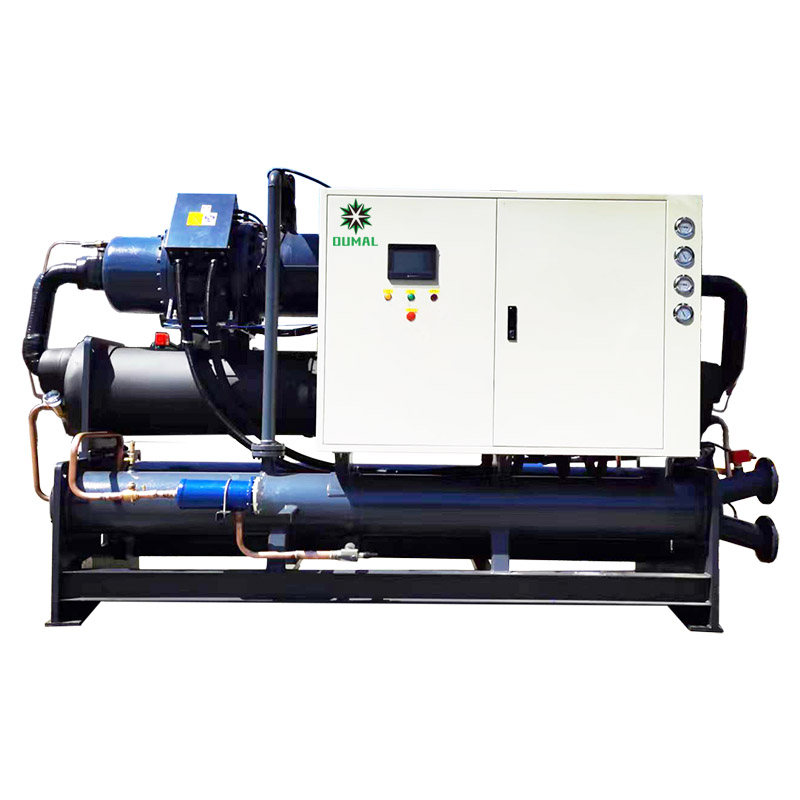
Selecting the Right Chiller for Your Process – What We’ve Learned at OUMAL

In industrial production, stable process cooling isn’t just a support function — it’s often the difference between smooth operation and costly downtime. At OUMAL Refrigeration Machinery Co., Ltd, we’ve worked with customers across injection molding, extrusion, thermoforming, and more. Over time, one thing has become clear: choosing the right chiller matters.

Not All Cooling Needs Are Created Equal
Different industries — even different machines — have very different cooling requirements. For example, a customer running a small injection molding line may only need a compact 8 ton chiller to maintain mold temperatures within a tight range. These chillers are space-efficient and offer precise control, making them a practical choice for localized cooling tasks.

On the other hand, when the scale increases or when multiple machines share a cooling circuit, something like a 15 TR chiller tends to be a better fit. We’ve seen these used successfully in mid-sized production lines where reliability and steady performance are non-negotiable.

For large plants, especially those operating around the clock, a 100 ton water cooled chiller can provide both capacity and energy efficiency. Water-cooled systems require more infrastructure — including cooling towers and proper piping — but in return, they offer stable performance in high ambient environments and over long production runs.

Built for Industry, Backed by Experience
What sets OUMAL apart is not just the equipment itself, but the way we build around customer needs. Our manufacturing team can handle a wide range of options and customizations, which means the chiller you receive isn’t off-the-shelf — it’s made to work the way you do.

We’ve served customers in over 20 countries, including the US, Australia, Saudi Arabia, Vietnam, and Brazil. The variety of applications we’ve supported — from blown film to compound mixing — gives us the insight to ask the right questions before making a recommendation. Our goal is always to match cooling performance with process demand, rather than over- or under-sizing.

Long-Term Value Comes from the Right Start
One thing we often remind our partners: a properly selected chiller does more than control temperature. It protects your equipment, shortens your cycle times, and helps maintain product consistency. That’s especially important in processes where a few degrees can mean the difference between a good batch and scrap.


Whether you’re starting with a single machine or upgrading an entire line, OUMAL is ready to help you choose wisely — whether that’s an 8 ton, 15 TR, or 100 ton water cooled chiller.


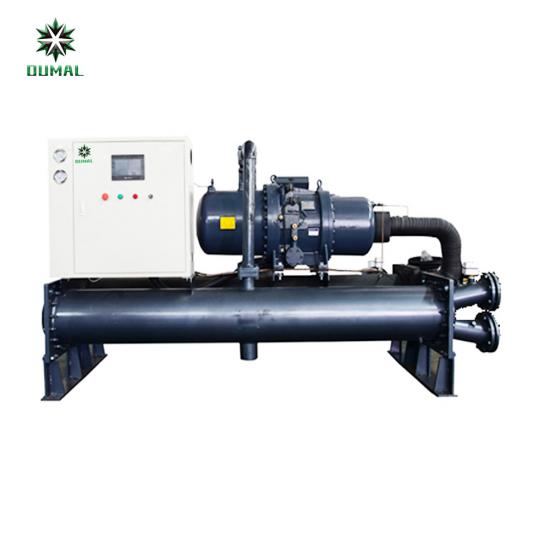
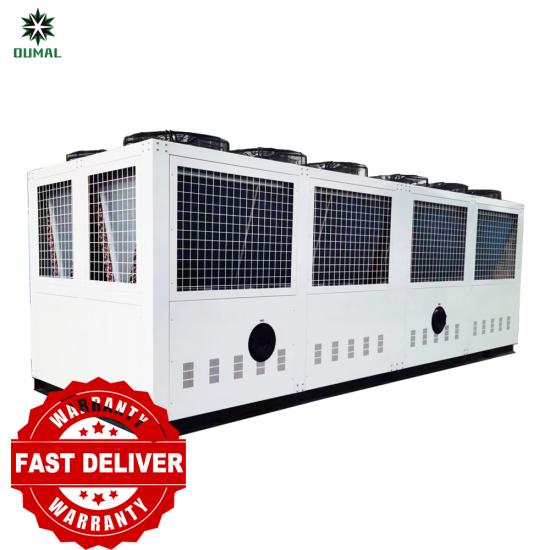
China chiller manufacturer

What Is an Air Cooled Chiller – A Practical Explanation from the Factory Floor

When someone new joins our engineering team, one of the first questions they usually ask is: “So what’s the difference between air cooled and water cooled chillers—and which one’s better?”


It’s a good question. And after installing, maintaining, and even troubleshooting both systems in dozens of customer factories, here’s how we usually explain it.


Let’s Start with the Basics

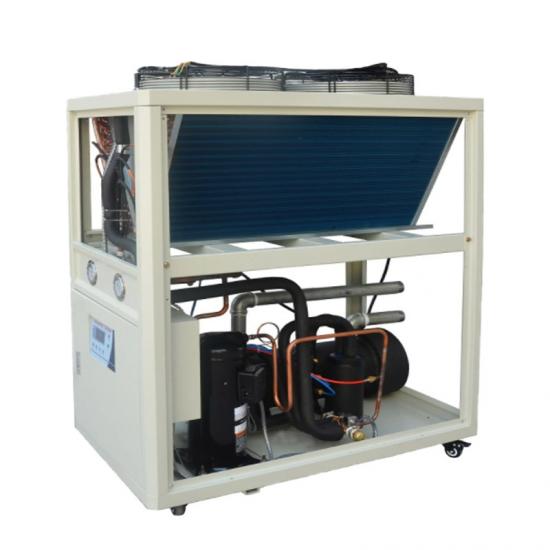
An air cooled chiller is essentially a cooling unit that uses ambient air to remove heat from a circulating liquid—usually water or a water-glycol mix. It's often used to keep production equipment or buildings at a stable temperature.

There’s no need for a cooling tower or a complex water pipeline. It uses built-in fans to get the job done.

This setup is widely chosen in:

  • Injection molding plants

  • Food packaging lines

  • Laser processing workshops

  • HVAC systems for commercial buildings

If you’ve got space outside and want to avoid dealing with water quality issues, air cooled is probably the better call.

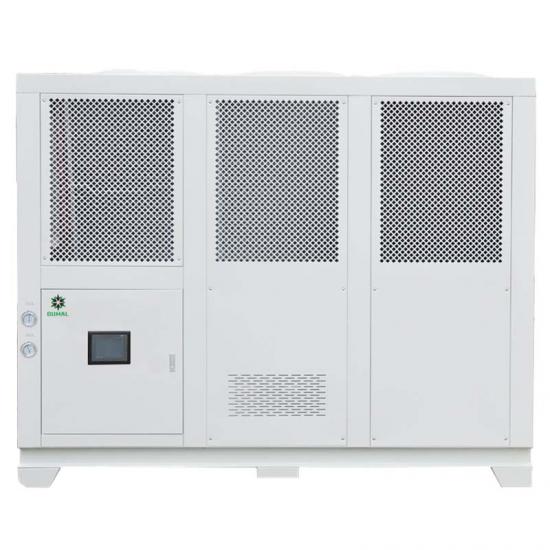
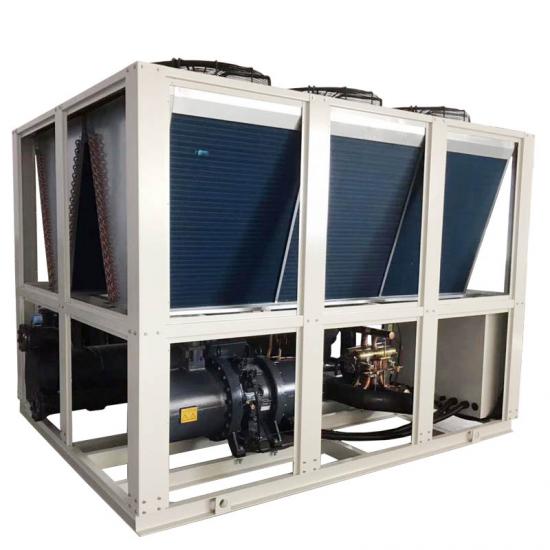
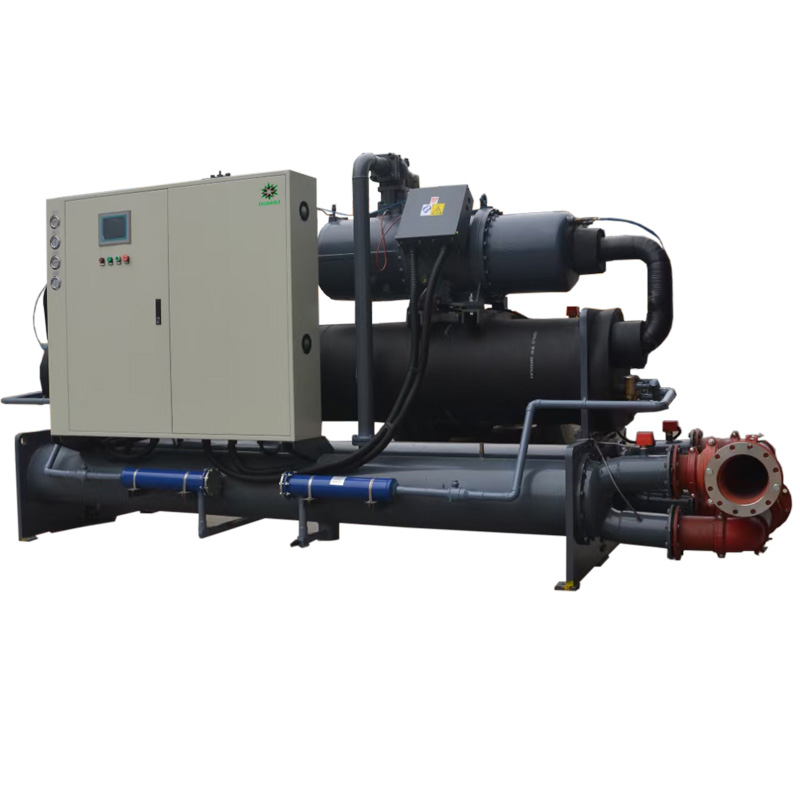
air cooled screw chiller

What’s Inside the Unit?

Rather than listing textbook components, here’s what we see under the cover of atypical air cooled water chiller we ship:

  • A compressor that acts like the system’s engine

  • An evaporator that draws heat out of your process water

  • A condenser with aluminum fins, cooled by strong fans

  • An expansion valve to adjust refrigerant pressure

  • A control panel—the brain of the system

Some models include water pumps and tanks. Others are modular—you can connect them to existing infrastructure.


Here’s How It Works (Simplified)

Let’s say you’re using a CNC machine that heats up during operation. Here’s how the air cooled chiller steps in:

  1. The warm water comes back from the CNC.

  2. It enters the evaporator inside the chiller.

  3. The refrigerant in the evaporator absorbs that heat and turns into a gas.

  4. The gas gets compressed—its temperature and pressure rise sharply.

  5. That hot gas goes through the condenser. Fans blow outside air across coils, removing the heat.

  6. The refrigerant turns back into a liquid, and the cycle repeats.

Your machine keeps running cool—and you don’t need a water tower or much operator attention.


Why Do Customers Choose Air Cooled Units from Us?

Some of our long-term clients choose air cooled chiller systems for one reason: they just work.
Even without an in-house technician, these systems are straightforward to install, easy to control, and rarely break down when used correctly.

Clients also appreciate that we offer:

  • Tailored sizing based on actual load

  • Remote monitoring options

  • Short lead times, even for custom orders

  • Reliable after-sales support (yes, even overseas)


As a practical air cooled chiller supplier, we’re not here to sell what’s biggest or most expensive—we help customers find what runs stably for years.

Application of hot melt adhesive automatic scraper

In modern manufacturing, hot melt adhesive is widely used in various industries, including packaging, woodworking, electronics, and automobiles. However, the traditional manual scraping gun method has some inconveniences in large-scale production, such as low production efficiency and high labor costs. In order to overcome these challenges, engineers have developed hot melt adhesive automatic scraping gun technology, providing companies with a tool to improve efficiency and reduce costs.


Limitations of traditional manual scraper guns

In traditional hot melt adhesive applications, workers need to manually bring the hot melt adhesive gun close to the target surface and manually control the spraying and scraping process of the hot melt adhesive. This method has several disadvantages. First, the manual scraper gun needs to be repeatedly positioned and controlled, and the errors caused by this are difficult to avoid, resulting in uneven coating and unstable quality. Second, long-term use of manual scrapers can easily cause worker fatigue and reduce worker work efficiency. In addition, manual scrapers also cause waste of hot melt adhesive because operators often find it difficult to accurately control the amount of hot melt adhesive used.


Advantages of hot melt adhesive automatic scraper

In order to solve the problems of traditional manual scraper, automation technology is gradually applied to the hot melt adhesive field. The hot melt adhesive automatic scraper system consists of a coater, a sensor and a control system. The coater can spray the hot melt adhesive evenly onto the target surface through precise control. At the same time, the sensor can monitor the shape and state of the target surface and automatically adjust the height and speed of the scraper to ensure the consistency and accuracy of the coating. The control system can realize the automated hot melt adhesive scraper process according to the preset parameters and process requirements.


Application fields of hot melt adhesive automatic scraper

Hot melt adhesive automatic scraper technology has been widely used in many industries. In the packaging field, it is used in carton sealing, bag sealing, tape bonding and other links to improve production speed and quality stability. In the woodworking industry, hot melt adhesive automatic scraper can be used in furniture manufacturing, board bonding and other processes to improve production efficiency and product quality. In the electronics industry, automatic scrapers can be used in circuit board assembly, component packaging and other processes to improve work efficiency and reliability. In the automotive manufacturing field, hot melt adhesive automatic scraper can be used in body sealing, interior bonding and other processes to improve bonding effect and product reliability.


The application of hot melt adhesive automatic scraper technology has brought great benefits to all walks of life. It can improve production efficiency, reduce labor costs, ensure the consistency of coating quality, and reduce the waste of hot melt adhesive. With the continuous development of automation technology, hot melt adhesive automatic scraper will be used in a wider range of fields and continue to create greater economic benefits and development opportunities for enterprises.

hot glue gun nozzle


glue spray gun

slot die coating die

glue module dispenser

hot melt coating machine

Carbonization problem in the use of hot melt adhesive machine effective prevention and treatment methods

As an efficient and convenient bonding equipment, hot melt adhesive machine is widely used in packaging, textile, automobile manufacturing and other fields. However, in actual use, hot melt adhesive machine often encounters a thorny problem - carbonization. The generation of carbonization not only affects the normal operation of the equipment, but may also lead to product quality degradation or even equipment damage. Therefore, understanding how to effectively prevent carbonization, the impact of carbonization on use, and the correct treatment method after carbonization is crucial to ensure the stability of the hot melt adhesive machine and extend its service life.


Carbonization is mainly caused by the following factors:

· Too high temperature: Hot melt adhesive needs to melt at a certain temperature, but if the temperature is set too high or the equipment is in a high temperature state for a long time, it will cause the colloid to decompose.

· Too long residence time: The hot melt adhesive stays in the heating system for too long and fails to be discharged in time, which is prone to oxidation and decomposition.

· Air ingress: If the equipment is not well sealed, oxygen in the air enters the adhesive tank or pipe, which will accelerate the oxidation reaction of the colloid.

· Material problem: Some types of hot melt adhesives are sensitive to high temperatures and are more prone to carbonization.

· Equipment aging: Hot melt adhesive machines that have been used for a long time may have problems such as aging of heating elements and failure of temperature control systems, which may lead to abnormal temperature increases.


In order to reduce the occurrence of carbonization of hot melt adhesive machines, the following are some practical preventive measures:

1. Reasonable temperature control

· Set the appropriate heating temperature according to the type of hot melt adhesive used. It is generally recommended to control the temperature at the lower limit of the recommended range to reduce the risk of colloid decomposition.

· Regularly check whether the temperature control system is accurate to avoid abnormal temperature rise due to equipment failure.


2. Shorten the residence time of colloid

· During the production process, minimize the residence time of hot melt adhesive in the heating system. The production process can be optimized to speed up the flow rate of colloid and reduce the time the colloid is exposed to high temperature.

· If the equipment is out of use for a long time, the residual colloid in the glue tank and pipeline should be cleaned in time to avoid carbonization due to long-term standing.


3. Maintain the tightness of the equipment

· Ensure that the hot melt adhesive machine's adhesive tank, pipes, nozzles and other parts are well sealed to prevent air from entering and contacting the adhesive.

· For open-design equipment, consider installing a dust cover or using an inert gas (such as nitrogen) for protection to reduce the occurrence of oxidation reactions.


4. Regularly maintain the equipment

· Regularly check the heating elements, temperature control system and pipe connections of the hot melt adhesive machine to ensure that the equipment is operating normally.

· When cleaning the adhesive tank and pipes, the residual colloid should be thoroughly removed to avoid excessive accumulation and carbonization.


5. Choose high-quality hot melt adhesive

· Different types of hot melt adhesives have different tolerance to high temperatures. It is recommended to choose products with good stability and anti-aging properties.

· When changing the brand or model of hot melt adhesive, be sure to test it first to ensure that it is compatible with the existing equipment.


6. Pay attention to the frequency of adding glue

·During the production process, hot melt glue should be added in an appropriate amount according to actual needs to avoid adding too much glue at one time, which will cause some glue to be carbonized due to long-term non-use.


Once carbonization is found in the hot melt adhesive machine, the following steps should be taken in time to deal with it:

1. Stop the equipment immediately

·When carbonization is detected, the hot melt adhesive machine should be turned off immediately and the heating operation should be stopped to prevent further carbonization.

·Cut off the power supply and wait for the equipment to cool down completely before proceeding with the subsequent operation


2. Clean carbides

· Use special tools or chemical cleaning agents to remove carbides on the adhesive tank, pipes and nozzles.

Common cleaning methods include:

o Mechanical cleaning: Use scrapers, brushes and other tools to manually remove carbides, which is suitable for mild carbonization. o Chemical cleaning: Select a cleaning agent suitable for hot melt adhesive materials (such as professional adhesive remover), inject it into the equipment and soak it for a period of time, and rinse it with clean water after the carbides soften.

o High temperature burning: For stubborn carbides, high temperature burning can be used for cleaning, but it is necessary to control the temperature to avoid damaging equipment components.


3. Check the equipment condition

· After cleaning, carefully check whether there is wear or damage to the glue tank, pipes and nozzles. If necessary, replace damaged parts in time to ensure the normal operation of the equipment.

· Check the performance of the heating elements and temperature control system to ensure that they are working properly.


4. Recalibrate the temperature setting

· Before restarting the equipment, recalibrate the temperature setting to ensure that it meets the requirements for the use of hot melt adhesive.

· Perform a trial run to observe whether the equipment is operating normally and whether the glue flows out evenly.


5. Strengthen daily maintenance

· Analyze the causes of carbonization problems that have occurred and formulate improvement measures to avoid similar situations from happening again.

· Strengthen the daily maintenance of equipment, clean the rubber tank and pipelines regularly, and ensure that the equipment is always in good condition.


Elastic string baby diaper module introduction

The elastic string glue gun is specially developed and designed for the rubber application of sanitary napkins and diaper products. It has the advantages of uniform, delicate and strong covering power. It adopts an air-on-air-off design, which is responsive and reliable. Built-in filter can reduce failures caused by clogged nozzles. Built-in imported high-quality sealed structural components ensure stable operation and long-lasting durability of the gun body. The solenoid valve of the gun body can be powered by DC24V or AC220V according to the user's requirements. Can be modified and applied to other brands of hot melt adhesive equipment according to user requirements.


1. Application of the latest design concepts and balancing technology: Adopting the most advanced design concepts and balancing technology may mean higher work efficiency and a better user experience.


2. Increase the service life of the gun body and reduce maintenance: By improving the design and using high-quality components, the service life of the gun body is increased and maintenance costs are reduced accordingly.


3. Imported core components: The use of imported core components can improve the overall quality and stability of the spray gun, thereby extending its life and improving performance.


4. The number of glue breaks is as high as 3600 times/minute: This shows that the spray gun is fast and reliable in operation and is suitable for mass production needs.


5. Winding glue spraying method: ensure that each rubber band is firmly fixed within 360 degrees, improving product quality and efficiency.


6. High-efficiency and powerful back-extraction module: it can cleanly disconnect the glue, avoid unnecessary impurities or tailing, and ensure production quality.


7. Dual guide function: ensures that each rubber band can be wound accurately, avoiding waste and errors, and improving production efficiency and quality.


hot melt glue system

Electric Cordless glue gun

Hot glue applicator

Hot melt adhesive gun


Innovative application of hot melt adhesive machine in paperboard industry

Hot melt glue machine is a common industrial equipment, widely used in carton packaging, cardboard manufacturing and other industries. It heats the solid glue block to convert it into molten glue, and then applies the glue to the cardboard by spraying or coating to achieve the bonding effect. The following will introduce the application of hot melt glue machine on cardboard.


1. Cardboard packaging: Hot melt glue machine plays the role of bonding cardboard in cardboard packaging. When making cartons, the cardboards need to be firmly connected to ensure that the structure of the carton is strong and can withstand heavy objects and vibrations during transportation. The hot melt glue machine can spray hot melt glue on the seams of the cardboard or other locations that need to be bonded. The glue liquid quickly cools to form a strong bonding layer, which firmly connects the cardboards together.


2. Cardboard repair: During cardboard packaging or carton transportation, the cardboard may be damaged or cracked due to external impact or other reasons. The hot melt glue machine can glue the damaged parts together by spraying hot melt glue, repair the damage of the cardboard, and maintain the integrity and service life of the cardboard.


The application of hot melt glue machine on cardboard has the following advantages:

1. High efficiency: The hot melt glue machine can quickly melt the solid glue block into a molten liquid, and the glue liquid quickly cools down after contacting the cardboard to form a strong adhesive layer. This high efficiency can improve production efficiency and reduce downtime in the process.

2. Uniform coating: The hot melt glue machine can achieve uniform spraying or coating of the glue liquid, ensuring that all parts of the cardboard can be fully bonded. This is very important for quality control in the cardboard manufacturing and packaging process.

3. Environmental protection: The hot melt adhesive used in hot melt adhesive machines is usually made of environmentally friendly materials, does not contain organic solvents and volatile organic compounds, and does not pollute the environment.


Hot melt adhesive machine provides a reliable bonding solution and is widely used in carton packaging, cardboard manufacturing and other industries, providing reliable packaging materials for product transportation and protection.

hot melt glue machine

hot melt glue machine

hot melt glue machine


Innovative Applications of Hot Melt Glue Machines

Hot melt glue machines are versatile tools widely used in various industries and for numerous applications. These machines have found innovative applications that have revolutionized the way we approach tasks requiring adhesion and precise bonding.


One of the most notable innovations in the application of hot melt glue machines is in the realm of packaging. Traditionally, packaging processes relied on adhesives that required drying time, leading to inefficiencies in production lines. However, hot melt glue machines offer a faster alternative that bonds instantly upon contact, significantly speeding up packaging operations and improving overall efficiency.


Another area where hot melt glue machines have made a significant impact is in the field of woodworking. These machines are now commonly used in woodworking shops for tasks such as edge banding, furniture assembly, and veneer application. The precise application of hot melt adhesive ensures strong and durable bonds, making it an indispensable tool for carpenters and woodworkers.


Beyond traditional industries, hot melt glue machines have also found innovative applications in fields such as crafts and DIY projects. Crafting enthusiasts use these machines to create intricate designs, attach embellishments, and assemble various materials with ease. The precision and control offered by hot melt glue machines make them essential tools for artists and hobbyists looking to bring their creative visions to life.


Moreover, hot melt glue machines have found applications in the medical industry, particularly in the assembly of medical devices and equipment. The sterile nature of hot melt adhesives, coupled with the ability to create strong bonds quickly, makes them ideal for medical applications where precision and reliability are paramount.


In conclusion, hot melt glue machines have evolved beyond simple tools for basic adhesion tasks to become indispensable assets in a wide range of industries. Their ability to provide instant bonding, precision application, and versatility have led to innovative applications that continue to push the boundaries of what is possible. As technology advances and new materials are developed, the applications of hot melt glue machines are likely to expand even further, driving innovation across multiple sectors.

Hot melt adhesive machine

Glue Barrel/Glue Tank

Glue Discharge Controller

Corded Hot Glue Gun

hot glue fiber nozzle

hot glue tube pipe hose