What is the function of a linear actuator in automation?

In automation systems, a linear actuator serves as a critical component that converts various forms of energy (such as electrical, hydraulic, or pneumatic) intocontrolled linear motion(push, pull, lift, or lower). Its primary functions and roles in automation can be categorized as follows:

1. Enabling Precise Positioning

Linear actuators provide accurate control over the linear displacement of components, ensuring that parts, tools, or workpieces move to specific positions with high repeatability. This is essential in automated production lines, where tasks like:

  • Aligning components during assembly (e.g., inserting a pin into a hole with millimetric precision).
  • Positioning sensors or cameras for quality inspection (e.g., scanning products at exact intervals).
  • Adjusting tooling (e.g., moving a cutting blade to a precise depth in machining).

2. Driving Load Handling

They generate force to move or manipulate loads, ranging from lightweight objects to heavy machinery. This function is vital for:

  • Material handling: Pushing pallets onto conveyor belts, lifting goods in warehouses (e.g., automated storage systems).
  • Clamping or gripping: Securing workpieces during manufacturing processes (e.g., holding a metal part while welding).
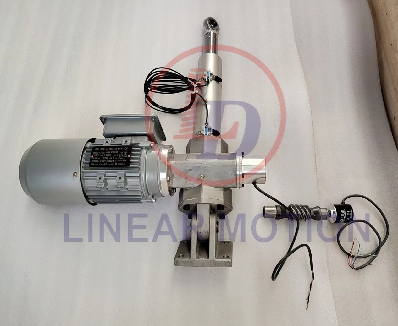
  • Pressing or stamping: Applying controlled force to shape materials (e.g., in automotive part production).Linear actuator

3. Enabling Sequential Automation

Linear actuators integrate with control systems (e.g., PLCs, microcontrollers) to execute predefined motion sequences, enabling fully automated workflows. For example:

  • In packaging machines: Pushing products into boxes, sealing lids, or adjusting packaging film tension in a synchronized order.
  • In robotics: Moving robotic arms or end-effectors through specific paths to complete tasks like picking and placing items.

4. Adapting to Variable Conditions

Many linear actuators offer adjustable speed, force, and stroke length, allowing automation systems to adapt to changing requirements:

  • Adjusting the speed of a conveyor pusher based on product size.
  • Modifying clamping force to handle delicate items (e.g., electronics) vs. rigid materials (e.g., metal).
  • Extending or shortening stroke length to accommodate different workpiece dimensions without reconfiguring the entire system.

5. Enhancing Safety and Efficiency

By replacing manual linear motion (e.g., hand-cranking, manual lifting), linear actuators:

  • Reduce human intervention, minimizing the risk of workplace injuries in heavy or repetitive tasks.
  • Ensure consistent motion, reducing errors in manufacturing or processing.
  • Operate continuously without fatigue, improving production throughput.

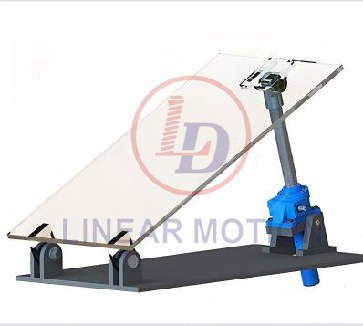
In summary, linear actuators are the "muscles" of automation, translating control signals into tangible mechanical action. Their ability to deliver precise, controlled, and adaptable linear motion makes them indispensable in industries such as manufacturing, logistics, robotics, aerospace, and healthcare.electric linear actuator

Why SGCC structural accessories are trending for modern machines

You see sgcc structural accessories getting popular in new machines. They last a long time and do not rust easily. SGCC is special because it uses strong steel and works well. Careful making gives you the same good quality every time. You can change them to fit what your project needs. This gives you something that works well and does not break, even when used a lot. Think about using sgcc for your next machine project. You will see good results that last a long time.


Key Takeaways

SGCC structural accessories last a long time and do not rust easily. This makes them great for machines that need to work for many years. The hot-dip galvanisation process helps stop corrosion. It keeps machines safe from water and chemicals. SGCC steel parts do not wear out fast. They stay strong even when used every day. You can change SGCC accessories to fit your project. You can pick the size, shape, and logo you want.


SGCC accessories help machines work better and faster. They make sure machines run smoothly and do not break down often. It is easy to take care of SGCC parts. The zinc coating stops rust and makes cleaning simple. Using SGCC steel saves money over time. It lasts long and does not need much fixing. Smart SGCC steel accessories help machines work better. They also help you check how machines are working.


Durability and Longevity

You want machines to work for a long time. SGCC structural accessories help with this. SGCC steel uses hot-dip galvanisation. This puts a strong zinc coating on the steel. The zinc layer protects the steel for many years. Your machines get long-lasting corrosion resistance. This means your machines stay reliable. Zinc-plated steel sheets do not get damaged easily from daily use. You can trust SGCC to make your equipment last longer.


Wear Resistance

SGCC steel does not wear out fast. The zinc coating works like a shield. It keeps the surface smooth and strong. Hot-dip galvanisation makes the steel hard to scratch or dent. Zinc-plated steel sheets handle friction and impact better than regular steel. You see less damage as time goes on. SGCC structural accessories help machines run well, even with daily use.


Corrosion Resistance

Corrosion resistance is a big reason SGCC structural accessories are popular. SGCC steel uses hot-dip galvanisation to cover metal with thick zinc. This layer blocks moisture and chemicals. Zinc-plated steel sheets do not react much with water or air. You get strong protection against rain, humidity, and tough environments. Hot-dip galvanisation keeps machines safe outside or in factories.


Here is a table that shows how SGCC steel compares to other materials for corrosion resistance:

Material Galvanisation Method Zinc Coating Corrosion Resistance Rust Prevention
SGCC Steel Hot-dip galvanisation Thick Excellent Yes
Zinc-plated Steel Sheets Electro-galvanisation Thin Good Yes
Regular Steel None None Poor No


Rust Prevention
You do not want rust on machines. SGCC steel helps stop this problem. The zinc coating from hot-dip galvanisation stops rust before it starts. Zinc-plated steel sheets stay clean and shiny. Corrosion resistance means you spend less time fixing things. SGCC structural accessories keep machines looking new. You feel better knowing your equipment will not rust easily.


Jiaxin makes it simple to customize what you need. First, you send your drawings or a sample. The engineers check if they can make your design. You get advice from experts who know SGCC and building materials. If your design works, Jiaxin gives you a price. You look at the price and details. If you agree, Jiaxin makes a sample for you. You check the sample to see if it is right. This step helps you avoid mistakes and save money.


You see many reasons to choose sgcc steel for your machines. Sgcc steel gives you strong protection against rust. You get long-lasting parts that work well in tough places. Sgcc structural accessories help you build machines that last. You can pick custom designs and sizes for your project. Sgcc steel makes your equipment reliable and easy to care for. If you want better results, explore sgcc structural accessories for your next job. Contact Jiaxin to learn more or get a custom quote.


If you want to learn more about our products,please visit the website: https://www.jxprecise.com/

Frozen Food Accurate Counting Solution

Frozen Food Accurate Counting Solution

Q1: What are the pain points of traditional frozen food counting methods?
Traditional manual or simple mechanical counting methods mainly suffer from two major pain points: low efficiency, which struggles to meet large-scale production demands, and high error rates, leading to cost losses and customer complaints.

frozen food counting machine


Q2: How does Zhiwan Vision Particle Counting Machine solve these problems?
Our automatic vision counting machine utilizes advanced machine vision and optical technology to provide a high-precision, fully automated counting solution, fundamentally eliminating the aforementioned pain points.


Q3: What are the core advantages of this equipment?

Advantage

Description

Counting Accuracy

Accuracy rate as high as 99.9% or above

Processing Speed

Capable of processing thousands of items per minute

Adaptability

Widely adapts to frozen foods of various shapes and sizes (e.g., meatballs, shrimp, vegetables)

Hygiene & Safety

Food-grade contact materials ensure no contamination

Smart Learning

Built-in algorithm continuously learns and optimizes for high recognition accuracy


Q4: What types of frozen foods can it recognize?
The equipment has a broad range of applications, including but not limited to:

  • Frozen meat, meatballs, sausages
  • Seafood (e.g., whole shrimp, shrimp meat, fish pieces)
  • Cheese cubes, frozen fruits, vegetables
  • Desserts, baked goods (e.g., frozen fries, pumpkin pies)
  • Other convenient frozen foods


Q5: In which stages of the production process is it typically used?
There are three main application scenarios:

  • Online Counting (Front-end Integration): Integrated at the front end of the production line to achieve fully automated counting from production to packaging.
  • Quality Sampling (End-stage Verification): Conducts precise sampling at the end of the packaging stage to strictly control outgoing quality.
  • Warehouse Inventory: Used for fast and accurate inventory checks in raw material or finished product warehouses, improving storage management efficiency.


Q6: What specific value can it bring to our customers?

Benefit

Description

Efficiency Boost

Counting efficiency is 5-10 times higher than manual methods, speeding up production cycles

Cost Control

Significantly reduces labor costs and material loss due to counting errors

Quality Assurance

Drastically reduces counting errors, improving product quality and customer satisfaction

Data Traceability

Provides complete counting data records for precise production traceability

Compliance & Safety

Fully complies with food hygiene and safety regulations and standards


Q7: How can we get more information or experience the product?
Feel free to contact our professional team at any time. We can provide detailed product technical documentation and success cases, and based on your needs, arrange a free on-site demonstration to offer a tailored technical solution.

Intelligent vision Counting Systems Precision for Modern Warehousing

Intelligent vision Counting Systems: Precision for Modern Warehousing

In today's Industry 4.0 landscape, warehouse efficiency and accuracy are crucial to competitive supply chain performance. Businesses handling bulk granular materials—such as fasteners, pharmaceuticals, seeds, electronic components, and jewelry accessories—often face inefficiencies and inaccuracies during counting processes. Manual methods are slow, prone to errors, and struggle with mixed batches or irregularly shaped items.

Hefei The One Electronic Technology Co., Ltd. specializes in advanced warehouse vision counting machine designed to overcome these challenges. Our machines enhance workflow accuracy, reduce operational costs, and support seamless digital integration—making them ideal for modern warehouses aiming for full automation.

warehouse vision counting machine


The Limitations of Manual Counting & Our Automated Approach

Common Issues with Traditional Methods

Time-consuming counting reduces throughput in receiving, sorting, and shipping.

Human errors lead to inaccurate inventories, financial discrepancies, and customer disputes.

High reliance on labor increases operational costs and limits scalability.

Manual data entry creates delays, inaccuracies, and poor traceability.


How Our vision Counting System Works
Equipped with high-resolution industrial cameras and proprietary AI-based vision algorithms, our system instantly recognizes, analyzes, and counts particles—even when overlapping or irregularly shaped.

Unmatched Speed and Accuracy: Count thousands of items per minute with near-perfect accuracy.

Wide Material Compatibility: Works with screws, capsules, seeds, electronic parts, beads, and more.

Real-Time System Integration: Compatible with WMS, ERP, and other warehouse management platforms for automated data synchronization.


Key Use Cases in Warehouse Operations

Incoming Goods Inspection
Rapidly verify quantities during receiving—whether performing full checks or random sampling—to ensure order accuracy and reduce offloading time.

Inventory Sorting and Cycle Counting
Integrate into packing lines for automated batch splitting and efficient stocktaking. Ideal for kitting and custom order fulfillment.

Outbound Quality Control
Recheck quantities before shipping to prevent order errors, reduce returns, and strengthen customer trust.

Fully Automated Packaging and Labeling
Select advanced models that combine counting, packaging, and labeling into one seamless operation—printing labels with item name, quantity, batch number, and date in compliance with international traceability standards.

fullly automatic counting and packaging machine


Engineered for Performance and Reliability

We independent developmed machine vision algorithms ensure robust performance across diverse industrial environments. Our systems are already trusted across industries including pharmaceuticals, agriculture, electronics, hardware, and retail logistics.

Designed to support lean management and Industry 4.0 readiness, our vision counters help businesses minimize waste, maximize efficiency, and transition toward fully automated warehouse operations.

Upgrade to a smarter, error-free warehouse with our vision counting systems.

Is R407C Compatible With Any Refrigerant?

Refrigerant gas R407C has been a reliable choice for air conditioning and heat pump systems, especially since the phase-out of R22. It’s known for being a high efficiency refrigerant and a more eco-friendly alternative. But a common question arises:


Can R407C be used with or mixed with other refrigerants?

Let’s explore what makes R407C refrigerant unique—and why compatibility matters more than you might think.


What Is R407C?

R407C is a zeotropic HFC blend made up of:


R32 (23%)

R125 (25%)

R134a (52%)


This combination gives refrigerant gas R407C a good balance of cooling performance, energy efficiency, and environmental safety (no ozone depletion). It’s commonly used in residential and commercial systems, and it's often considered a go-to R22 replacement.

Since it's chlorine-free, eco-friendly refrigerant R407C meets global environmental regulations like the Montreal Protocol.


Is R407C Compatible With Other Refrigerants?

The short answer: No. Don’t mix refrigerants.

Even though some refrigerants may appear similar, R407C refrigerant is not compatible with:


R22 (its predecessor)

R410A

R134a

Or any other refrigerant


Here’s why:

R407C is a zeotropic blend, which means it has a glide—its components boil at different temperatures. Mixing it with another refrigerant changes the pressure-temperature relationship and disrupts system performance.

Mixed refrigerants can lead to:


Inaccurate superheat/subcooling readings

Reduced efficiency and cooling capacity

Compressor overheating or failure

Loss of manufacturer warranty


In many countries, it's illegal to mix refrigerants due to safety and environmental risks.


What If I’m Replacing R22?

You can use R407C refrigerant for R22 system retrofits, but the process must be done correctly.

Key retrofit steps:

Recover all R22 (don’t mix)

Flush or replace components if needed

Switch from mineral oil to POE oil

Check for material compatibility (especially seals and O-rings)

Charge the system with pure, high efficiency refrigerant R407C

Skipping these steps can reduce efficiency or cause leaks.


Are There Better Alternatives?

While eco-friendly refrigerant R407C is still widely used, newer low-GWP options are entering the market, such as:


R32 (higher efficiency, but mildly flammable)

R454B (lower GWP, designed to replace R410A)


However, if your system is designed for or retrofitted to R407C refrigerant, it remains a cost-effective and efficient solution—just don’t mix it.


Final Thoughts

R407C is not compatible with other refrigerants. Mixing it with anything else, including R22 or R410A, is unsafe, inefficient, and potentially illegal.

If you're using refrigerant gas R407C, keep it pure.

If you’re switching from another refrigerant, retrofit properly.

And when in doubt, always consult a certified HVAC technician.

What is R454B Refrigerant Equivalent To? Your Friendly Guide

Have you ever wondered what the future of cooling looks like? As the world embraces greener technologies, even the refrigerants that cool our homes, preserve our food, and power our air conditioners are evolving. One of the most promising new options is refrigerant gas R454B—a cleaner, more efficient alternative designed to meet today’s environmental demands.

But what exactly is R454B, and what can it replace? Let’s break it down.


So, What is R454B Refrigerant Equivalent To?

In simple terms, R454B refrigerant is a low-GWP (Global Warming Potential) alternative to R-410A, one of the most widely used refrigerants in residential and light commercial HVAC systems. If you’ve used an air conditioner or heat pump in the past 20 years, chances are it ran on R-410A.


Here's the difference:

R-410A GWP: 2088

Eco-friendly refrigerant R454B GWP: Just 466


That’s a 78% reduction in climate impact—making high efficiency refrigerant R454B a crucial step forward in meeting international regulations like the Kigali Amendment.

While R-410A is its primary equivalent, some testing also shows R454B refrigerant for R-32-based systems is technically possible with proper system adjustments.


Why Does This Matter?

You might be thinking: “It’s just a gas swap, right?” Not quite. The fact that R454B refrigerant is a close match to R-410A is what makes it such a game-changer in the transition to greener cooling solutions.


1. Smooth Equipment Transition

Manufacturers don’t need to redesign HVAC systems from scratch. Many existing R-410A systems can adopt refrigerant gas R454B with only minor modifications—saving time, cost, and engineering effort.

2. Boosted Energy Efficiency

You don’t have to sacrifice performance for sustainability. In fact, high efficiency refrigerant R454B can improve energy efficiency by up to 4.7% compared to R-410A, meaning lower energy bills and a smaller carbon footprint.

3. A Viable Solution to Regulatory Pressure


As regulations phase out high-GWP refrigerants, eco-friendly refrigerant R454B fills the gap with a practical, available, and future-ready alternative.


What’s Inside R454B?

Eco-friendly refrigerant R454B is a blend of:


R-32 (68.9%) – a widely used refrigerant with moderate GWP

R-1234yf (31.1%) – a next-generation HFO with GWP < 1


The result? A refrigerant with:

Zero Ozone Depletion Potential

Significantly reduced GWP

Excellent thermal performance


This unique combination makes R454B refrigerant both climate-friendly and effective for a wide range of HVAC applications.


Is R454B the Same as R-410A?

Not exactly. While they’re functionally similar, there's a key difference in safety classification.

R-410A: A1 – non-flammable

R454B refrigerant: A2L – mildly flammable


Before you worry, "mildly" is the key word. A2L refrigerants have low burning velocities and are difficult to ignite. Systems using refrigerant gas R454B are designed with added safety measures like leak detection and sealed components to mitigate risk. Always ensure installations are handled by qualified professionals.


Where is R454B Refrigerant Used?

Adoption of R454B refrigerant for new systems is growing quickly. You’ll see this high efficiency refrigerant in:

Residential & Light Commercial AC: Split systems, ducted units, and heat pumps


Direct Expansion (DX) Chillers: Mid-sized commercial cooling

High-Temperature Heat Pumps: Ideal for heating as well as cooling

Commercial Refrigeration: Including supermarket display cases and cold rooms


An added bonus? Systems using R454B refrigerant typically require 20–30% less charge volume than R-410A—making them even more eco-conscious and cost-efficient.


The Bottom Line

So, what is R454B refrigerant equivalent to? It's the modern, low-GWP successor to R-410A—offering a blend of high performance, energy efficiency, and environmental responsibility.

Whether you’re upgrading an HVAC system or specifying equipment for a new build, asking about R454B refrigerant is a smart step toward a sustainable future.


Choose the high efficiency, eco-friendly refrigerant R454B—and keep your cool the greener way.

Do you know the uses of linear guides?

Linear guides have a wide range of applications. They are the "backbone" and "blood vessels" of modern industrial equipment and precision machinery. Their core mission is to provide high-precision, high-rigidity, and high-efficiency linear motion.


I. Core Application Areas

1. CNC Machine Tools - The "Main Field"

This is the most classic and important application area for linear guides. They directly determine the machining accuracy and speed of machine tools.

Purpose: Controls the movement of key components such as the turret, spindle, and worktable.

Specific Equipment: Machining centers, CNC milling machines, lathes, grinders, EDM machines, etc.

Function: Enables precise positioning and rapid movement of tools or workpieces in the X, Y, and Z axes, completing the cutting of complex parts.


2. Industrial Robots - "Flexible Joints"

Purpose: Serves as the robot's seventh axis (ground rail), extending the robot's travel distance and operating range. Used in linear motion joints within robot arms, they enable precise and smooth extension and retraction.

Function: Provides reliable basic linear motion for robots, widely used in robotic workstations for handling, welding, painting, assembly, and other tasks.


3. Electronics and Semiconductor Manufacturing Equipment - "King of Precision"


Purpose: Positioning and moving precision components such as chips, wafers, and circuit boards.


Specific Equipment: Semiconductor lithography machines, chip packaging machines, surface mount (SMT) machines, wire bonders, wafer probers, and LCD panel handling equipment.


Function: Achieving ultra-high-speed, ultra-precision positioning at the micron and even nanometer scales is crucial for the production of chips and electronic components.


4. Precision Measuring Instruments - "Fiery Eyes"


Purpose: Moving sensors or probes to scan and measure workpieces.


Specific Equipment: Coordinate Measuring Machines (CMMs), Image Measuring Machines, and Laser Scanners.


Function: Providing an extremely stable and precise reference motion track for the measuring head. Any slightest wobble will directly affect the measurement results, thus requiring the highest precision from linear guides.


5. Medical Equipment - "Lifeguards"


Purpose: Moving diagnostic or therapeutic components. Specific equipment: CT machines, MRI scanners, linear accelerators (radiotherapy equipment), surgical robots, and automated biochemical analyzers.

Purpose: Achieve precise patient movement or precise positioning of treatment equipment, requiring smooth, quiet, and reliable operation.


II. Other Common Applications

Automated production lines: Linear motion units in material handling, automated assembly lines, and logistics sorting systems.

Laser processing equipment: Guides the movement of laser heads in laser cutting and laser welding machines.

Printing equipment: Reciprocating motion of print heads in digital printers and large-format printers.

Aerospace: Used as simulation test platforms for components such as aircraft wings and missile servos.

Everyday items: Even high-end office furniture (such as height-adjustable desks) and smart home devices can be found in them.


To summarize its core applications:

Its ultimate purpose is to ensure that a component on a device is fast, stable, accurate, and able to withstand loads.

If you are interested in linear guides, please leave your information and I will contact you in time.

How to improve the production efficiency of high-precision ball screws?

As an indispensable transmission component in CNC machine tools, ball screws play a pivotal role in the performance of the whole machine. Whether in the field of mold processing that pursues extreme precision or in the production line that requires continuous and efficient operation, the performance of ball screws directly and profoundly affects the overall quality of CNC machine tools. Here is how to improve the production efficiency of high-precision ball screws.


1. Use advanced processing technology: Introduce advanced processing technologies such as high-speed cutting and precision grinding to improve processing speed and precision.


2. Improve the process flow: Analyze the existing production process in detail and remove unnecessary links. By arranging the process reasonably, reduce the handling and waiting time of workpieces between different equipment, and make the production process smoother.


3. Optimize tools and fixtures: Selecting appropriate tool materials and tool geometry parameters can improve cutting efficiency and quality and extend tool life. At the same time, designing precise and efficient fixtures can quickly locate and clamp workpieces, reduce clamping time, and improve processing accuracy and stability.


4. Equipment upgrade and maintenance: Regularly evaluate production equipment, replace old and low-performance equipment in a timely manner, and introduce advanced production equipment and automated production lines. At the same time, establish a complete equipment maintenance system to ensure that the equipment is in good operating condition and reduce equipment failure downtime.


5. Environmental control: Constant temperature and humidity workshop (±1°C) reduces the impact of thermal deformation on precision.

Vibration isolation foundation (such as air spring) ensures precision machining stability.


In addition, ball screws require irregular maintenance and cleaning, regular replenishment of grease or lubricating oil, and dust, water vapor and other foreign matter intrusion. Through the above measures, the production efficiency of high-precision ball screws can be effectively improved while ensuring the quality and performance of the products.

How to resolve the problem of a ball screw failing to lock onto the bottom FK bearing?

Machining a retaining ring groove at the end of the ball screw (i.e. installing a retaining ring/circlip) to replace the nut and locking ball screw fixing method is a feasible solution, but it requires comprehensive consideration of the design, process and application scenario adaptability. The following is a detailed analysis:

1. Feasibility of the Snap Ring Groove Solution

Advantages:

Simplified structure: Eliminating nuts and locking screws reduces the number of parts and assembly steps.

Loosening risk: Circlips are less likely to loosen under axial load (especially in low-vibration environments).

Space saving: Circlip grooves occupy less space, making them suitable for compact designs.

Limited axial load capacity: Circlips typically have lower axial load capacity than locknuts and may not be suitable for high-load or high-shock environments.

High installation accuracy requirements: The machining accuracy of the snap ring groove (such as groove depth, width, and roundness) directly affects the retaining effect of the snap ring.

Maintenance difficulties: Disassembly may require specialized tools, and repeated disassembly and assembly may cause wear in the snap ring groove.

2. Key Design Considerations

Snap Ring Groove Machining:

The groove dimensions must strictly match standard retaining ring specifications (such as DIN 471/472) to ensure that the retaining ring is fully seated and retains its elasticity.

The groove bottom must be smooth and burr-free to avoid stress concentration that may cause cracking.

CNC lathe machining is recommended to ensure the groove's perpendicularity to the axis and positional accuracy.

Axial retaining rings (such as DIN 472) are preferred. Their thickness and elasticity must be sufficient to withstand the axial force of the screw.

Adding a retaining ring washer may be considered to distribute the axial force and reduce wear on the groove.

Auxiliary fixing measures: Add thread sealant or anaerobic adhesive to the outside of the retaining ring groove to further enhance anti-loosening performance. Combined with end screwing (threaded holes machined into the screw end face and screwed against the bearing inner ring) provides a double fixation.

3. Implementation Recommendations

For light loads/low speeds: The retaining ring groove solution is feasible, but the retaining ring's condition requires regular inspection.

For heavy loads/high vibration: It is recommended to retain the lock nut or use a double nut + lock washer combination.

Verification testing: Simulate actual operating conditions (such as vibration and temperature rise) on a prototype to confirm whether the retaining ring exhibits axial movement.

4. Other Potential Improvements

Bearing Seat Design: Check the preload and fit tolerances of the FK bearings to ensure the bearings are free of play.

Screw Support: If space permits, a fixed-supported (rather than fixed-free) configuration can be used to reduce the risk of axial displacement.

If a retaining ring groove solution is chosen, it is recommended to consult with the ball screw supplier to confirm the machinability of the end material (for example, whether the hardness allows for groove cutting) and to refer to similar application examples (such as the Z-axis mounting methods used on some small CNC machine tools).

Who is the "lifeline" guarding precision transmission?

As the core component of precision transmission, the performance of ball screw directly affects the positioning accuracy and motion stability of the entire system. According to statistics, more than 60% of CNC machine tool precision failures are related to screw wear or preload failure. Today, we will mention and introduce the key technologies and practical methods of ball screw detection.


1. Geometric accuracy detection


Lead error: Use laser interferometer for detection, the cumulative error of high-end lead screws throughout the entire process must be ≤5μm/m


Thread profile accuracy: Profiler measures tooth angle deviation (within ±30')


Middle diameter runout: V-block with micrometer detection, typical value ≤0.01mm


2. Motion performance detection


Reverse clearance: Through forward and reverse micro-motion measurement, the precision level should be ≤3arcmin


Friction torque detection: Torque sensor measures starting torque (usually <1% rated dynamic load)


Temperature rise characteristics: Infrared thermal imager monitors the temperature rise curve during high-speed operation


3. Durability detection


Life test: ≥1 million reciprocating tests under rated load


Wear measurement: Three-coordinate machine regularly detects changes in raceway profile


Vibration spectrum analysis: FFT analyzes abnormal vibration frequency components


4. Evolution of detection equipment: From mechanical measuring tools to intelligent diagnosis


Mechanical micrometer + standard gauge block


Optical projector detects thread profile


Limitations: Relying on operator experience, low efficiency


Laser interferometer (such as Renishaw ML10)


Contact profiler (Taylor Hobson Form Talysurf)


Advances: Accuracy of 0.1μm, digital output


Online monitoring system (such as THK's i-Smart)


Machine vision automatic detection (Keyence CV-X series)


Advantages: Real-time data acquisition + AI fault prediction


5. Practical skills for on-site detection


Case: Troubleshooting of Z-axis jitter in machining center


Preliminary judgment: Use a dial indicator to detect axial movement (measured 0.08mm, 3 times the standard)


Depth detection:


Laser interferometer detects the lead error curve and finds local mutation points


Endoscope checks the nut raceway and finds that 2 balls are broken


Solution: Replace the nut assembly and re-tighten it to eliminate jitter


6. Outlook for cutting-edge detection technology


Quantum sensing detection:

The German PTB Institute has achieved nanoscale strain measurement based on diamond NV color centers, which can detect the microscopic stress distribution of the screw.


Digital twin technology:

The virtual screw model is constructed through real-time data, and the remaining life accuracy is predicted to be 92% (Siemens verification data).


Terahertz non-destructive testing:

Japan's THK laboratory uses 0.3THz waves to detect internal defects of resin cages, with an identification accuracy of 50μm.


7. Golden rules for maintaining precision


Three elements of daily maintenance:


Lubrication management: Use designated grease (such as Klüber Isoflex NBU15)


Dust prevention measures: Cleanliness level ISO 4406 16/14/11


Preload adjustment: Regularly check the change in preload torque


Scrap judgment criteria:

Replacement should be made when any of the following conditions occur:


Lead error exceeds initial value by 300%


Roller peeling area > 3mm²


Cage deformation causes ball jamming


Conclusion:


Inspection engineers are transforming from "quality judges" to "precision doctors", using intelligent detection methods to diagnose high-end equipment. In this world of micron-level precision, every precise measurement is a commitment to the quality commitment of "Made in China".