Turbocharged air systems operate under changing pressure, temperature, vibration, and installation constraints. The hose around the charge air cooler must connect components while accommodating these conditions. For B2B buyers, selecting the right hose requires more than matching a diameter.
This guide explains what a CAC hose is, where hot-side and cold-side hoses are used, and what buyers should consider when specifying a silicone hose for a charge-air system.
Key Takeaways
- CAC stands for "Charge Air Cooler".
- Hot-side and cold-side hoses are located on different sides of the cooler.
- Hose geometry and construction affect installation and operating behavior.
- Temperature, pressure, movement, and routing should be considered together.
What Does CAC Hose Mean?
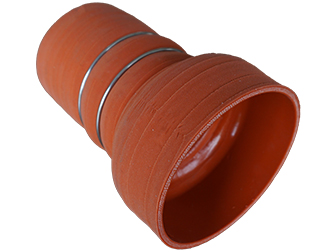
A CAC hose is a flexible hose used in a Charge Air Cooler system. CAC stands for "Charge Air Cooler", a component in a turbocharged air system that cools compressed intake air before it reaches the engine.
A simplified charge-air path is:
Turbocharger → Charge Air Cooler → Engine Intake
The hose sections around the cooler provide flexible connections between components in this path. Unlike a fully rigid pipe, a hose can accommodate certain differences in alignment and movement between connected components.
A CAC silicone hose is therefore defined not only by its material, but also by its dimensions, geometry, reinforcement, and connection requirements.
This is particularly relevant for B2B sourcing. A hose with the correct nominal diameter may still be unsuitable if its length, bend geometry, connection orientation, or operating conditions do not match the application.
Where Are CAC Hoses Used: Hot Side vs. Cold Side?
The charge-air path can generally be divided into two sections around the charge air cooler. The hot side is upstream of the cooler, while the cold side is downstream.
CAC Hose Hot Side
The CAC hose hot side is located between the turbocharger and the charge air cooler.
Compressed air leaving the turbocharger has a higher temperature than the air entering the compressor. The hose in this section may therefore experience elevated temperatures as well as changing boost pressure.
The surrounding installation environment also matters. A hot-side connection may be located near the turbocharger, exhaust components, or other heat sources. The actual temperature around the hose can therefore differ from the general engine operating temperature.
Temperature cycling is another consideration. During operation, the hose heats up, while shutdown allows it to cool. Repeated heating and cooling can create different material and mechanical demands from a single short-term temperature exposure.
CAC Hose Cold Side
The CAC hose cold side is located between the charge air cooler and the engine intake side.
The charge air has passed through the cooler before reaching this section, so its temperature is generally lower than on the hot side. However, a lower air temperature does not eliminate the other operating requirements.
The cold-side connection can still experience boost pressure, pressure fluctuations, vibration, engine movement, and restricted routing space. The hose must maintain its connection while accommodating the mechanical conditions around it.
For this reason, hot-side and cold-side selection should not be based on temperature alone. The hose position, pressure conditions, movement, routing, and connection requirements should be considered together.
What Makes a Silicone CAC Hose Suitable for the Application?
Choosing silicone is only one part of specifying a suitable silicone CAC hose. The final hose construction needs to match the conditions in which it will operate.
Temperature and Thermal Cycling
The relevant question is not simply whether a material can withstand a stated peak temperature. Buyers should consider continuous exposure, temperature changes, nearby heat sources, and the actual location of the hose.
This is especially important when comparing hot-side and cold-side applications. The two positions can expose the hose to different thermal conditions within the same air system.
Pressure and Reinforcement
A charge-air system operates under pressure, and pressure can change with engine load and operating conditions.
Hose construction influences how the hose behaves under these changes. Reinforcement can help control expansion and maintain dimensional stability while preserving the flexibility required for installation.
The appropriate construction depends on the application. Hose diameter alone does not define the required reinforcement or construction.
Flexibility and Movement
Engine components can move relative to each other because of vibration and normal operating movement. A flexible hose provides a way to accommodate this movement between otherwise rigid components.
However, flexibility must be considered together with routing. A hose that is too short, sharply bent, or installed under excessive tension may experience unnecessary mechanical stress.
Dimensional Stability
A hose should maintain an appropriate shape under its expected operating conditions. Excessive expansion or deformation can affect the connection and change the behavior of the air path.
This is one reason why material, reinforcement, geometry, and wall construction need to be considered as a complete system rather than as separate specifications.
How Do CAC Hose Geometry and Construction Affect Selection?
Hose geometry is an important part of CAC system installation.
A straight hose may be suitable where the connection points are aligned. A formed or angled hose may be more appropriate where space is restricted or where the connection points are positioned at different angles.
RAINBOW's CAC hose range includes hump, inlet, outlet, diesel-specific, and custom configurations for different installation requirements. The range also includes reinforcement and lining options for application-specific conditions.
Hose Geometry
When specifying a hose, buyers may need to provide:
- Inside diameter
- Outside diameter
- Overall length
- Bend angle
- Connection orientation
- Available clearance
- Required routing path
These details help determine whether a standard configuration is suitable or whether a custom geometry is required.
A hump section, for example, can provide additional flexibility where movement or alignment changes need to be accommodated. The appropriate shape depends on the actual installation rather than a general preference for one configuration.
Reinforcement and Lining
Reinforcement affects the balance between pressure handling, dimensional stability, and flexibility.
Some applications may also require a specific inner lining because of the media or operating environment. RAINBOW identifies fluorocarbon and fluorosilicone lining options for specific CAC hose requirements.
These options should be selected according to the actual application rather than treated as standard requirements for every hose.
What Should B2B Buyers Check Before Ordering a CAC Hose?
Before requesting a quotation, buyers can reduce specification problems by providing the operating and installation information available to them.
Dimensions
Provide the required:
- Inside diameter
- Outside diameter
- Overall length
- Connection dimensions
- Bend angles or formed geometry
Operating Conditions
Where available, specify:
- Hot-side or cold-side location
- Continuous operating temperature
- Temperature fluctuations
- Working pressure
- Pressure changes during operation
- Nearby heat sources
Installation Conditions
Hose routing can be just as important as nominal size. Information about available space, connection direction, component movement, and nearby parts can help determine the required geometry.
Construction Requirements
For applications with particular performance requirements, buyers should also identify whether specific reinforcement, lining, or other construction characteristics are needed.
A useful specification should therefore describe the complete application rather than simply state "CAC hose" and a diameter.
Drawings, samples, photographs of the installation, or application details can also help clarify the required configuration when a custom hose is being considered.
RAINBOW Silicone CAC Hose for Application-Specific Requirements
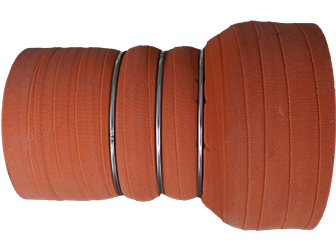
RAINBOW provides CAC hose configurations for different installation and application requirements, including hump, inlet, outlet, diesel-specific, and custom geometries. Its product range also identifies reinforcement and lining options for applications with specific construction requirements.
For projects involving specific dimensions, routing constraints, operating conditions, or construction requirements, buyers can provide RAINBOW with drawings, samples, or application details to discuss the appropriate CAC hose configuration.
FAQ
1.Cac Hose Meaning
CAC hose means "Charge Air Cooler hose". It is a flexible hose used to connect components in the charge-air system around the charge air cooler.
2.Cac Hose Full Form
CAC stands for "Charge Air Cooler". Therefore, the full form of CAC hose is "Charge Air Cooler hose".